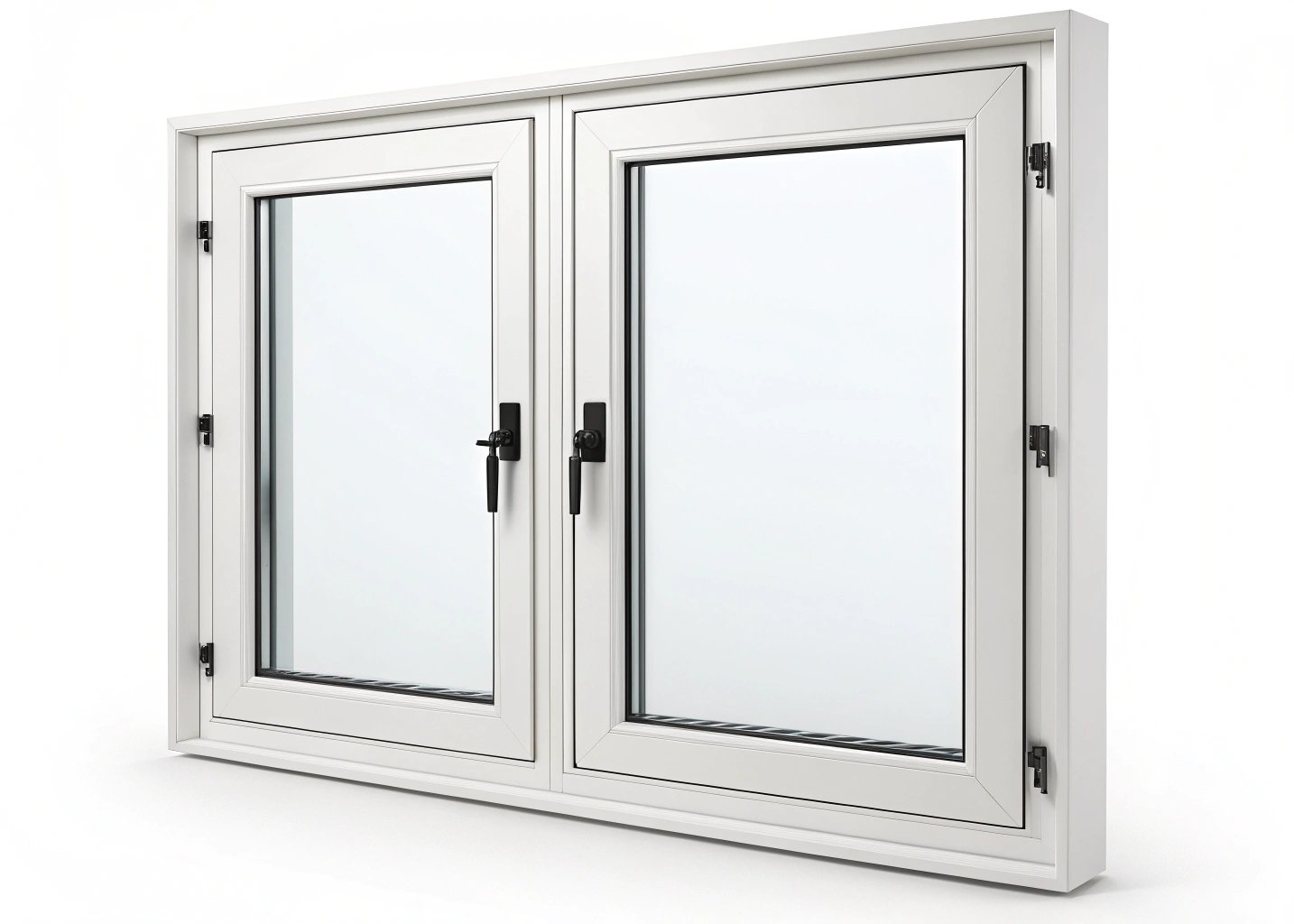
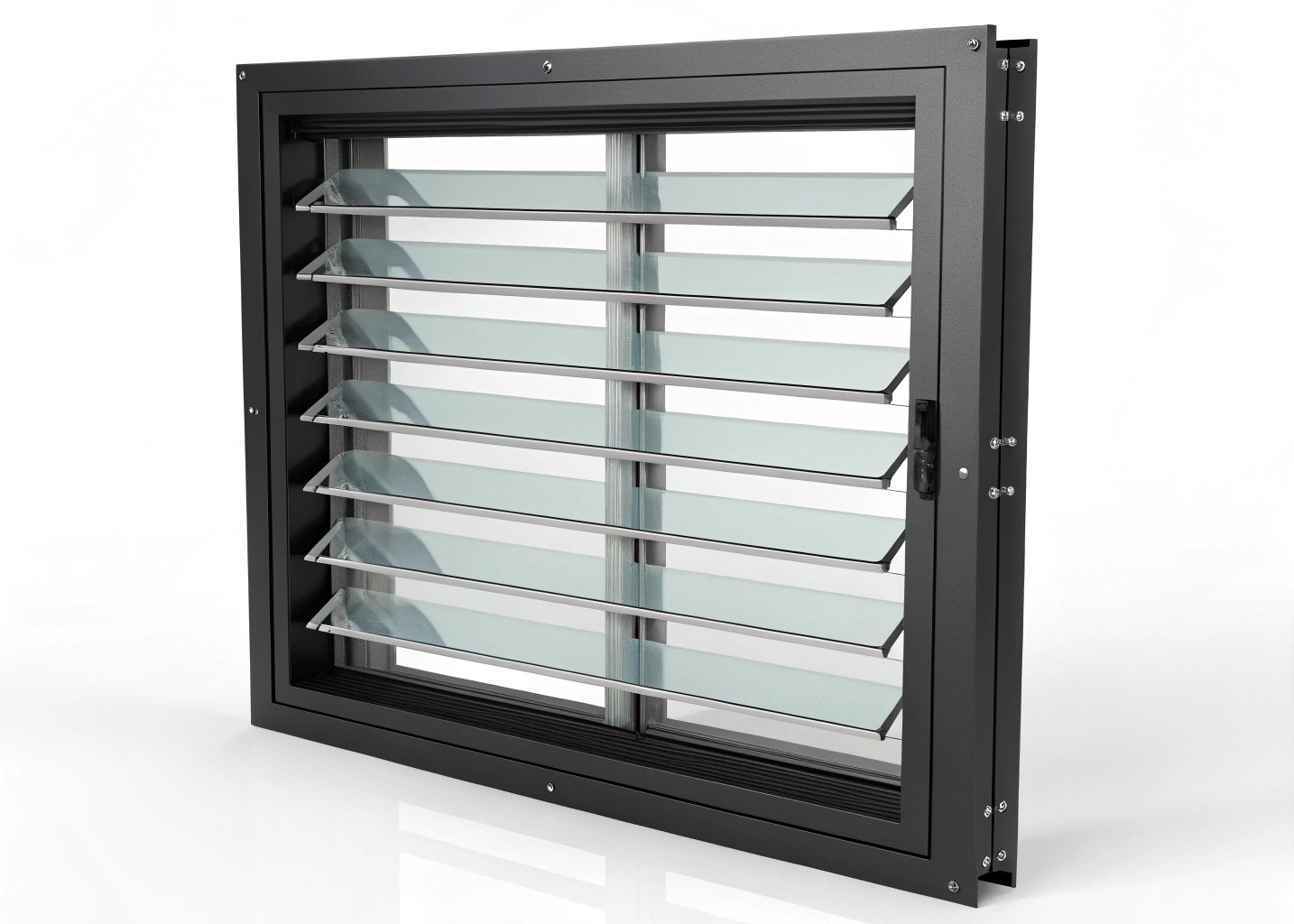
Selecting the right door system is not only an architectural decision but also a functional and operational one. Sliding doors and revolving doors serve very different purposes, and choosing the wrong system often leads to congestion, energy loss, or long-term maintenance issues.
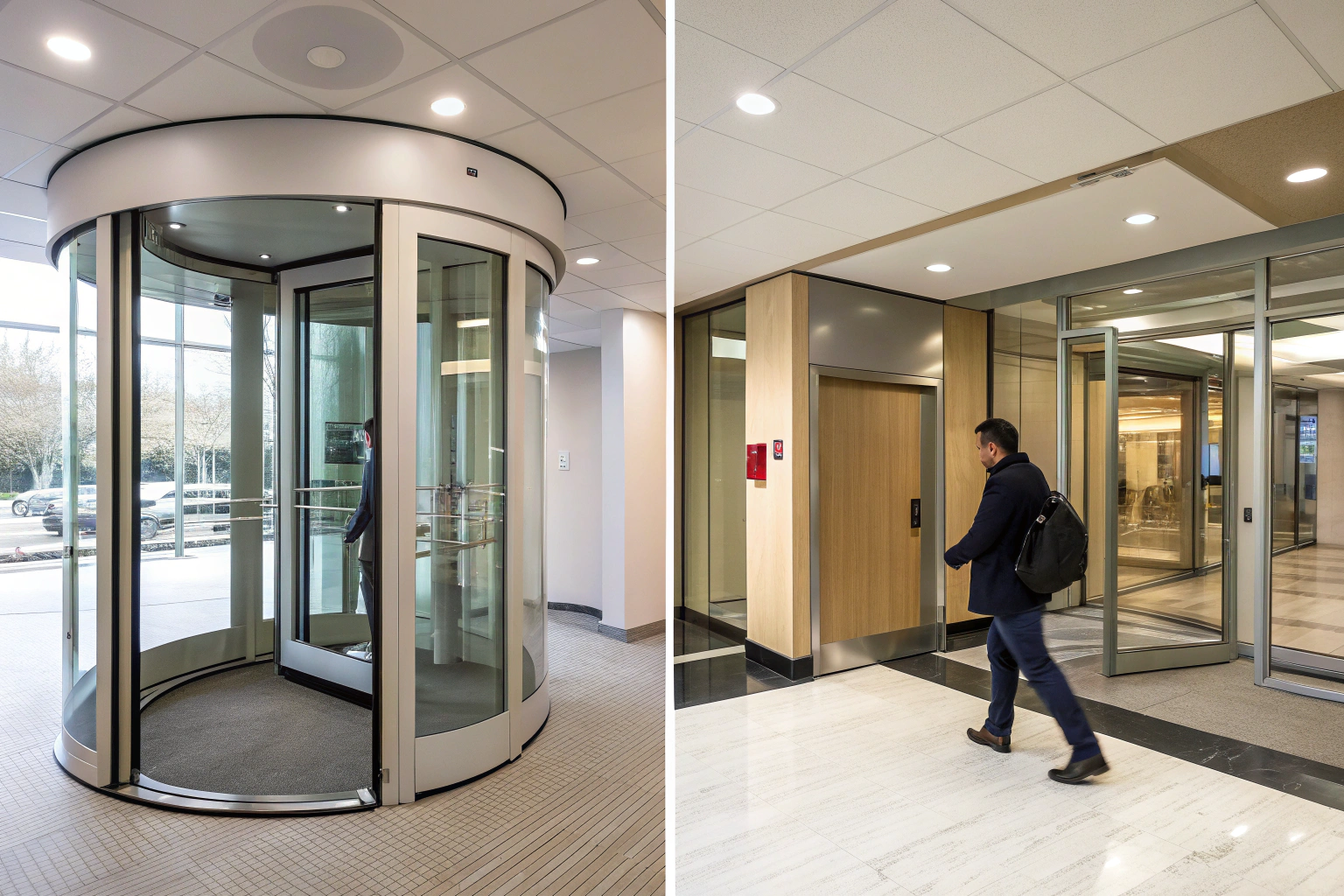
Sliding doors and revolving doors are designed for different traffic patterns and building functions. Sliding doors prioritize flexibility and accessibility, while revolving doors focus on traffic control and energy efficiency.
Understanding how these systems differ in structure, usage, and manufacturing requirements is essential before making a decision.
How Do Sliding Doors and Revolving Doors Differ in Core Function?
The primary difference lies in how people move through the entrance.
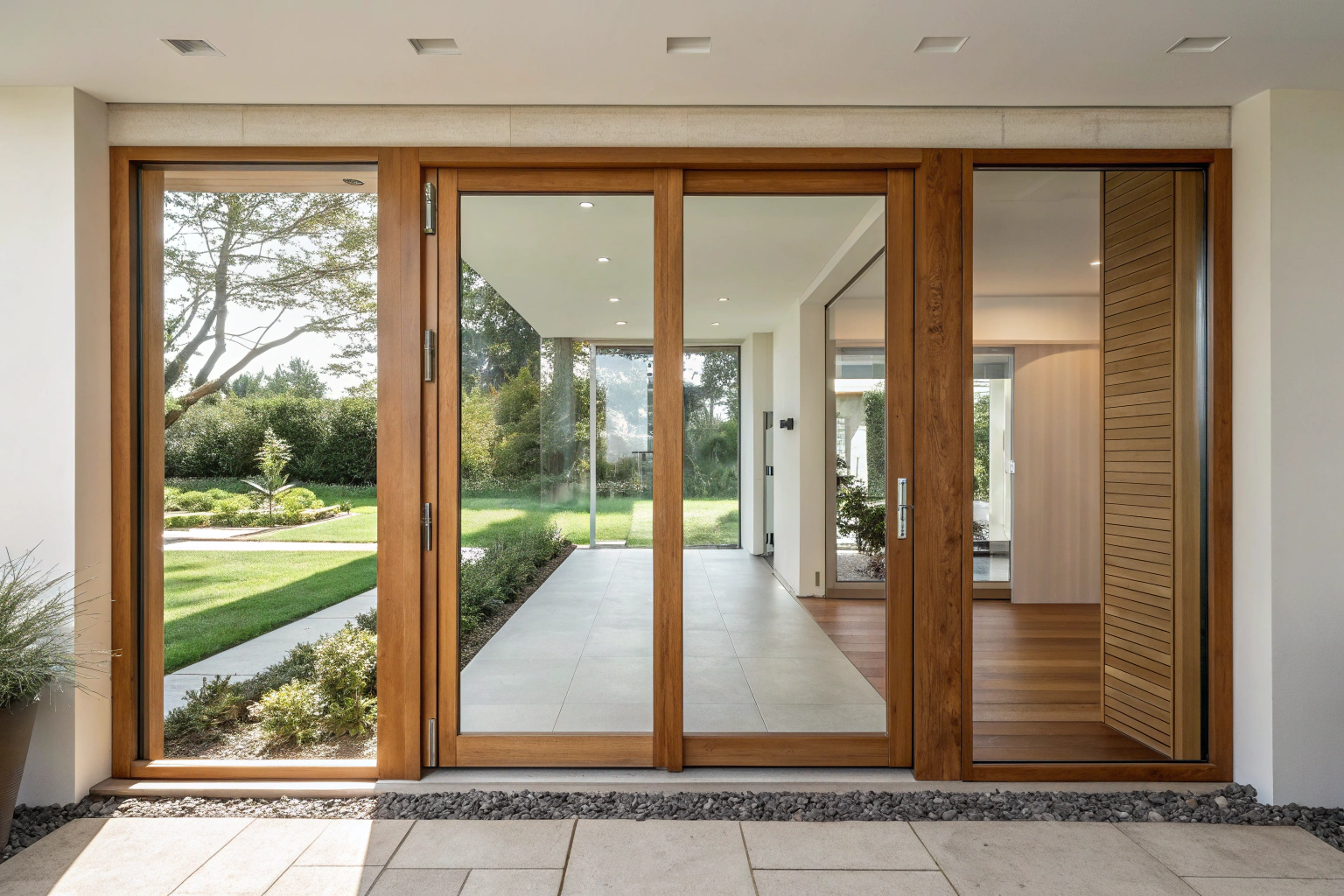
Sliding doors provide a wide, unobstructed opening, while revolving doors regulate movement through controlled rotation.
Sliding doors open horizontally along a track, allowing fast and intuitive access. They are widely used in residential buildings, commercial storefronts, hospitals, and offices where accessibility and clear openings are essential. The door remains fully open when activated, making it suitable for carts, wheelchairs, and large objects.
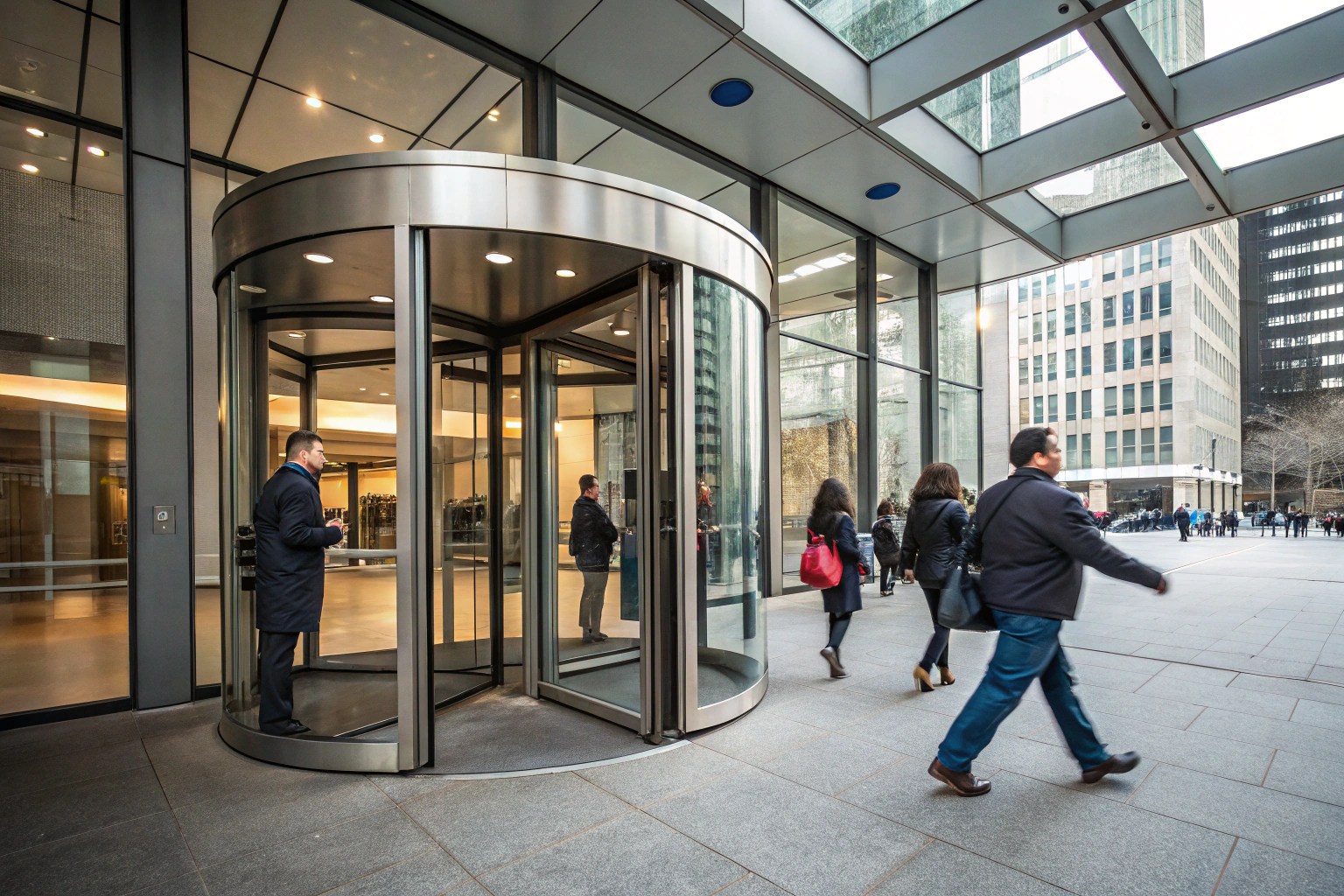
Revolving doors rotate around a central axis, dividing entry and exit into segments. This design controls traffic flow and reduces direct air exchange between inside and outside. As a result, revolving doors are commonly used in hotels, office towers, airports, and public buildings with constant foot traffic.
From a functional standpoint, sliding doors emphasize convenience, while revolving doors emphasize regulation and environmental control.
How Does Traffic Flow Influence the Choice?
Traffic volume and movement patterns strongly affect door performance.
Sliding doors handle variable traffic efficiently, while revolving doors perform best under continuous, predictable flow.
Sliding doors respond automatically to approaching users and can remain open during peak periods. This flexibility suits environments where traffic fluctuates or includes groups moving together. However, when traffic is constant, frequent opening and closing can increase wear and energy loss.
Revolving doors maintain a steady flow without fully opening the building envelope. Each rotation allows multiple users to pass while minimizing disruption. This makes them suitable for high-traffic entrances where maintaining order and reducing drafts are priorities.
In manufacturing system design, traffic assumptions influence motor selection, bearing strength, and structural reinforcement. Sliding and revolving doors are engineered around these different usage patterns.
How Do Energy Efficiency and Environmental Control Compare?
Energy performance is a key consideration in modern buildings.
Revolving doors offer superior energy efficiency, while sliding doors prioritize openness over insulation.
Because revolving doors are never fully open, they significantly reduce heat loss, air infiltration, and pressure imbalance. This improves indoor climate stability and reduces HVAC load, especially in large commercial buildings.
Sliding doors open completely, allowing air exchange whenever activated. Advanced sealing systems and sensor control reduce unnecessary opening time, but energy loss remains higher compared to revolving doors.
From a production perspective, revolving doors require precise balancing, airtight enclosure design, and high-tolerance bearing systems. Sliding doors rely more on track accuracy, roller durability, and sensor responsiveness. Each system reflects a different engineering focus driven by energy performance goals.
How Do Space and Architectural Design Affect the Decision?
Available space and design intent often determine feasibility.
Sliding doors require lateral wall space, while revolving doors need central floor area and vertical clearance.
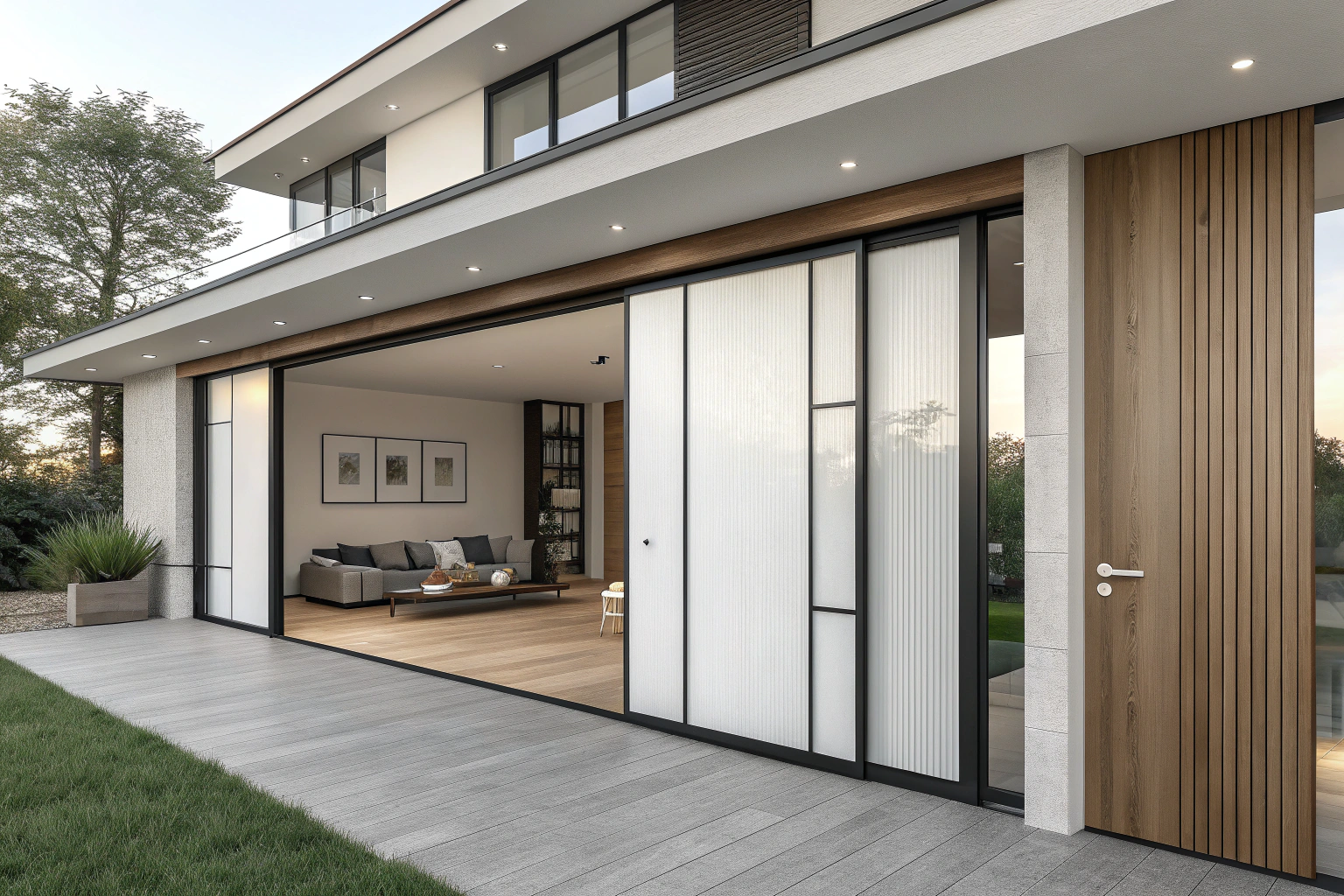
Sliding doors need sufficient wall width to accommodate panels when open. In narrow façades or curved walls, this can be limiting. However, sliding doors integrate easily into minimalist designs and allow large glass panels for transparency.
Revolving doors occupy a circular footprint and require sufficient ceiling height. They become architectural features rather than hidden elements. In many landmark buildings, revolving doors serve as visual focal points that convey scale and prestige.
In factory production, these spatial differences influence frame fabrication, glass curvature processing, and assembly methods. Revolving doors often involve curved glass and custom structural components, increasing production complexity.
How Do Manufacturing and Workshop Processes Differ?
The two systems place very different demands on production.
Sliding doors emphasize linear precision, while revolving doors demand rotational balance and structural symmetry.
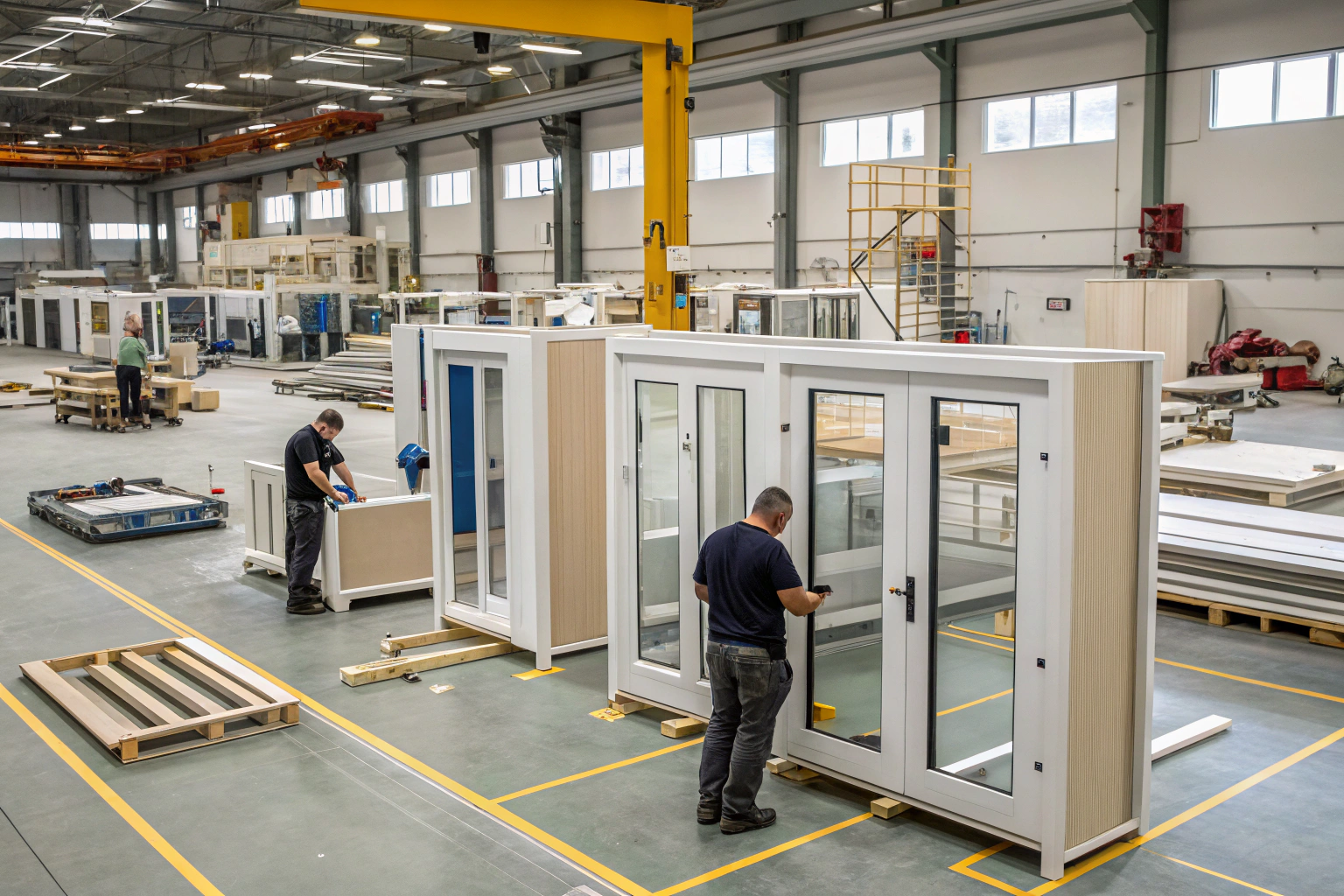
Sliding door production focuses on straight-profile extrusion, CNC machining of tracks, and consistent roller alignment. Workshop efficiency depends on maintaining tight tolerances along long linear components. Glazing and assembly are relatively straightforward, allowing scalable production.
Revolving door manufacturing is more complex. Central shafts, curved glass panels, precision bearings, and balanced rotation systems must work together seamlessly. Assembly requires careful calibration to ensure smooth movement and safety compliance. Quality inspection involves rotation testing, load simulation, and vibration control.
These differences explain why revolving doors typically involve longer lead times and higher production costs than sliding doors.
Which Door System Is More Suitable in Practice?
Suitability depends on building function rather than superiority.
Sliding doors suit environments focused on accessibility and flexibility, while revolving doors suit buildings prioritizing traffic control and energy conservation.
Retail spaces, healthcare facilities, and residential projects often favor sliding doors for ease of use and inclusive access. Corporate headquarters, hotels, and transport hubs often adopt revolving doors to manage heavy foot traffic and reduce energy loss.
In many large buildings, both systems are used together. Revolving doors handle main traffic flow, while sliding or swing doors provide accessible alternatives. This combined approach reflects practical system integration rather than a single “better” choice.
Conclusion
Sliding doors and revolving doors are designed to solve different problems. Sliding doors provide openness, flexibility, and accessibility, making them suitable for spaces where ease of movement and clear openings are essential. Revolving doors control traffic, reduce air exchange, and improve energy efficiency, making them ideal for high-traffic commercial environments.
From a manufacturing perspective, these differences are reflected in system engineering, workshop processes, and quality control requirements. Sliding doors rely on precise linear motion and scalable production, while revolving doors depend on rotational balance, structural accuracy, and complex assembly. Neither system is universally better. The correct choice depends on building usage, traffic behavior, energy performance goals, and architectural constraints. When door selection aligns with these factors, long-term performance, user experience, and operational efficiency can all be achieved simultaneously.