Many aluminum windows look fine in a catalog. Problems often begin later, when drawings are unclear, samples do not match bulk production, tolerances drift, packaging fails, or export delivery slips.
A professional aluminum window manufacturer manages the full process through connected design, engineering, sampling, production control, inspection, packaging, and export coordination. The real difference is not only how the window looks, but how consistently the factory controls every step before shipment.
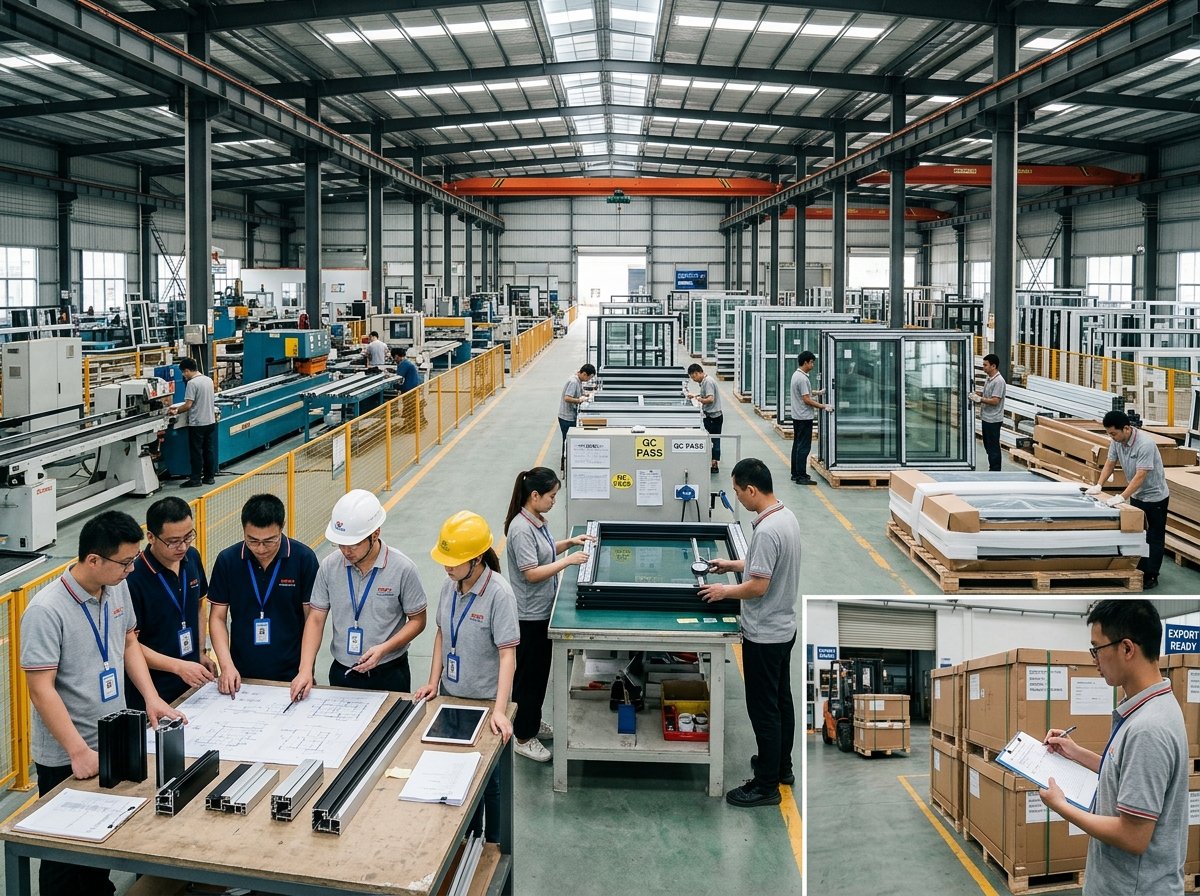
For overseas buyers, the biggest risk is rarely one single part. The bigger risk is a broken process. That is when condensation complaints, air leakage, water seepage, sliding difficulty, wrong opening direction, missing accessories, scratched frames, broken glass, and delayed replacements all start to appear. A professional manufacturer reduces these risks by controlling the full chain from design to delivery. This matters for brand owners, distributors, contractors, project buyers, and factories looking for OEM or ODM supply support.
Why Does the Manufacturer’s Process Matter More Than the Product Photo?
A product photo only shows the finish on one day. The factory process decides whether the same result can be repeated across every order.
The manufacturer’s process matters because most field failures come from weak design review, poor tolerance control, bad hardware matching, missing inspection points, or weak packaging and delivery management.
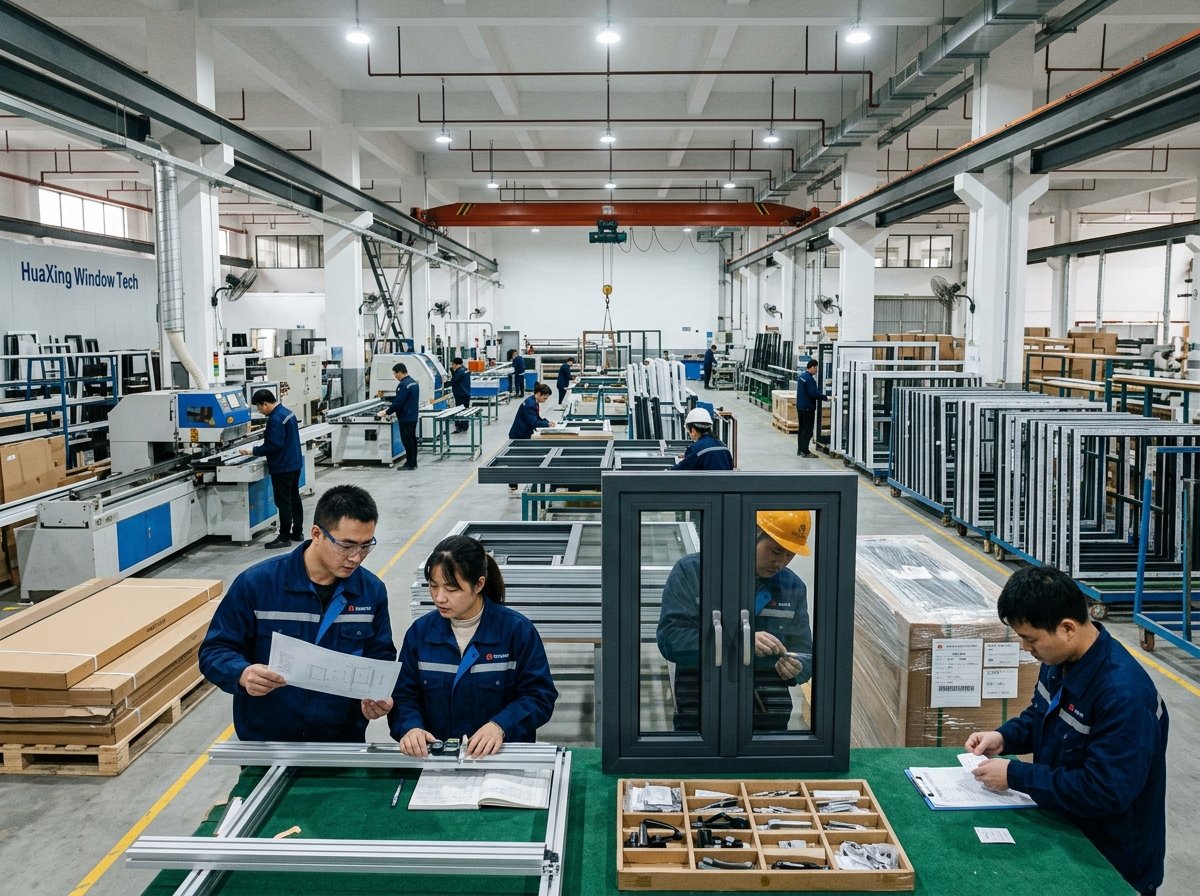
Public complaints across forums, reviews, and social platforms repeat the same failures. Frames get severe condensation because thermal design is weak. Sliding doors leak air because interlock sealing and compression are not strong enough. Water enters under tracks because drainage paths and sill details were not engineered correctly. Doors sag because sash weight, hardware capacity, and assembly precision were never controlled as one system. Some projects arrive with scratches, wrong sizes, or missing parts because packaging and packing-list control failed before shipment.
This is why a reliable supplier must be more than a seller. A real factory with in-house design, R&D, engineering, sales, and quality teams can manage product decisions inside one system. That is especially important in custom projects, where sizes, glazing, hardware, and compliance documents must work together instead of being handled by separate disconnected parties.
How Aluminum Window Manufacturers Manage Design, Engineering, and Sampling?
Good production starts long before cutting and assembly. It starts with design logic and technical review.
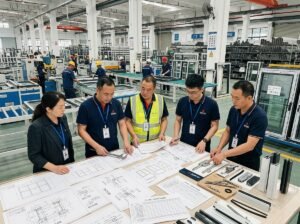
Professional manufacturers manage design, engineering, and sampling by connecting customer requirements, section details, thermal and structural logic, hardware matching, and sample verification before bulk production begins.
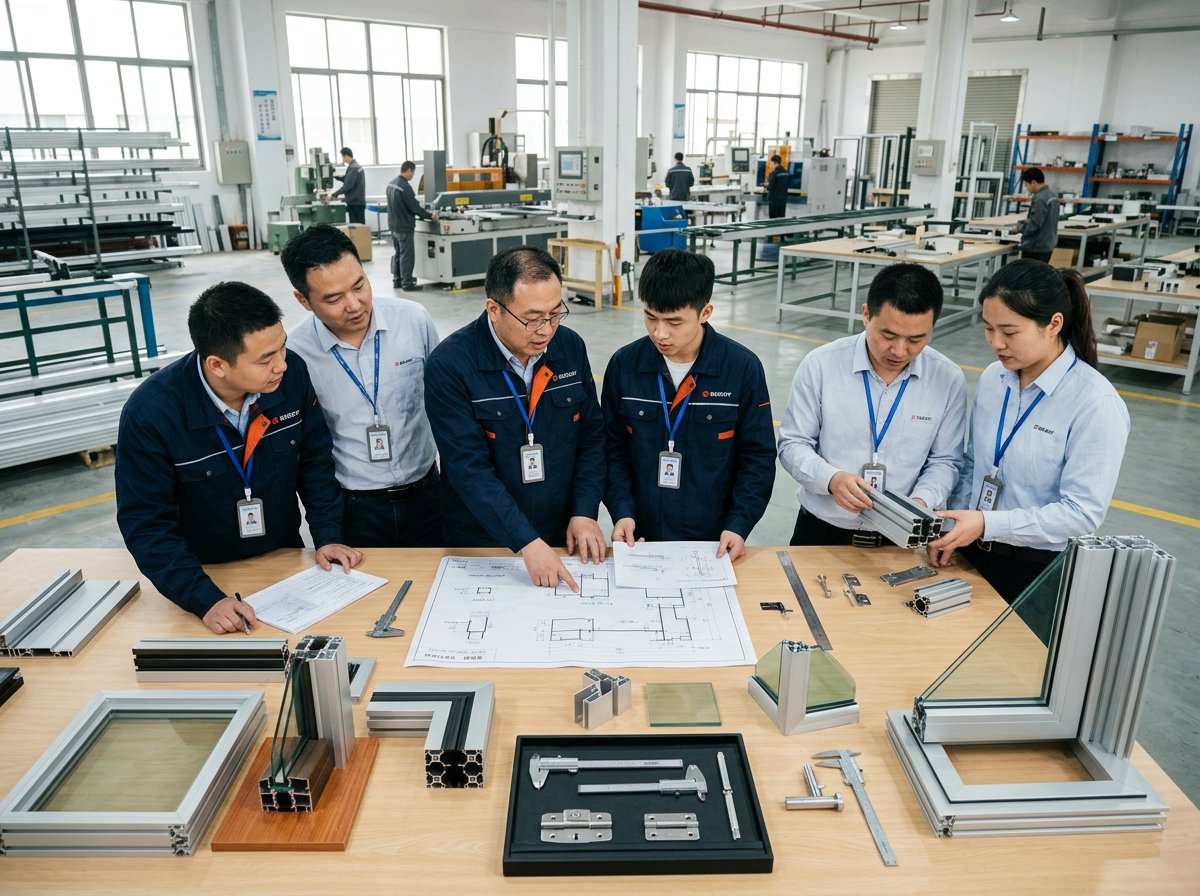
Key design and engineering steps
| Step | What the factory should do | Why it matters |
|---|---|---|
| Requirement review | Confirm climate, building use, opening type, glass, finish, hardware | Prevents wrong system selection |
| Drawing development | Prepare shop drawings, section details, BOM, and opening schedule | Reduces order mistakes |
| Engineering check | Review sash weight, profile strength, drainage, sealing, and thermal logic | Prevents future performance issues |
| Sample preparation | Build sample or mock-up for approval | Confirms appearance and function |
| Revision control | Lock final approved version before production | Avoids mismatch between sample and bulk |
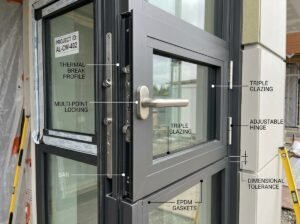
In many failed projects, the problem starts when the factory treats design as paperwork only. That usually leads to wrong glass weight, poor drainage paths, lock misalignment, or hardware that does not match the sash load. A stronger manufacturer treats engineering as risk prevention. That includes checking condensation risk, air and water performance, meeting stile structure, roller load, hinge position, threshold detail, and wall interface suggestions.
Sampling is also more important than many buyers expect. A sample is not only for color or appearance. It is the stage where sliding smoothness, lock alignment, gasket fit, profile matching, and fabrication logic can be checked early. For OEM and ODM orders, sampling is also where branding details, handle style, accessory kit, labels, and packaging methods can be confirmed before the project scales up.
What Happens Between Profile Extrusion and Frame Assembly?
This is where many hidden quality differences begin to appear. On paper, two windows may look similar. In production, they can be very different.
From profile extrusion to frame assembly, quality depends on profile accuracy, straightness, wall thickness consistency, machining precision, corner assembly strength, and hardware installation control.
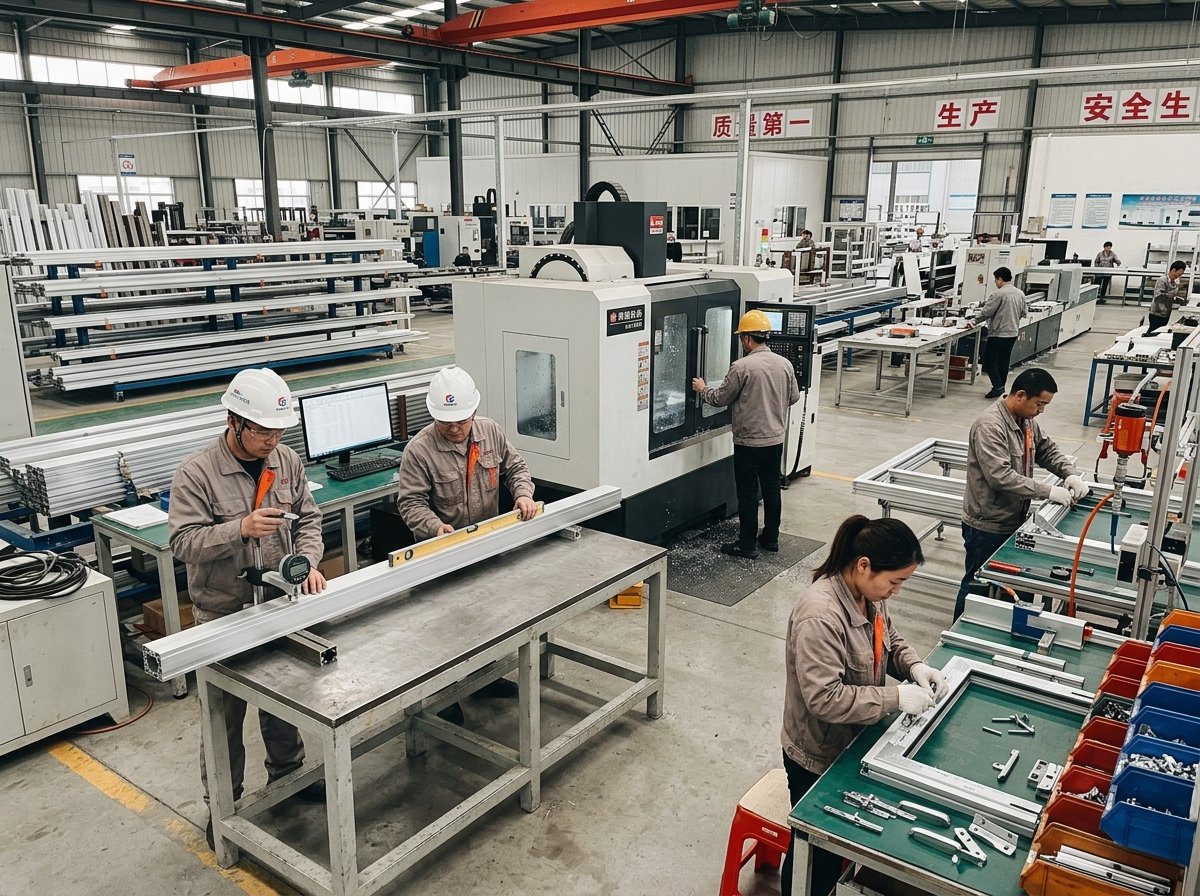
Core production controls
| Production point | Main risk if weak | Better factory practice |
|---|---|---|
| Profile extrusion | Bent, uneven, unstable section | Control straightness, section tolerance, and alloy consistency |
| Surface treatment | Corrosion, color mismatch, scratch sensitivity | Standardize pretreatment, coating thickness, and finish checks |
| Cutting and machining | Gaps, wrong holes, misalignment | Use precise cutting and CNC processing |
| Corner assembly | Weak frame, poor squareness | Check diagonal difference and corner strength |
| Sash assembly | Poor fit, dragging, locking issue | Control sash-to-frame tolerance |
| Hardware installation | Hard opening, sagging, poor sealing | Match hardware to sash weight and function |
Many common complaints clearly point to weak control in this stage. Bent tracks, metal shavings, doors jumping off tracks, and locks not aligning usually do not begin at the jobsite. They begin when profile precision, machining accuracy, and assembly discipline are not stable. The same is true for poor long-term performance. A window that feels drafty, noisy, or hard to operate after limited use often shows that production tolerance and hardware matching were weak from the start.
This is where a professional manufacturer gains an advantage. A real factory does not rely only on final appearance checks. It controls process points before the defects move downstream.
Quality Control Checkpoints from Profile Extrusion to Final Packaging
Quality control should not happen only at the last minute. It should be built into the full manufacturing flow.
The strongest factories use checkpoint-based quality control, covering incoming materials, profile processing, assembly, glazing, functional testing, surface inspection, and packaging review before shipment.
Recommended quality checkpoints
| Checkpoint | What to inspect |
|---|---|
| Incoming material check | Profile section, wall thickness, hardware, gasket, glass, finish |
| In-process machining check | Hole positions, cut angles, drainage holes, lock prep |
| Assembly check | Squareness, diagonal difference, sash fit, gasket seating |
| Glazing check | Glass build-up, spacer, seal quality, bead fit |
| Functional check | Sliding force, lock operation, opening and closing alignment |
| Performance-oriented check | Drainage path, sealing continuity, compression points |
| Final appearance check | Scratches, color consistency, dents, corner finish |
| Packaging check | Protection film, corner guard, label, accessory completeness |
This matters because many market complaints are completely preventable with stronger checkpoints. Severe condensation is often linked to weak thermal-break or glass-edge decisions that should have been checked earlier. Water ingress under sliding doors points to drainage and sill-control failures that should be tested before packing. Missing caps, vents, or wrong opening direction point to poor order review and packing-list discipline. Scratched dark-grey frames and damaged glass point to weak handling and packaging protection.
A better factory treats quality control as system validation. That includes not only dimensional checks, but also real-use checks such as lock pressure, meeting-stile fit, roller movement, and track cleanliness.
How Are Lead Times Managed on Custom Window Orders?
Custom orders fail when the schedule is treated as a promise without process support.
Professional manufacturers manage lead time by locking drawings early, planning procurement by BOM, controlling production milestones, coordinating glass and hardware supply, and giving realistic export dates instead of optimistic guesses.
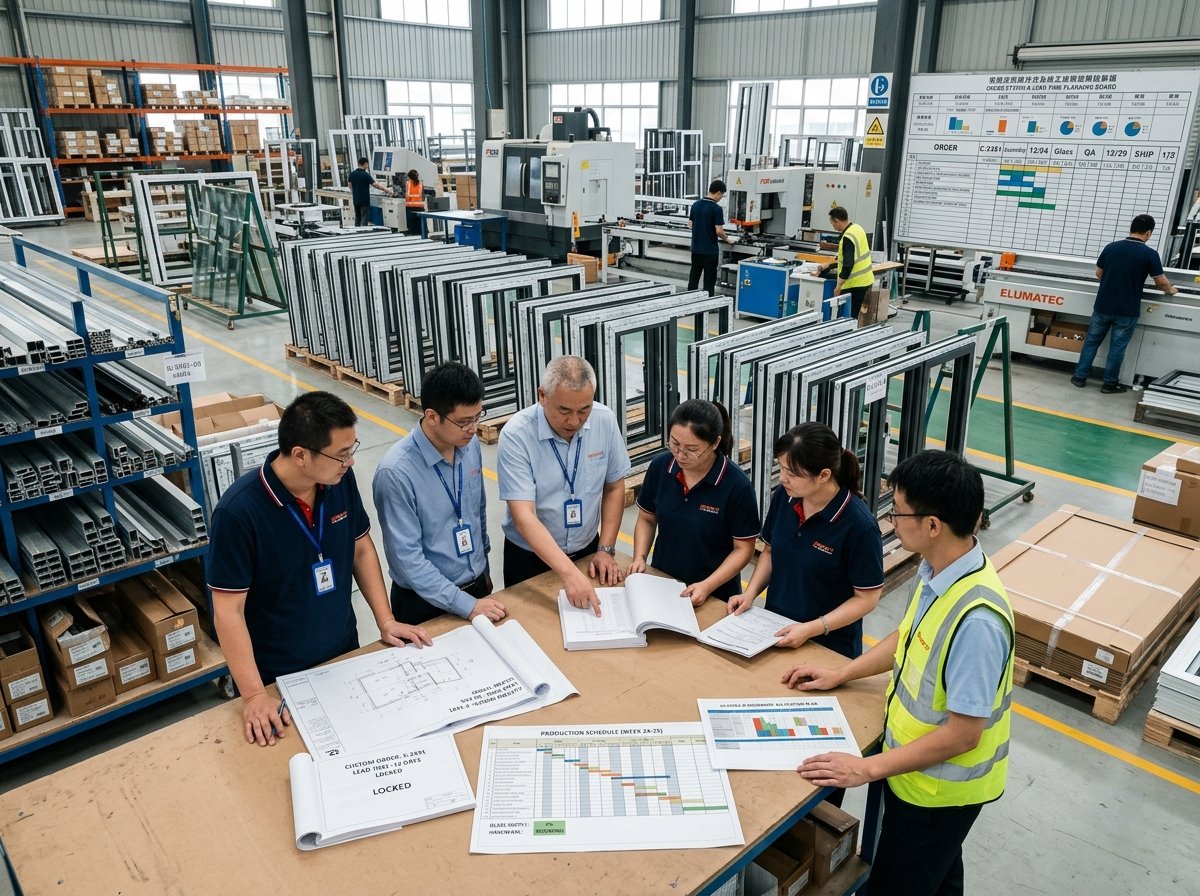
Typical lead time risk points
| Risk point | What usually goes wrong | Better control method |
|---|---|---|
| Unclear drawing approval | Production starts on wrong version | Final drawing sign-off before release |
| Slow sample feedback | Bulk schedule slips | Fix revision deadline and approval flow |
| Hardware or glass mismatch | Rework and delay | Lock BOM early and confirm supply availability |
| Large custom sizes | Production bottleneck | Pre-plan capacity and special handling |
| Missing QC release | Goods wait before shipment | Build inspection timing into production plan |
| Container loading issues | Shipment moves later | Prepare packing and loading list in advance |
Many bad reviews about aluminum windows and doors are not about the product only. They are also about late delivery, repeated cancellations, wrong items, and missing parts that delay the site. For overseas projects, this becomes even more serious. Installers lose labor time. Developers lose schedule confidence. Distributors lose customer trust.
That is why a good manufacturer must separate estimated lead time from controlled lead time. The controlled lead time includes drawing approval, sampling if needed, production scheduling, inspection, packing, loading, and export paperwork. A factory with in-house sales, engineering, and production planning can usually manage this with more transparency and fewer surprises.
Lead Time Management and Export Delivery Process for Custom Window Orders
Delivery is not just shipping. It is the final stage of process control.
The export delivery process should include order confirmation, labeling, piece-by-piece packing review, shipment planning, document preparation, and damage-prevention packaging designed for long-distance transport.
Export delivery checklist
| Delivery step | Why it matters |
|---|---|
| Final order review | Prevents wrong size, finish, handing, or accessory list |
| Labeling by room or drawing code | Helps installation sequence |
| Packing list by unit | Reduces missing-item claims |
| Corner and surface protection | Prevents scratches and impact damage |
| Glass protection and spacing | Reduces breakage risk |
| Container loading plan | Prevents movement and deformation in transit |
| Export documents | Supports customs clearance and project follow-up |
| After-shipment tracking | Improves buyer coordination |
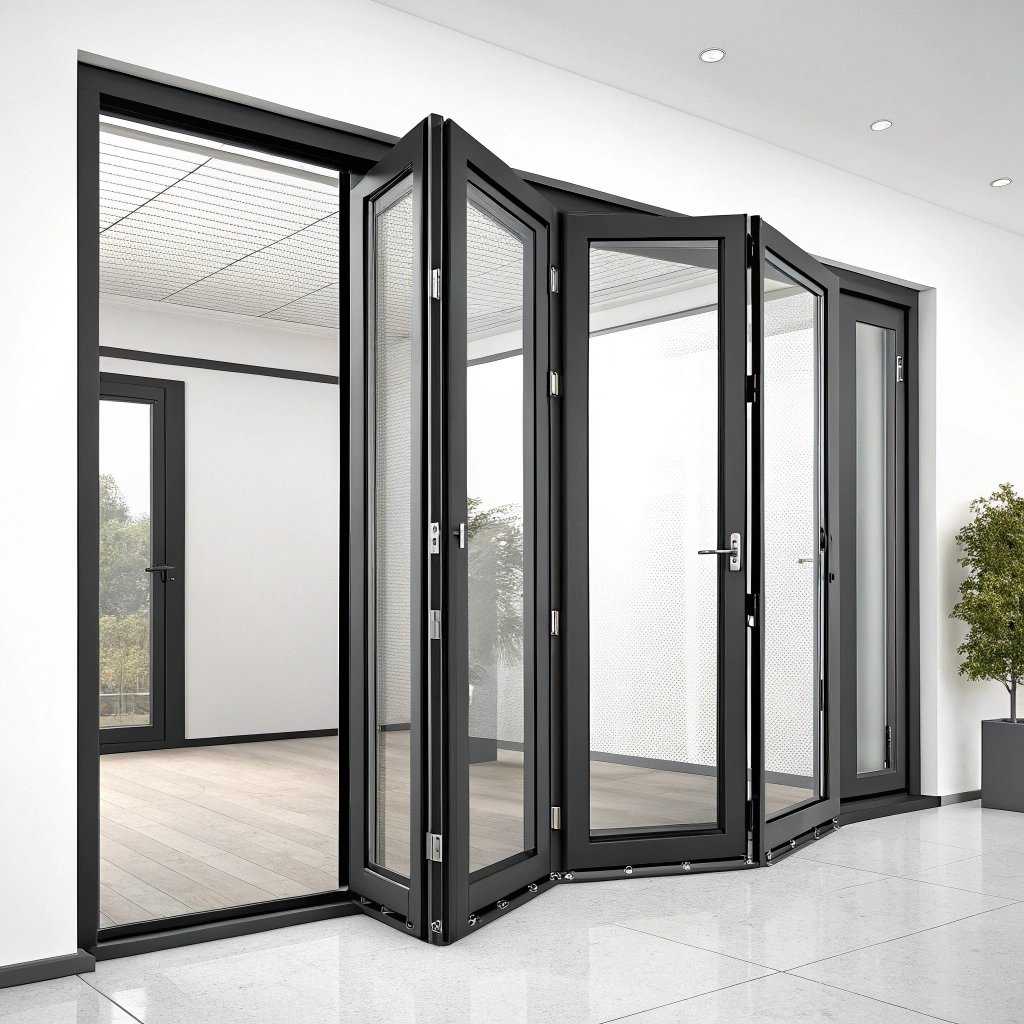
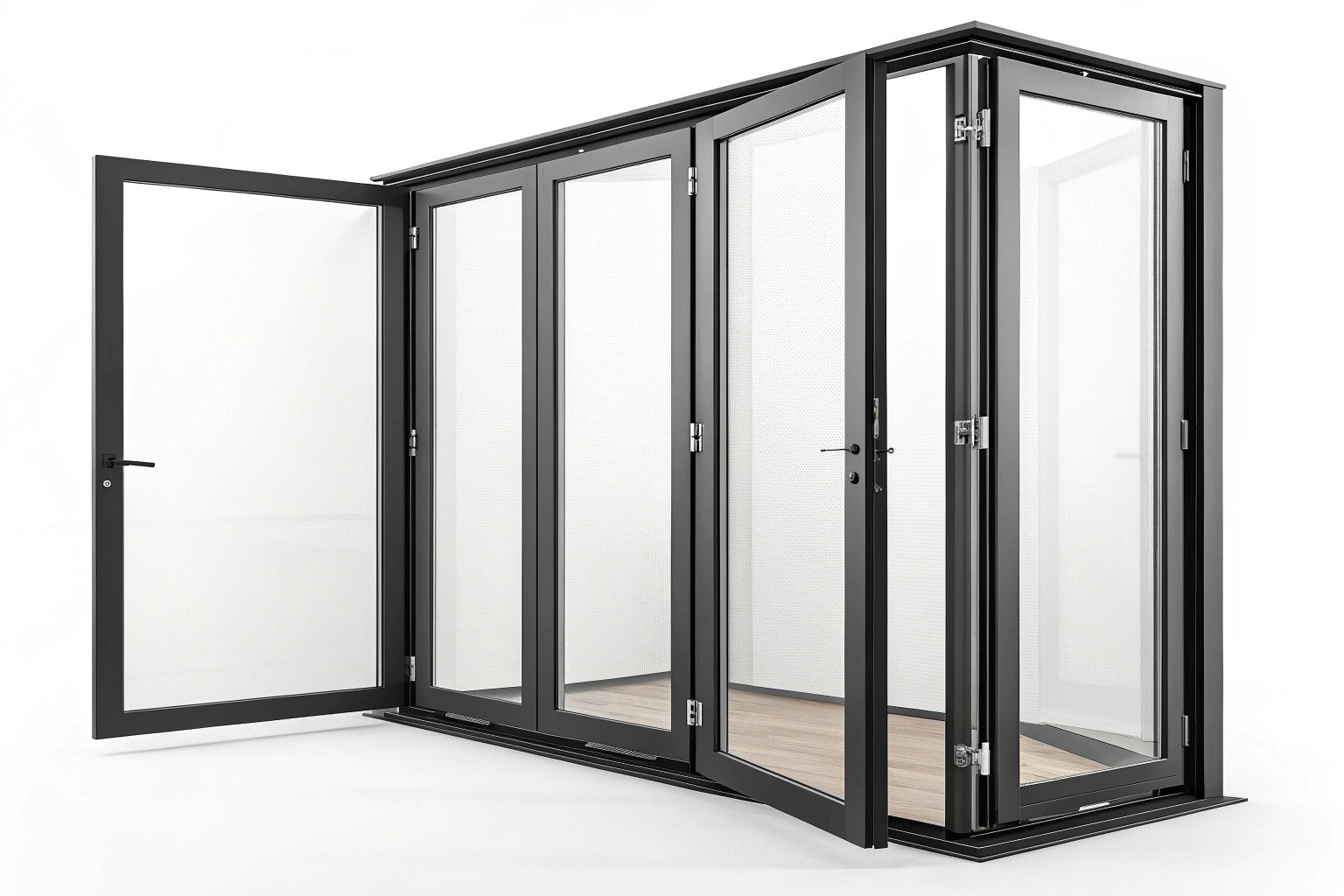
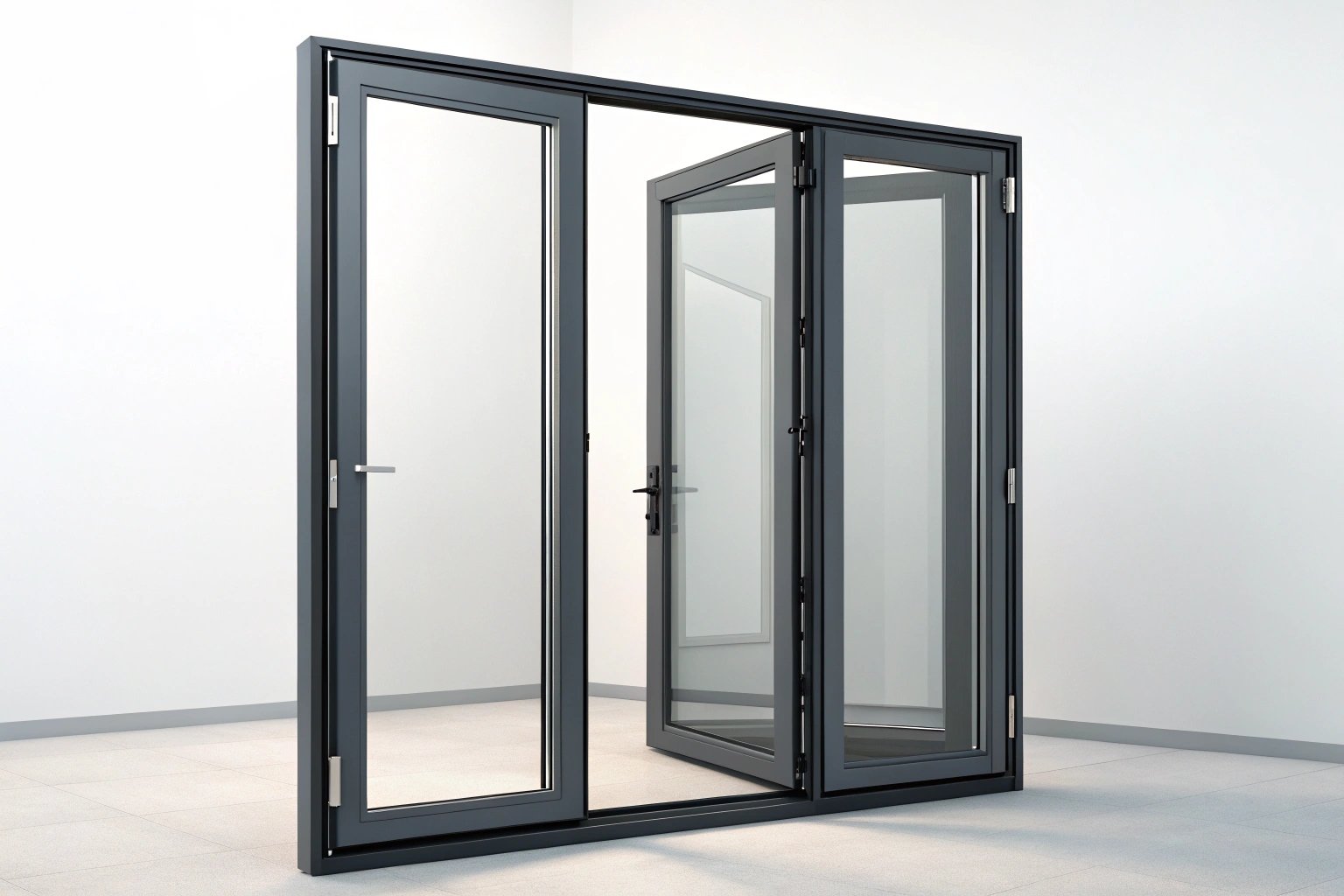
Many transport complaints come from weak packaging logic. Glass breaks because it was not blocked correctly. Dark finishes scratch because the surface was not protected enough. Accessories go missing because they were packed loosely or not listed clearly. A professional manufacturer plans packaging as part of the product, not as an afterthought. This is especially important for large sliding doors, bifold systems, and project shipments with many custom pieces.
What Makes a Manufacturer Truly Professional in OEM and ODM Projects?
In custom cooperation, professionalism is measured by repeatability, not by sales language.
A truly professional manufacturer combines factory ownership, in-house design, R&D, engineering discipline, stable QC, export experience, and clear communication across the full order cycle.
For brand owners and distributors, this means stable private-label supply and repeatable specifications. For contractors and project buyers, it means drawings match production, packaging supports site use, and after-sales issues can be traced clearly. For factories seeking strategic supply support, it means the partner can handle development, not only manufacturing.
Manufacturers that have already worked with well-known brands as OEM and ODM partners usually understand this better. They know that long-term cooperation depends on documentation, consistency, and fast problem resolution. They also know that export projects need more than product supply. They need coordinated support from design to final container loading.
Conclusion
A professional aluminum window manufacturer is defined by process control, not only by product appearance. Strong design review, stable engineering, strict checkpoints, realistic lead times, and reliable export delivery help turn custom window orders into safer and more repeatable projects. For buyers planning the next order, the best next step is to send an inquiry and confirm the full process before production begins.