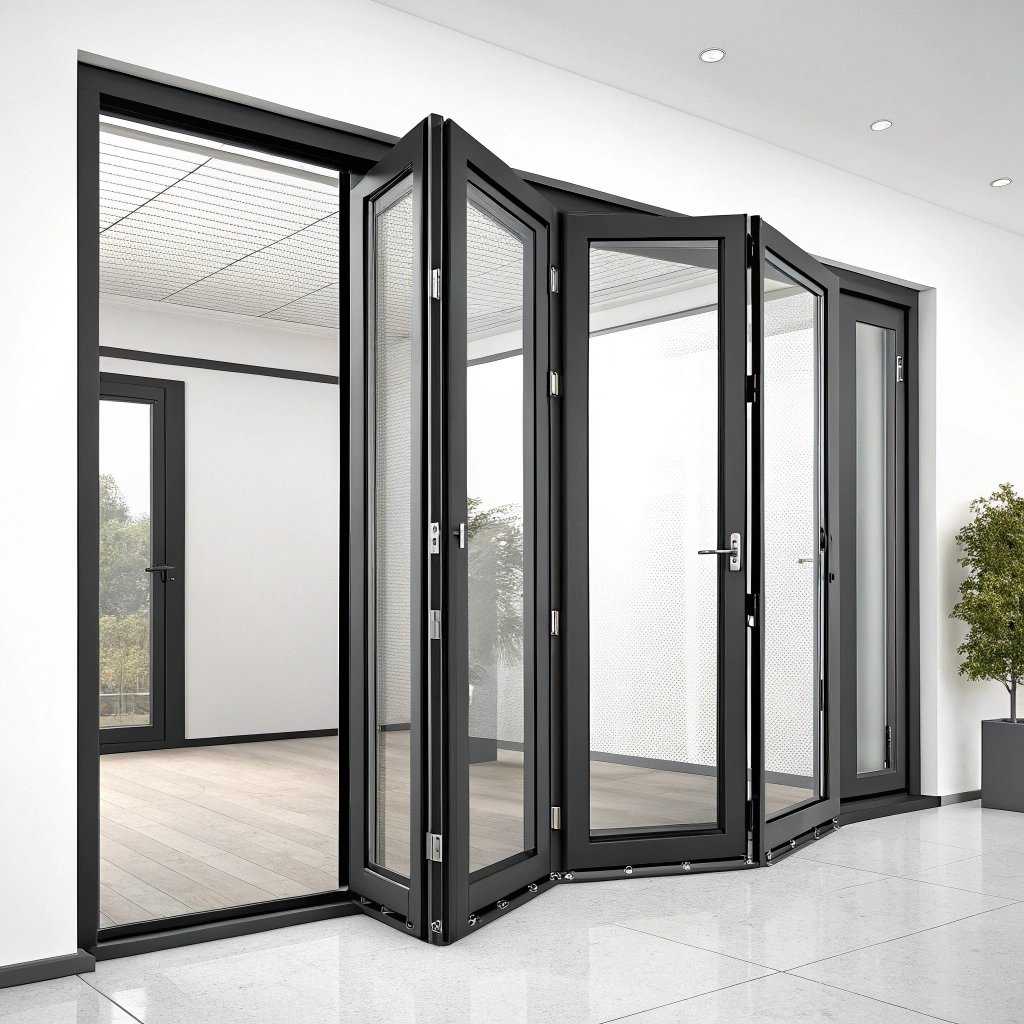
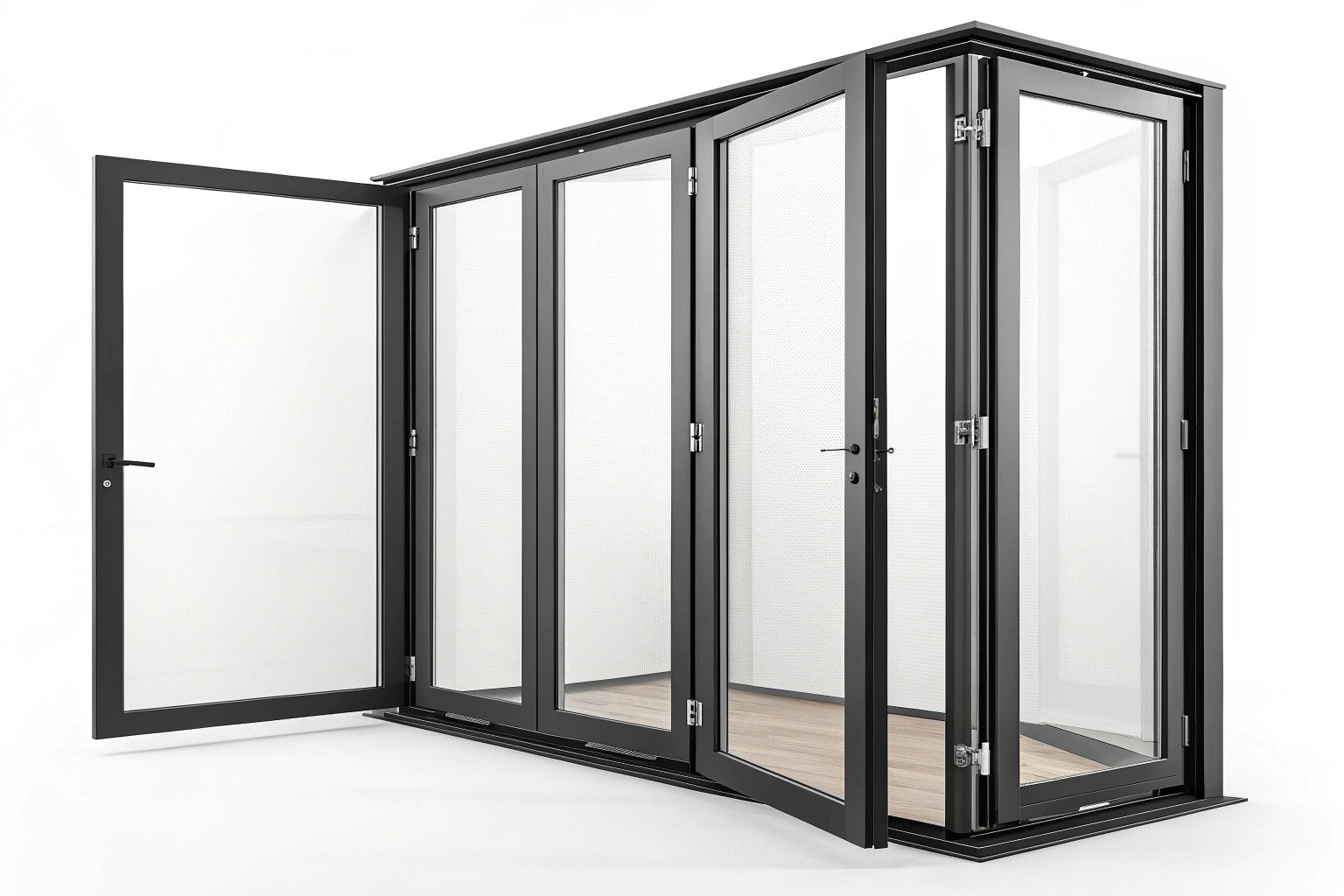
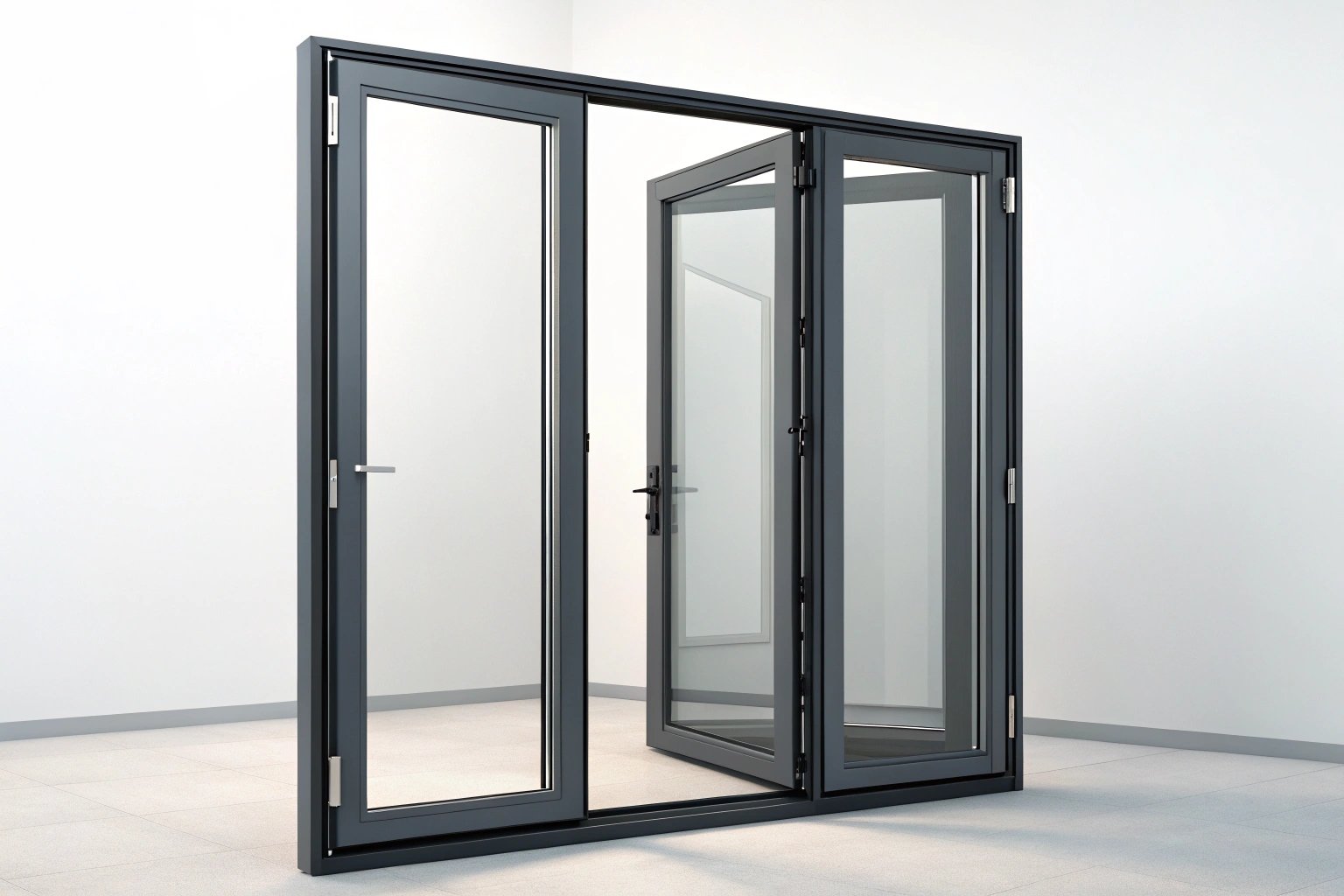
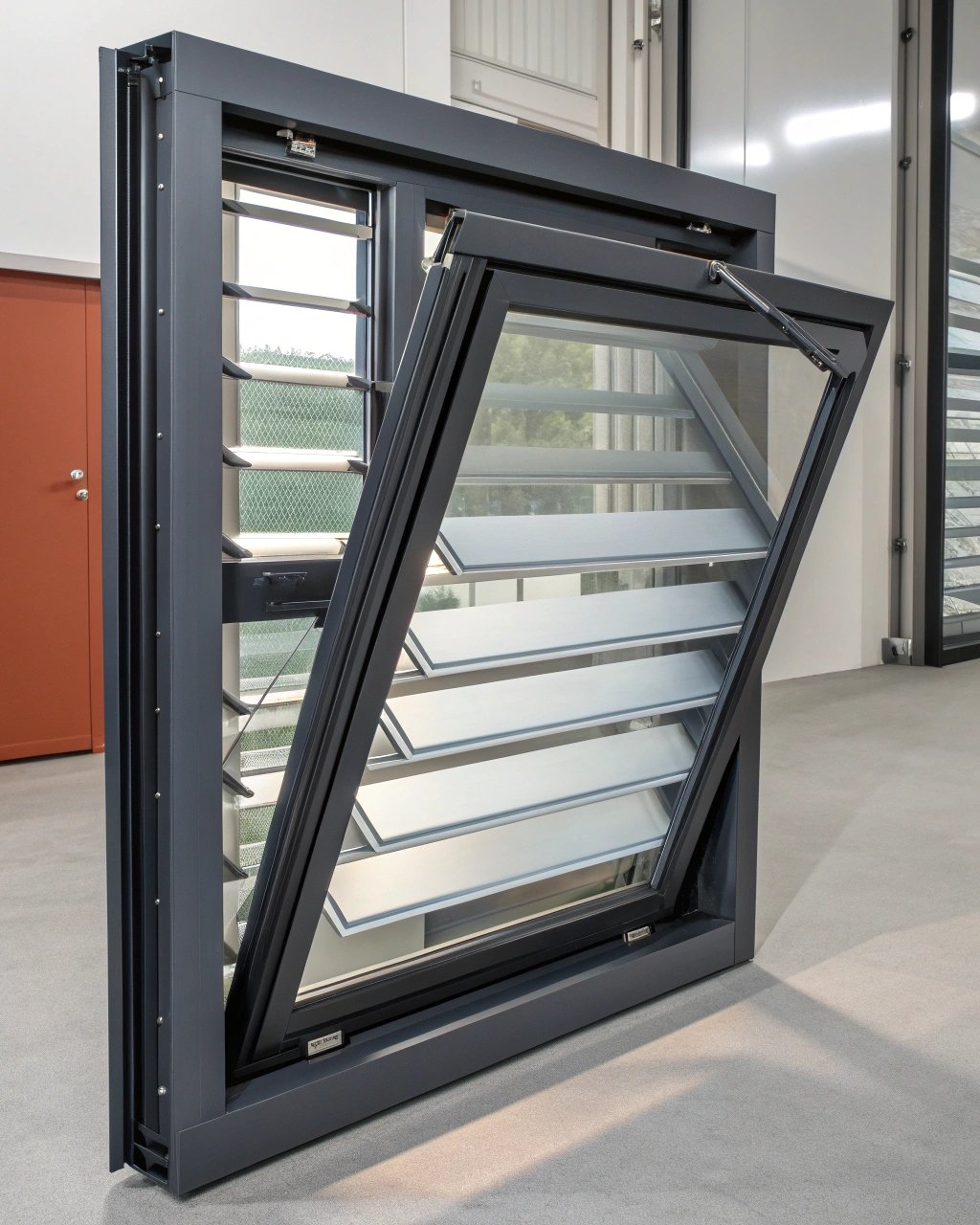
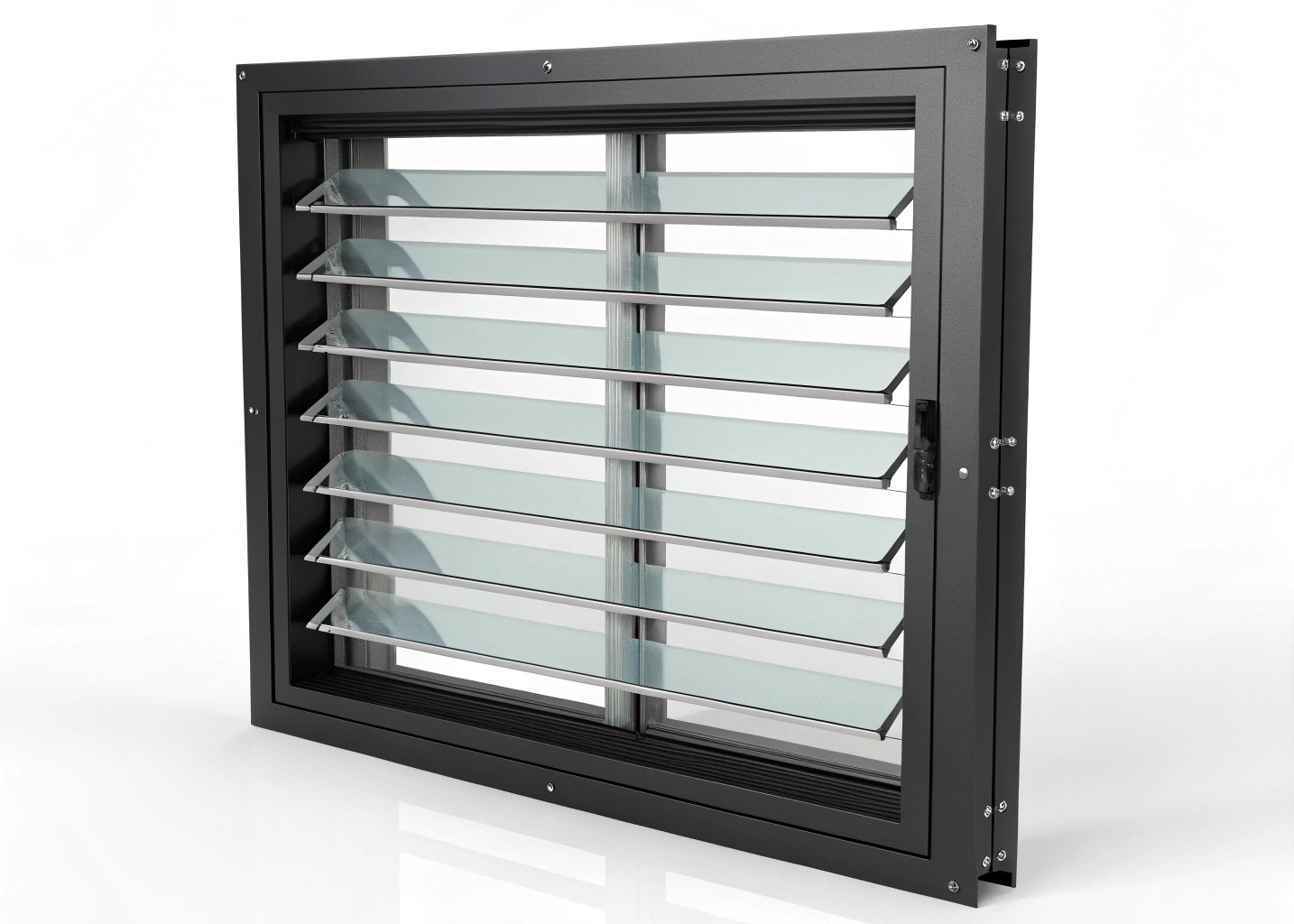
Large projects often fail on small details: wrong sizing, weak sealing, slow delivery, or hardware that performs well in samples but creates complaints after installation.
Custom casement windows for large-scale projects work best when engineering, sizing, sealing, hardware, thermal design, and delivery planning are controlled as one complete system from factory to site.
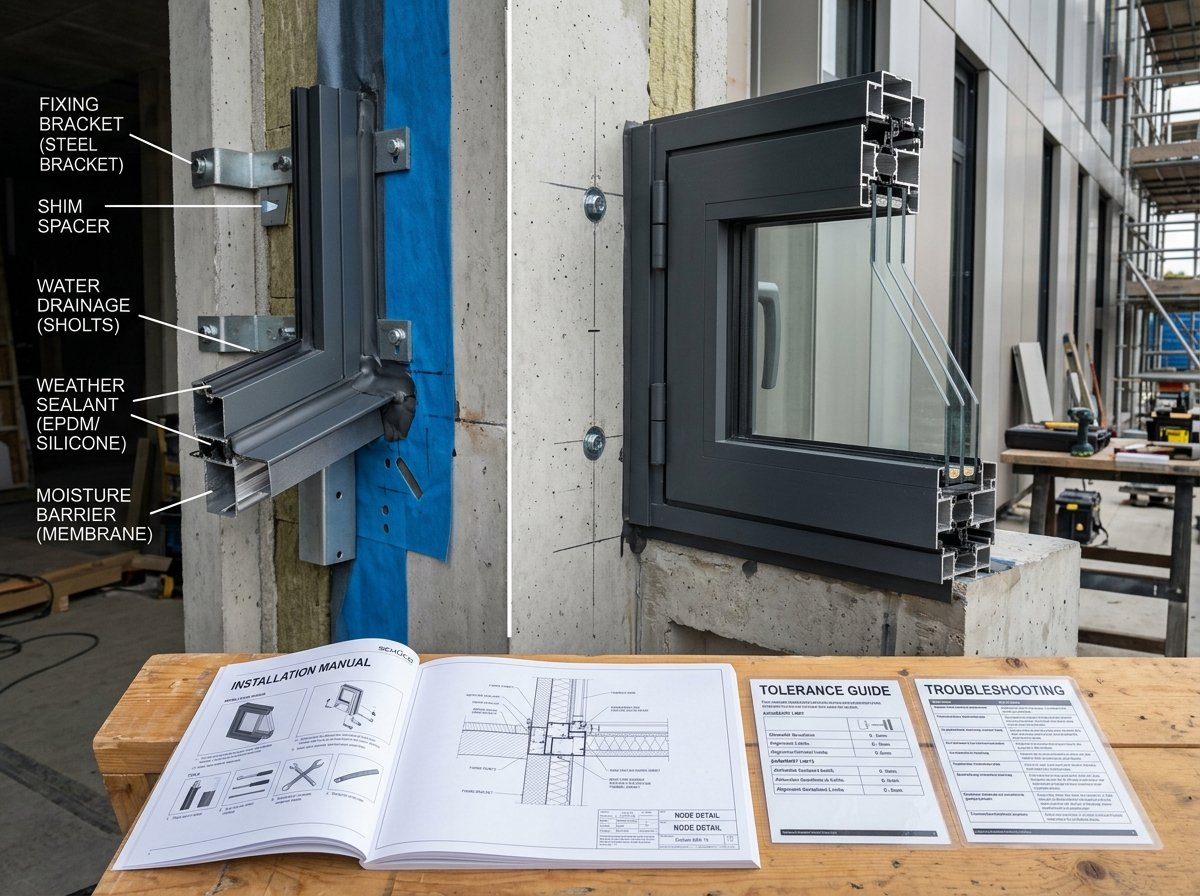
For large commercial, residential, education, and mixed-use developments, custom casement windows are often chosen for better sealing, cleaner lines, and more controlled operation than many sliding systems. Even so, project risk does not disappear with the window type. It simply changes shape. On large orders, recurring problems usually come from weak specification control, poor frame-to-sash tolerance, hardware mismatch, condensation risk, packaging damage, and batch delivery mistakes.
That is why project buyers usually look beyond a standard product catalog. The better choice is a real factory with in-house design, R&D, and sales teams that can manage custom engineering, stable production, and project coordination together. Manufacturers with OEM and ODM experience for established brands also tend to understand documentation, repeat quality, and system consistency more clearly across large-volume supply.
Why Are Custom Casement Windows Widely Used in Large-Scale Projects?
One-size-fits-all windows rarely match the real needs of large projects. Different buildings, climates, façade systems, and compliance targets usually require tailored solutions.
Custom casement windows are widely used in large-scale projects because they offer stronger sealing, more flexible specification options, and better adaptation to project-specific structural, thermal, acoustic, and aesthetic needs.
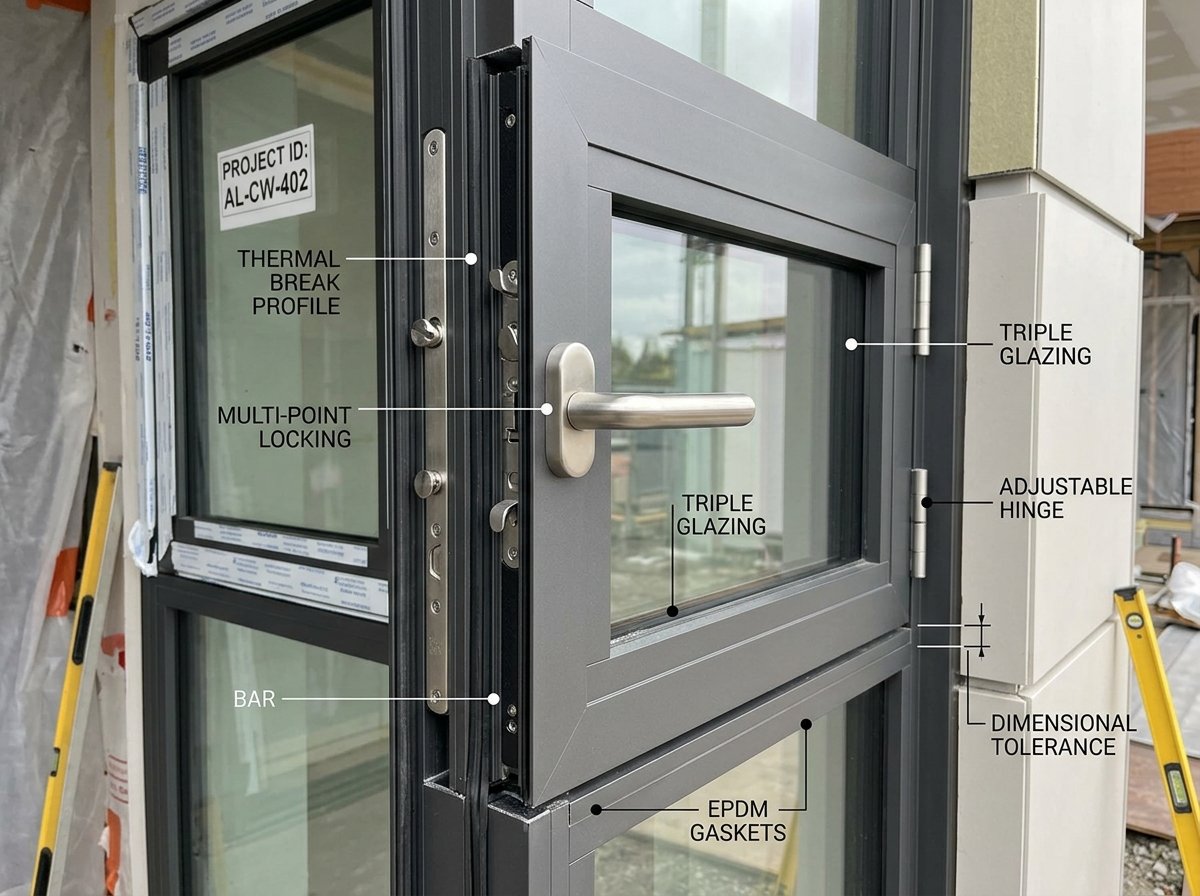
Casement windows are often preferred when better air tightness and water tightness are needed. Since the sash closes against the frame with compression seals, the system can usually perform better than standard sliding designs in draft control, rain resistance, and noise reduction. That advantage matters in apartment towers, schools, hotels, villas, and commercial projects where occupant comfort directly affects satisfaction.
At the same time, customization is not only about shape or color. In project work, customization usually includes frame depth, opening size, glass configuration, thermal break option, hardware load capacity, insect screen arrangement, surface finish, drainage detail, and installation logic. These choices affect not just appearance, but also long-term reliability.
Why project teams prefer custom casement systems
| Project need | Why casement customization helps |
|---|---|
| Better air sealing | Compression closure improves tightness |
| Stronger water resistance | Better perimeter sealing and drainage design |
| Thermal performance targets | Easier to combine with thermal break systems |
| Acoustic control | Tighter closure improves sound resistance |
| Façade coordination | Sizes, sections, and finishes can match elevation design |
| Local compliance | Glass, opening restrictors, and hardware can be adapted |
This is why the best project results usually come from system-level customization, not from selecting a standard window and trying to force it into a complex building requirement later.
How to Customize Casement Windows for Large-Scale Commercial Projects?
Large projects do not need random customization. They need controlled customization with clear technical logic.
Customizing casement windows for large-scale commercial projects means defining the full system around façade conditions, opening size, performance targets, hardware demands, thermal needs, and installation method before production begins.
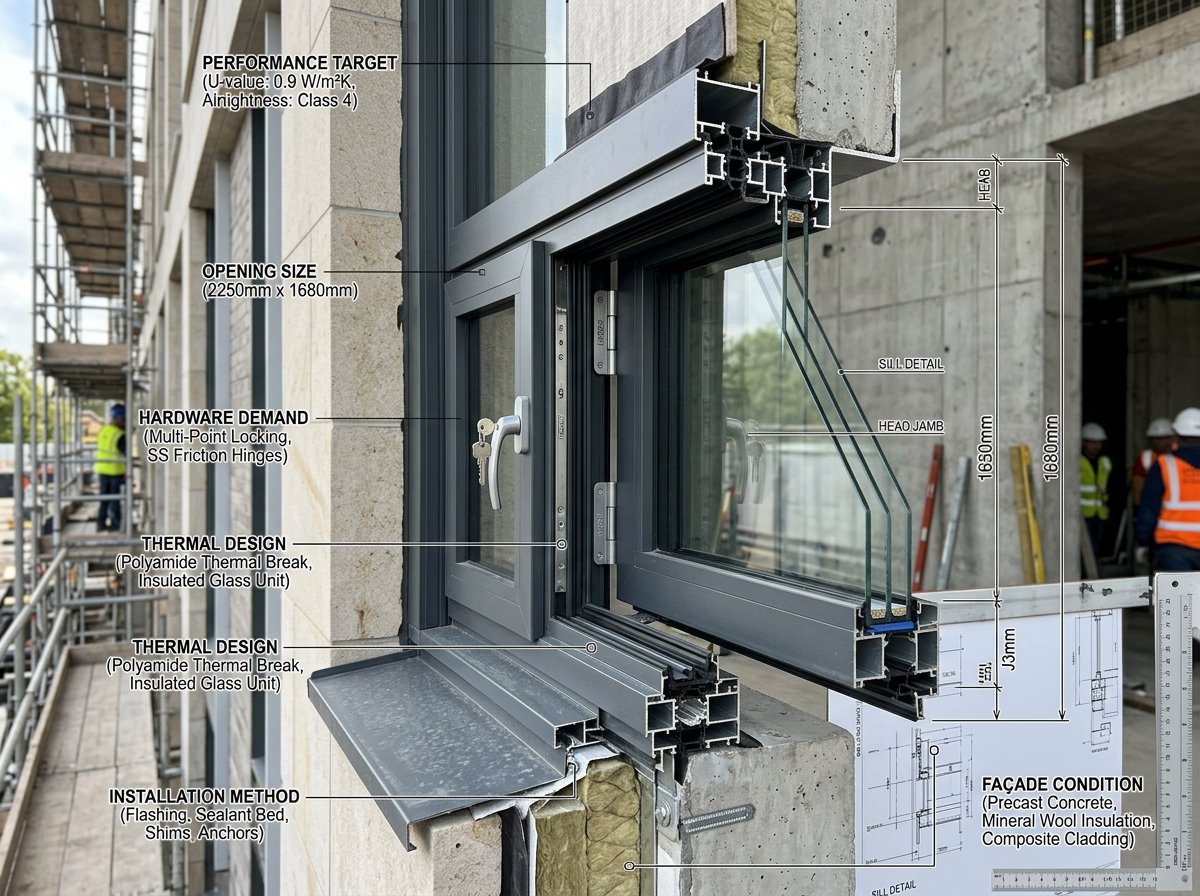
The first step is to treat the window as part of the building envelope, not as an isolated product. A commercial project may need specific frame depths to match wall build-up, stronger hardware for large sash sizes, thermal break sections for colder climates, and glazing combinations that balance sound control with energy performance. If these decisions are made too late, the project usually pays through redesign, delay, or site modification.
Customization should begin with approved drawings and a clear window schedule. That includes dimensions, handing, glazing, finish, hardware, opening limits, drainage direction, and interface details. It should also include a review of common failure points. Public complaints across the market repeat the same patterns: wrong size, difficult closing, lock misalignment, water leakage, condensation at cold frame zones, and damaged goods arriving on site. These are exactly the risks that should be designed out early.
What should be locked before custom production
Frame and sash dimensions
All critical sizes should be checked against structure, cladding, and installation clearance. Large projects suffer badly when dimensions are wrong even on a small percentage of units.
Opening style and hardware
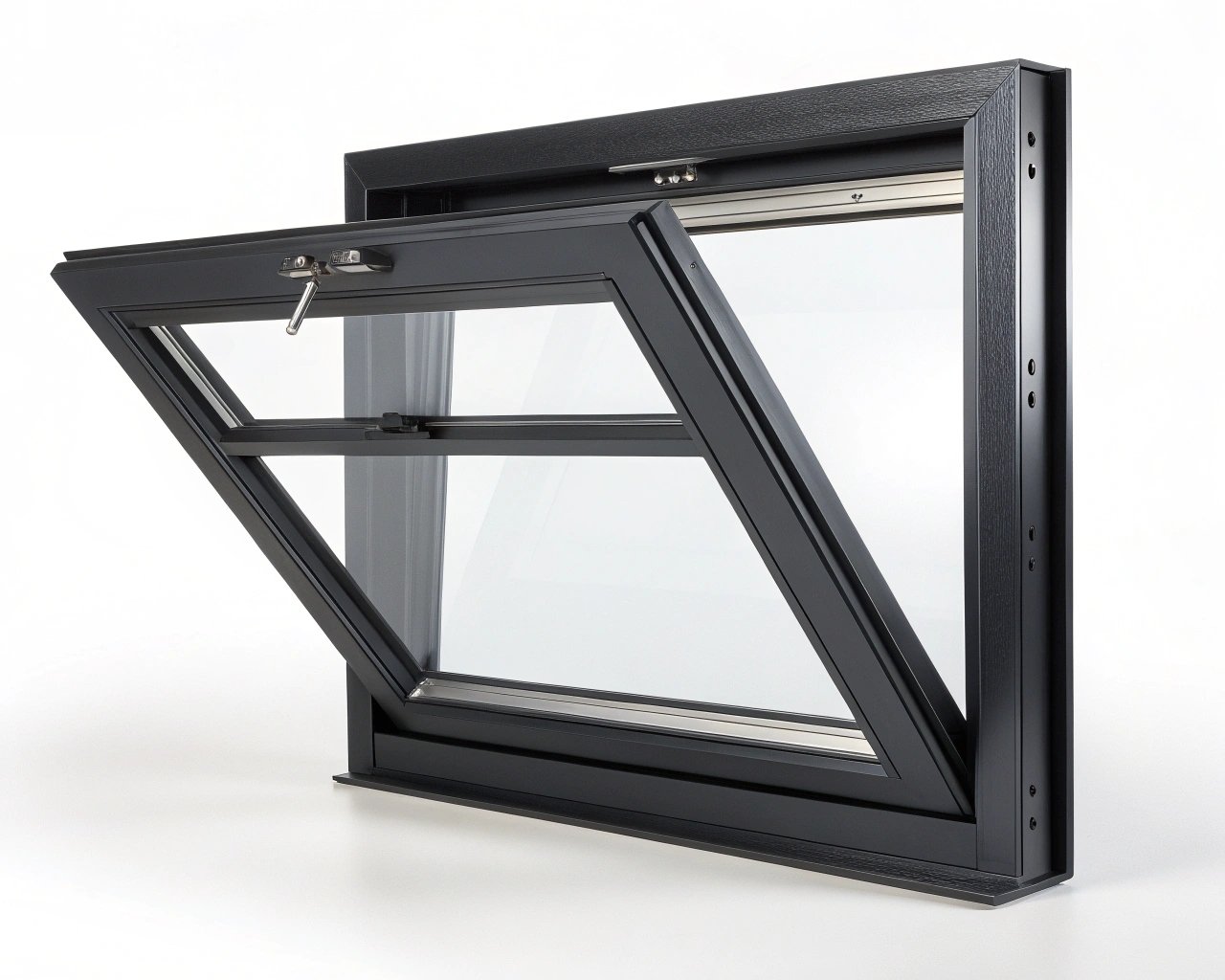
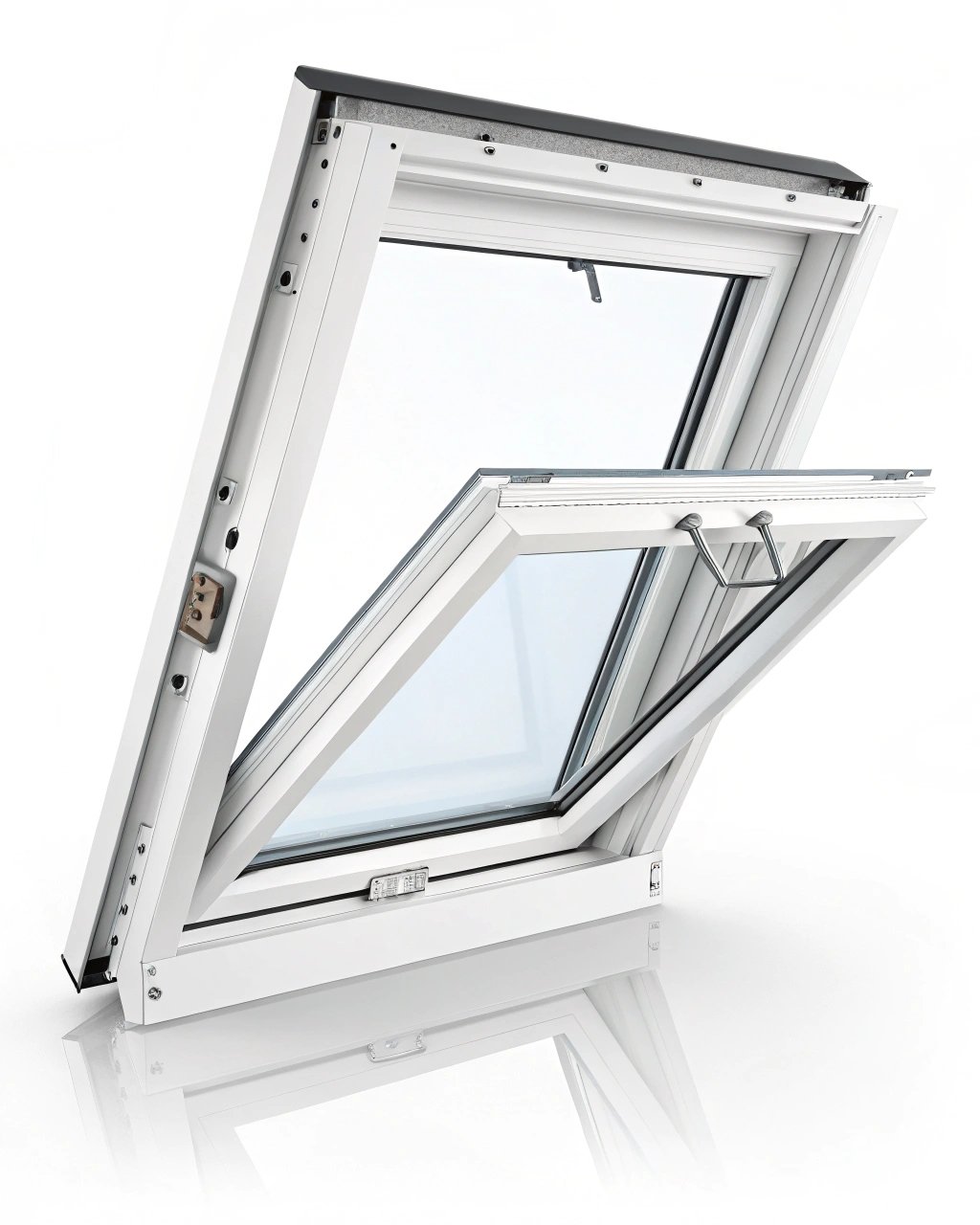
Top-hung, side-hung, friction stay, hinge type, restrictor, and lock point arrangement should be confirmed based on actual use and sash weight.
Glass and thermal design
Glass type should be chosen based on energy, acoustic, safety, and climate needs. Frame thermal behavior should be reviewed at the same time.
Finish and appearance
Color, coating grade, texture, and protective film should be defined early, especially for dark finishes and exposed environments.
Real factory support matters here. A manufacturer with in-house engineering can turn project drawings into production-ready systems faster and more accurately than a supplier that only passes requests between different parties.
What Key Engineering Considerations Matter Most in Project-Based Casement Window Customization?
A casement window can look simple from outside. The engineering behind a large project system is not simple at all.
The key engineering considerations are sash weight, hinge capacity, frame rigidity, thermal break design, drainage path, seal compression, glass support, and tolerance control across repeated production.
Large-scale customization is where weak engineering becomes expensive. If the sash is too heavy for the friction stay or hinge, the unit may sag after installation. If frame and sash tolerances drift, locking becomes difficult and compression sealing becomes uneven. If thermal design is weak, cold bridging and interior condensation can appear, especially near frame edges and sill zones. If drainage logic is unclear, water may collect and return toward the interior.
These risks are not theoretical. Market complaints around aluminum window systems repeatedly show cold frames, severe condensation, poor locking alignment, water entering through joints, and hardware that fails too early. For project teams, these complaints translate into engineering checkpoints.
Core engineering checkpoints
| Engineering area | Why it matters in custom projects |
|---|---|
| Sash weight vs hardware capacity | Prevents sagging and difficult closing |
| Frame section strength | Supports large openings and long-term stability |
| Seal compression | Controls air leakage, water resistance, and noise |
| Thermal break design | Reduces condensation and improves comfort |
| Glass support and setting blocks | Protects glass integrity and sash alignment |
| Drainage and venting path | Prevents water retention and internal leakage |
| Machining precision | Keeps lock points, hinges, and handles aligned |
A reliable manufacturer should be able to explain these points clearly, provide section drawings, and recommend system limits honestly. This is often where factories with real OEM and ODM development experience stand out. They are usually more familiar with balancing design targets against production reality.
How Do Performance Requirements Change the Design of Custom Casement Windows?
Project customization is not only about fitting the opening. It is also about meeting the right performance level for the building use and climate.
Performance requirements change custom casement window design by affecting profile selection, glazing build-up, sealing system, hardware grade, drainage detail, and installation interface.
A residential project in a mild climate may focus on basic comfort, visual quality, and easy operation. A coastal hotel may need stronger corrosion resistance and tighter weather sealing. A school near a busy road may need better acoustic control. A colder region may require stronger thermal break design and warmer frame surface performance to reduce condensation risk.
These changes influence the whole window system. Condensation complaints in public forums often come from weak thermal break design, exposed interior aluminum, or poor glass edge insulation. Draft complaints usually point to low gasket compression, poor corner sealing, or weak hardware pressure. Water leakage often comes from bad sill drainage, incorrect sealing paths, or weak perimeter detailing. These are not separate issues. They are signs that the system was not designed around actual project conditions.
Main project performance areas to confirm
Thermal performance
Thermal break structure, glass specification, and edge insulation should be reviewed together, especially where winter condensation risk is high.
Air and water tightness
The sash-to-frame seal, corner connection, and drainage path should be designed to resist drafts, whistling, and rain entry.
Acoustic performance
Where noise matters, the window should be reviewed as a full system with frame sealing and glazing composition considered together.
Durability
Hardware, finish, gaskets, and moving parts should match the expected use level and climate exposure.
Factories with internal design and testing thinking are usually better at this stage because they can recommend a system based on use condition instead of only offering a generic quotation.
What Project Risks Often Appear When Custom Casement Windows Are Poorly Managed?
Most large-project losses do not begin with dramatic failure. They begin with avoidable mistakes that repeat across many units.
The most common risks are wrong sizing, missing accessories, hardware mismatch, leakage, condensation, damaged packaging, delayed delivery, and weak response when site problems appear.
Large-scale projects magnify every weakness. One wrong sash detail becomes fifty installation delays. One unclear hardware schedule becomes an entire floor of windows that cannot be closed properly. One weak packing method can turn long-distance delivery into a surface-damage problem before the products even reach site.
Public complaint patterns across the aluminum window and door market show how often these issues repeat. Wrong dimensions, late deliveries, missing parts, scratched frames, blown glass units, poor sealing, and slow after-sales handling all appear again and again. These patterns are especially important for custom project orders because custom products cannot be replaced as quickly as stock items.
Common project risks and factory countermeasures
| Risk | Typical cause | Better factory action |
|---|---|---|
| Wrong dimensions | Weak drawing review or poor final check | Drawing-work order-finished product triple verification |
| Hard closing or lock issues | Tolerance drift or hardware mismatch | Pre-shipment functional checks and hardware matching |
| Leakage at frame or sill | Weak drainage or unclear installation logic | Improved drainage design and standard detail drawings |
| Condensation complaints | Weak thermal system | Better thermal break and glass edge specification |
| Surface damage on arrival | Weak export protection | Corner guards, film, glass protection, reinforced packing |
| Missing parts | Weak packaging control | Itemized packing list and accessory verification |
| Slow replacement | No clear project support process | Spare-part planning and project-based after-sales workflow |
This is one reason contractors, developers, and distributors often prefer to work with real factories instead of companies that only source from different workshops. Responsibility is clearer, and problem-solving is usually faster.
Why Do Lead Time, MOQ, and Delivery Planning Matter So Much for Custom Casement Windows?
A strong design means little if the project stalls because the windows arrive late, incomplete, or in the wrong sequence.
Lead time, MOQ, and delivery planning matter because custom casement windows affect site labor, façade closure, interior progress, and handover scheduling across the entire project.
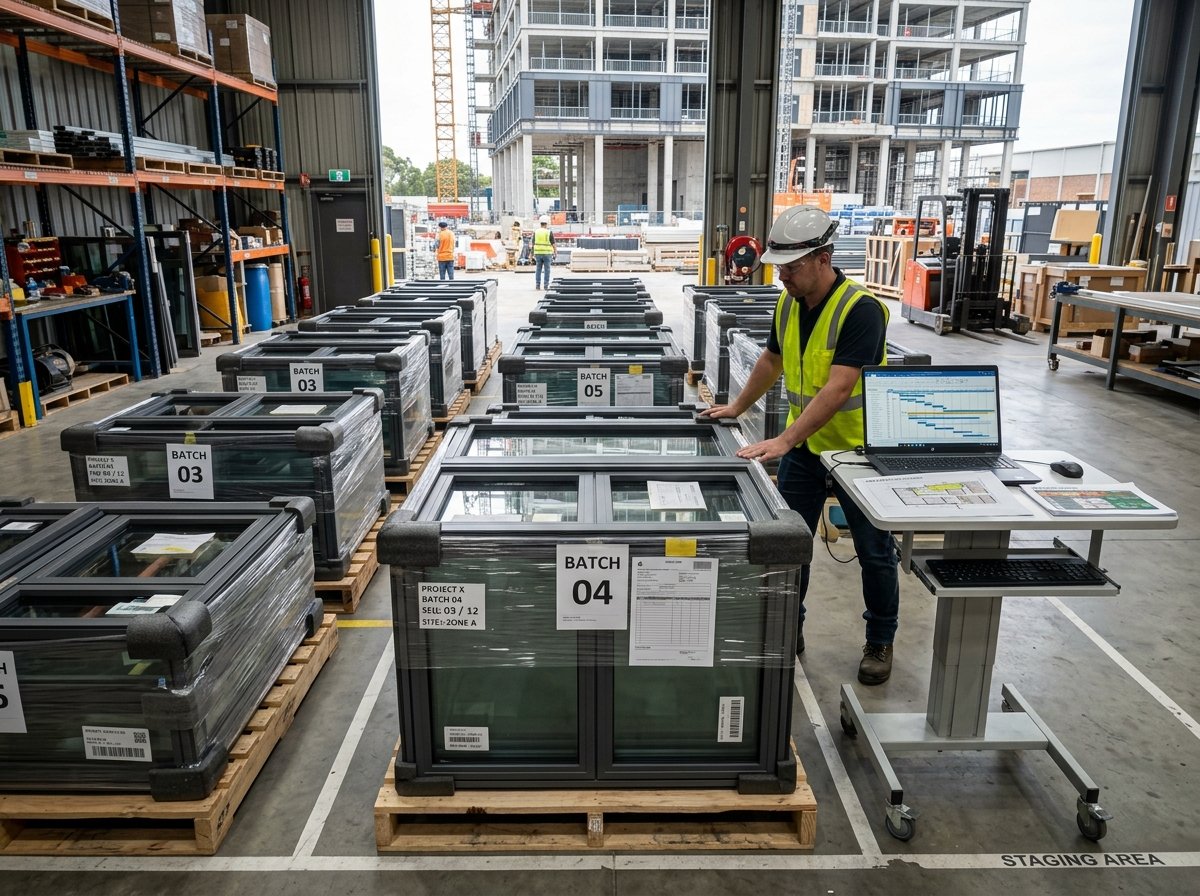
Custom windows require more planning than standard items. Profiles may need special machining. Hardware may need project-specific matching. Glass combinations may depend on final approval timing. Color and finish may extend production planning. All of this means buyers should review real lead times, not only attractive sales promises.
MOQ also matters. Some suppliers are comfortable with mixed project schedules and phased production. Others only want large repeated runs of one specification. In large-scale building work, that difference can affect whether different unit types are managed well or become a source of confusion and delay.
Delivery planning points that should be confirmed early
Production lead time by stage
Design confirmation, profile preparation, assembly, glazing, inspection, and packing should be understood as separate stages.
MOQ flexibility
Mixed building types, phased release, and revised quantities should be reviewed before order confirmation.
Batch delivery sequence
Products should be packed and labeled according to building zone, floor, or installation schedule where needed.
Reserve quantity and replacements
A project should not wait weeks because one damaged sash or one wrong accessory has no replacement plan.
Buyers who ignore these points often face the same complaints seen in public reviews: late deliveries, wrong items, repeated cancellations, and incomplete orders that delay installation teams.
Lead Time, MOQ, and Delivery Planning for Custom Casement Windows?
Custom window projects move more smoothly when logistics planning is treated as part of project engineering, not as an afterthought after production.
The best delivery planning for custom casement windows combines realistic lead times, manageable MOQs, phased shipment control, protective packaging, and a clear process for shortages, damage, and urgent replacements.
For large-scale projects, delivery planning usually needs to match construction progress. Some towers require floor-by-floor release. Some residential developments need unit-type grouping. Some overseas jobs need container planning that protects both sequence and finish quality. Without that structure, site handling becomes slow and error-prone.
Packaging quality is especially important. Public complaints often mention scratched dark frames, damaged glass, missing accessories, and goods that arrive in poor condition even before installation starts. A reliable manufacturer should treat packaging as part of the product, not as a low-priority final step.
What a better delivery plan should include
| Delivery element | Why it matters |
|---|---|
| Realistic production schedule | Prevents false promises and site disruption |
| Batch-based shipment plan | Matches installation sequence |
| Clear labels and packing identity | Reduces sorting mistakes on site |
| Reinforced export protection | Reduces scratches, deformation, and glass damage |
| Spare hardware and reserve units | Helps solve site incidents quickly |
| Claims and shortage process | Keeps the project moving after delivery issues |
Factories with mature export experience and brand-partner OEM or ODM background are often stronger in this area because they are used to stricter documentation, packing control, and consistency requirements.
How Should Buyers Compare Custom Casement Window Manufacturers for Large Projects?
The final decision should not be based on sample appearance or price alone. The safer choice is the manufacturer that controls the full project chain.
Buyers should compare custom casement window manufacturers by reviewing engineering capability, factory consistency, performance understanding, delivery discipline, and after-sales response together.
A practical comparison should cover five main areas:
| Comparison area | What should be checked |
|---|---|
| Factory status | Real factory, not only a trading office |
| In-house capability | Design, R&D, production, and sales coordination |
| Product control | Sizing, sealing, hardware, finish, and thermal logic |
| Project execution | Drawings, packing, labeling, lead time, phased delivery |
| Support system | Replacement, spare parts, technical guidance, after-sales speed |
Manufacturers that serve large projects well usually show the same pattern. They answer technical questions clearly. They review drawings carefully. They warn about risk early. They control repeated production well. They protect goods properly. They keep project communication organized after payment, not only before it.
Conclusion
Custom casement windows succeed in large-scale projects when engineering, production, and delivery are managed as one system. For reliable project supply, send drawings, quantity schedules, and performance requirements to begin a detailed factory review and quotation.