Choosing the correct bifold door size is essential for smooth operation, proper alignment, and a clean professional installation. Even small measurement errors can lead to uneven gaps, poor sliding performance, or installation issues that affect long-term durability.
This guide simplifies the process with a complete bifold door size chart, a step-by-step measuring method, and practical installation tips to help you select the perfect fit for your space with confidence.
What Sizes Do Bifold Doors Come In? The Ultimate Sizing Chart
“Nominal size” is the call‑out (e.g., 24″ × 80″), but the actual panels and the opening you need are different. Use the chart below; always verify with your manufacturer’s spec.
Actual Door Size refers to standard interior bifold door panel dimensions designed for typical top-track closet systems.
Finished Opening indicates the final drywall-to-drywall or jamb-to-jamb measurement after all wall finishes and trim installation are completed.
Rough Opening refers to the structural stud-to-stud framing dimension before drywall, trim, or finishing materials are installed.
Typical Bifold Door Rough Opening Formulas
Proper rough opening sizing is essential for smooth bifold door operation, accurate panel alignment, and long-term durability. The following formulas reflect common residential interior bifold door installation standards used throughout North America.
Single Bifold Door Systems
- Rough Opening Width:
Door Width + approximately 9/16″ to 2″ depending on track system and manufacturer specifications. - Rough Opening Height:
Door Height + approximately 2⅞″.
Double Bifold Door Systems
- Rough Opening Width:
(2 × Door Panel Width) + approximately 15/16″. - Rough Opening Height:
Door Height + approximately 2⅞″.
Actual clearance requirements may vary slightly depending on hardware systems, floor finishes, and manufacturer tolerances.
Standard 80″ Bifold Door Sizes
| Nominal Door Size | Panels | Actual Door Size (Approx.) | Finished Opening | Recommended Rough Opening |
|---|---|---|---|---|
| 24″ × 80″ | 2 | 23½″ × 79″ | 24″ × 80¾″ | 26″ × 82½″ |
| 28″ × 80″ | 2 | 27½″ × 79″ | 28″ × 80¾″ | 30″ × 82½″ |
| 30″ × 80″ | 2 | 29½″ × 79″ | 30″ × 80¾″ | 32″ × 82½″ |
| 32″ × 80″ | 2 | 31½″ × 79″ | 32″ × 80¾″ | 34″ × 82½″ |
| 36″ × 80″ | 2 | 35½″ × 79″ | 36″ × 80¾″ | 38″ × 82½″ |
| 48″ × 80″ | 4 | 47½″ × 79″ | 48″ × 80¾″ | 50″ × 82½″ |
| 60″ × 80″ | 4 | 59½″ × 79″ | 60″ × 80¾″ | 62″ × 82½″ |
| 72″ × 80″ | 4 | 71½″ × 79″ | 72″ × 80¾″ | 74″ × 82½″ |
Tall 96″ Bifold Door Sizes
| Nominal Door Size | Panels | Actual Door Size (Approx.) | Finished Opening | Recommended Rough Opening |
|---|---|---|---|---|
| 24″ × 96″ | 2 | 23½″ × 95″ | 24″ × 96¾″ | 26″ × 98½″ |
| 30″ × 96″ | 2 | 29½″ × 95″ | 30″ × 96¾″ | 32″ × 98½″ |
| 36″ × 96″ | 2 | 35½″ × 95″ | 36″ × 96¾″ | 38″ × 98½″ |
| 60″ × 96″ | 4 | 59½″ × 95″ | 60″ × 96¾″ | 62″ × 98½″ |
| 72″ × 96″ | 4 | 71½″ × 95″ | 72″ × 96¾″ | 74″ × 98½″ |
Important Installation Notes
- Manufacturer sizing tolerances may vary by approximately ±1/8″ to ±1/4″ depending on the door system and hardware design.
- Always verify final dimensions using the manufacturer’s technical specification sheet before framing or ordering.
- Older homes may have smaller finished openings, commonly ranging between 78¾″ and 79″ in height.
- When measuring existing openings, always use the smallest measured dimension to avoid installation issues or clearance problems.
- Floor finishes, carpet thickness, and uneven framing conditions should also be considered during final sizing calculations.

How to Measure for a Bifold Door: A Simple 3-Step Guide
Accurate measurements are critical for proper bifold door installation. Even small sizing errors can affect panel alignment, track performance, and overall operation. For the best fit, always measure the finished opening rather than relying on old door sizes.
Step 1: Measure the Opening Width
Measure the width of the opening at three locations:
- Top
- Middle
- Bottom
Record all measurements and use the smallest width as your final dimension.
If the variation between measurements exceeds approximately 1/4 inch, minor framing adjustments, drywall correction, or jamb shimming may be required to ensure proper alignment.
Step 2: Measure the Opening Height
Measure the height at three points:
- Left side
- Center
- Right side
Again, use the smallest measurement as the final opening height.
If flooring has not yet been installed, remember to account for the final floor thickness when calculating the finished opening height.
Step 3: Check Wall Depth & Clearance
Most standard interior bifold doors use 1⅜-inch thick panels and require sufficient clearance for tracks, pivots, and folded panel movement.
A minimum jamb depth of approximately 2″–2½″ is generally recommended for standard residential bifold hardware systems. Always confirm the required clearance specifications provided by the hardware manufacturer before installation.
Pro Tip: Measure every opening individually — even in the same home. Older walls and framing conditions are rarely perfectly square.

How to Fix Common Bifold Door Measuring Problems
Even small framing inconsistencies can affect bifold door alignment and smooth operation. The key is to work from the smallest measured dimension and make adjustments using shims, jamb corrections, and trim during installation.
Opening Is Not Square
If the diagonal measurements do not match, the opening is out of square.
In most cases, installers can correct minor irregularities by carefully adjusting the pivot-side jamb to ensure it is perfectly plumb while keeping the top track level. Standard bifold systems can usually tolerate slight framing inconsistencies when the hardware is properly aligned.
Uneven Widths or Heights
If the opening measurements vary across different points, always size the bifold door according to the smallest measurement.
Minor gaps can typically be corrected or concealed using shims, casing trim, or jamb adjustments. Avoid forcing oversized doors into tight openings, as this often leads to binding, track pressure, and poor long-term performance.
Non-Standard Openings
For older homes or unusual framing dimensions, the most cost-effective solution is often resizing the opening to match a standard bifold door size.
Where reframing is not practical, custom-sized bifold doors may be required. Some wood bifold doors allow limited trimming for minor adjustments, but always verify the manufacturer’s approved trim allowance before cutting.
Flooring Not Yet Installed
If final flooring materials have not been installed, remember to account for the finished floor thickness when measuring the opening height.
In many cases, installers either deduct the flooring thickness from the measurement or delay final sizing until flooring installation is complete to avoid clearance issues later.
Interior vs. Exterior Bifold Doors: Understanding the Difference
Not all bifold doors are designed the same. Interior and exterior bifold systems differ significantly in construction, hardware requirements, insulation performance, and installation complexity.
Interior Bifold Doors
Interior bifold doors are commonly used for closets, pantries, laundry rooms, and compact interior spaces. These systems are typically lightweight, easy to install, and designed for standard residential applications.
Most interior bifold doors feature:
- Standard 1⅜-inch thick panels
- Lightweight wood or composite construction
- Simple top-track hardware systems
- Minimal framing requirements
- Straightforward DIY-friendly installation
They are ideal for maximizing usable floor space while maintaining easy access within smaller interior areas.
Exterior Bifold Door Systems
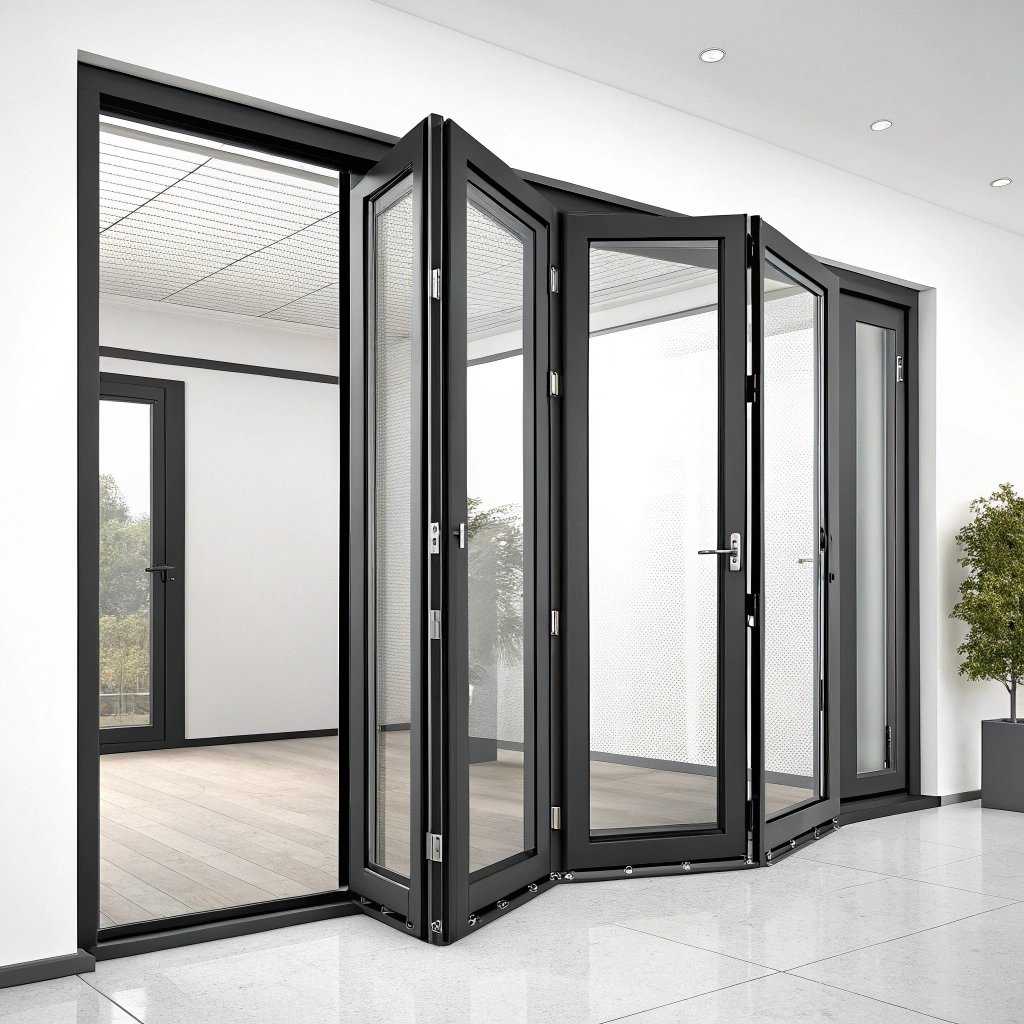
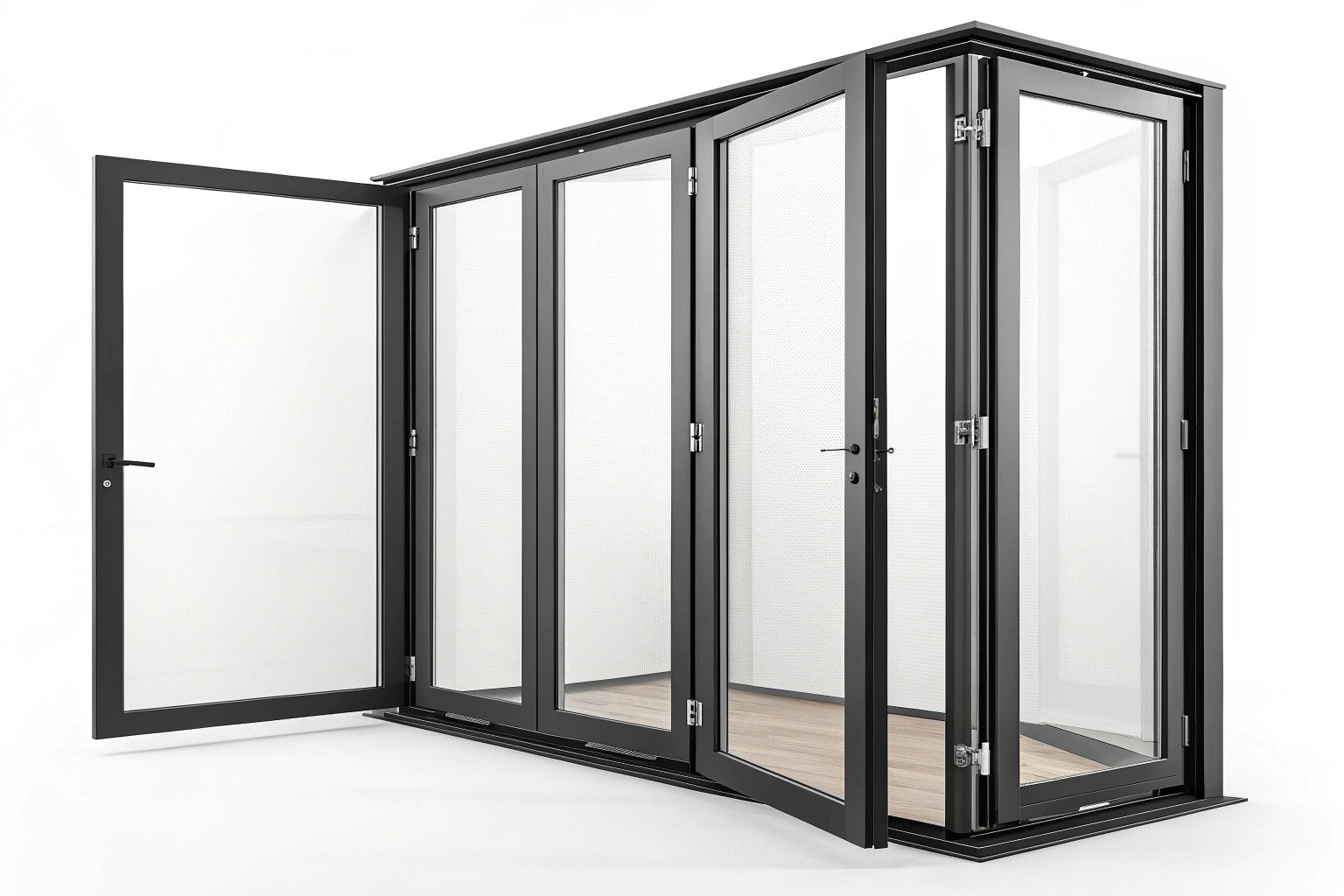
Exterior bifold doors are a completely different category of product engineered for structural performance, weather protection, and large opening systems.
These premium patio and folding glass wall systems typically include:
- Heavy-duty insulated panels
- Advanced weather sealing systems
- Multi-point locking hardware
- Reinforced frames and threshold systems
- Structural support requirements
- Professional installation
Because exterior bifold systems are significantly heavier and more complex, they are usually custom-manufactured and professionally installed according to exact engineering specifications.
Always verify manufacturer requirements for rough openings, floor support, and load-bearing conditions before installation.
Conclusion: Measure Carefully Before Ordering
The key to a smooth, properly functioning bifold door system is accurate measuring. Always measure width and height in multiple locations and use the smallest measurement when selecting your final door size.
Proper planning for rough openings, flooring thickness, hardware clearance, and wall alignment will help ensure smooth operation, clean installation, and long-term durability.
Looking for high-quality bifold door solutions?
Explore Zumwin Bifold Door Systems
Need help confirming your opening size or selecting a custom configuration?
Contact Our Technical Team