Installing a new front door is one of the most impactful upgrades you can make to a home — improving curb appeal, energy efficiency, security, and overall property value at the same time. However, front door pricing can vary dramatically depending on material selection, glass configuration, frame construction, customization level, and installation complexity.
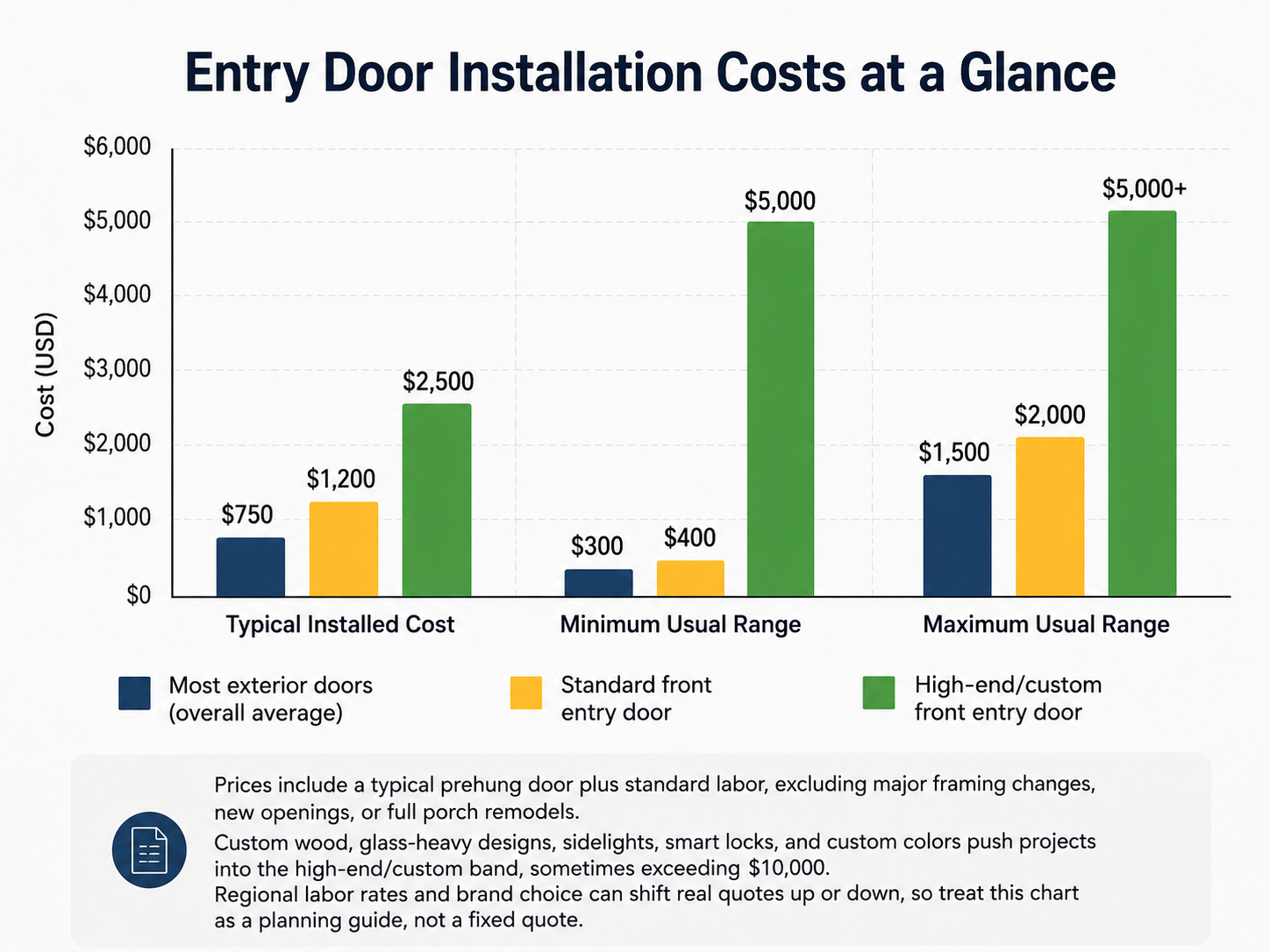
In 2026, professionally installed front entry doors typically range from around $1,500 for a standard replacement to $10,000+ for large custom wood or luxury architectural entry systems. While many online estimates provide broad pricing ranges, they often fail to explain what actually drives those costs.
As a professional door manufacturer, we work directly with the full production process — from material sourcing and frame engineering to glazing, finishing, hardware integration, and custom fabrication. This guide breaks down where your investment really goes, helping homeowners, builders, and designers better understand the true cost differences between standard entry doors, fiberglass systems, steel doors, and fully custom wood entrances.
Whether you are a custom home builder designing a luxury grand entrance or a homeowner upgrading from a basic steel door to a premium wood entry system, understanding the full scope of front door costs helps you plan your project more accurately and avoid unexpected expenses.
Need pricing guidance beyond entry doors?
Explore our complete Door Installation Cost Guide covering interior doors, patio doors, garage doors, and full-home replacement projects.
How Front Door Costs Compare to Other Door Types
Before focusing specifically on front entry doors, it helps to understand how they compare within the broader door market. Front doors typically cost more because they must deliver far more than simple access — they are responsible for security, weather protection, energy efficiency, and the overall architectural first impression of the home.
Typical Installed Door Costs by Type
| Door Type | Typical Installed Cost |
|---|---|
| Interior Hinged Doors | $200 – $900+ |
| Sliding Patio Doors | $650 – $4,500+ |
| Garage Doors | $1,000 – $6,500+ |
| Standard Front Entry Doors | $500 – $3,000+ |
| Custom Wood Front Doors | $3,000 – $15,000+ |
Unlike interior doors, front entry systems must withstand exterior weather exposure while providing structural strength, insulation, and long-term durability. In many homes, the front door also serves as a major architectural focal point, which significantly increases both material and installation requirements.
Understanding Front Door Costs: More Than Just the Door Panel
A modern front entry system is not simply a decorative slab — it is a complete engineered assembly designed for security, insulation, and weather resistance.
A properly built entry system must:
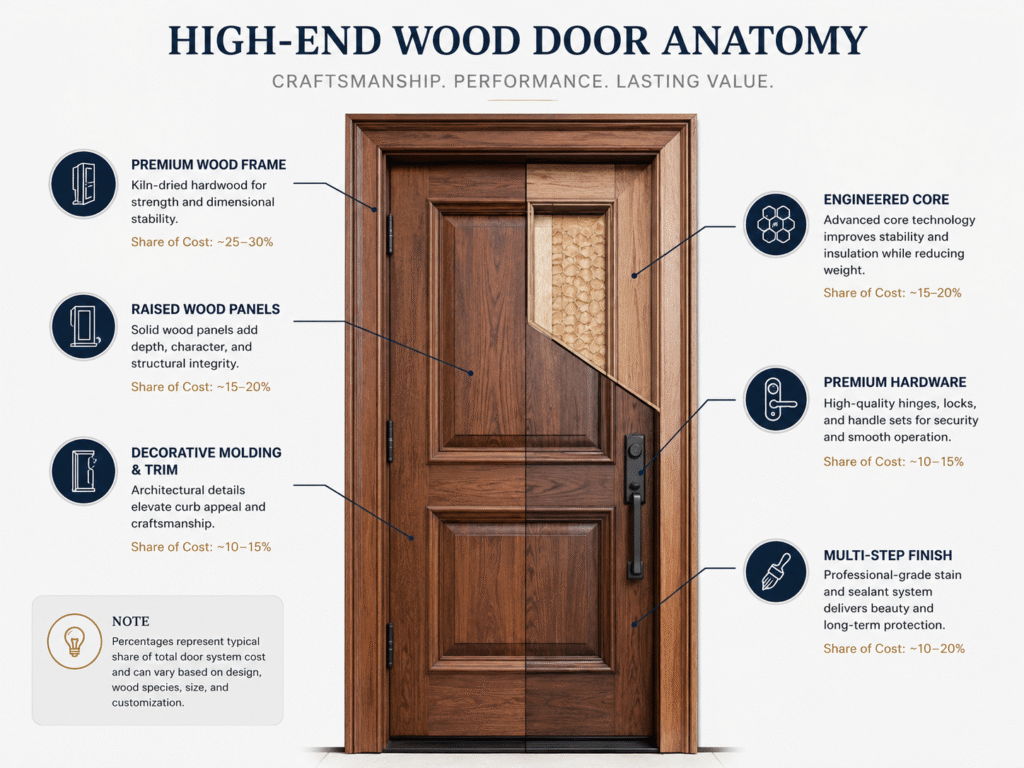
- Prevent water intrusion
- Reduce air leakage and outside noise
- Provide structural security
- Integrate cleanly with exterior siding and interior trim
- Maintain long-term energy efficiency
What Is Included in a Front Door System?
A complete exterior entry system typically includes:
- Door slab (wood, fiberglass, steel, aluminum, or composite)
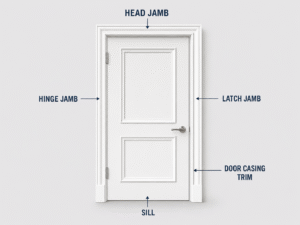
- Door frame and jamb system
- Threshold and sill assembly
- Hinges and locking hardware
- Weatherstripping and sealing systems
- Exterior casing or brickmould
- Optional sidelights and transom glass units
Because all components work together as a single system, front door pricing involves much more than the door panel alone.
Pre-Hung vs. Slab-Only Doors
For most exterior applications, pre-hung front doors provide better long-term performance and often lower total installation costs.
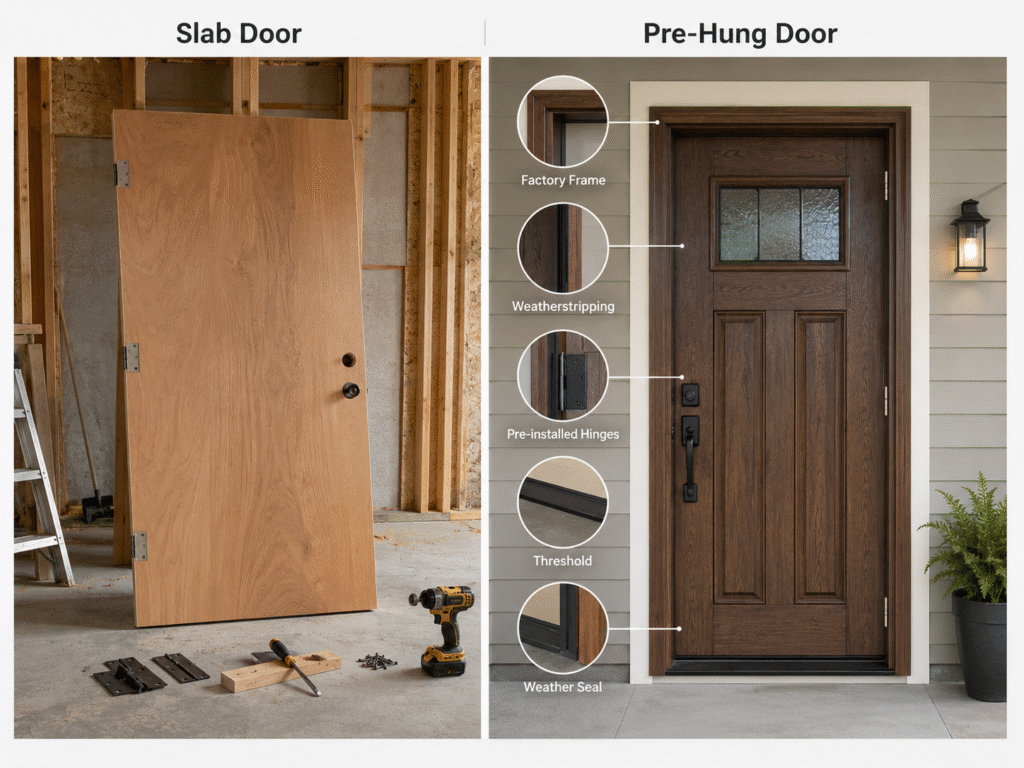
Slab-Only Doors
A slab-only door includes only the door panel itself without the frame, threshold, hinges, or weather sealing components.
Best For
- Historic restorations
- Existing frames in excellent condition
- Specialized custom projects
Considerations
- More complex installation
- Higher labor requirements
- Increased risk of air and water leakage
- On-site hinge and hardware alignment required
Pre-Hung Front Doors
A pre-hung system includes the door already mounted within a factory-built frame complete with hinges, threshold, and weatherstripping.
Advantages
- Faster installation
- Better factory alignment
- Improved weather sealing
- Reduced installation errors
- Better long-term energy performance
Considerations
- Higher initial material pricing
- Larger shipping dimensions
However, once labor costs are considered, pre-hung systems are often the more cost-effective solution for modern front door installations.
Builder & Contractor Insight
In new construction and multi-unit projects, pre-hung entry systems can reduce on-site installation labor by approximately 30–50% while improving installation consistency and reducing future service callbacks.
Cost Factor #1: Material Breakdown
Material selection is one of the biggest factors influencing both front door pricing and long-term performance. Beyond appearance alone, different materials affect durability, insulation, maintenance requirements, security, and overall architectural value.
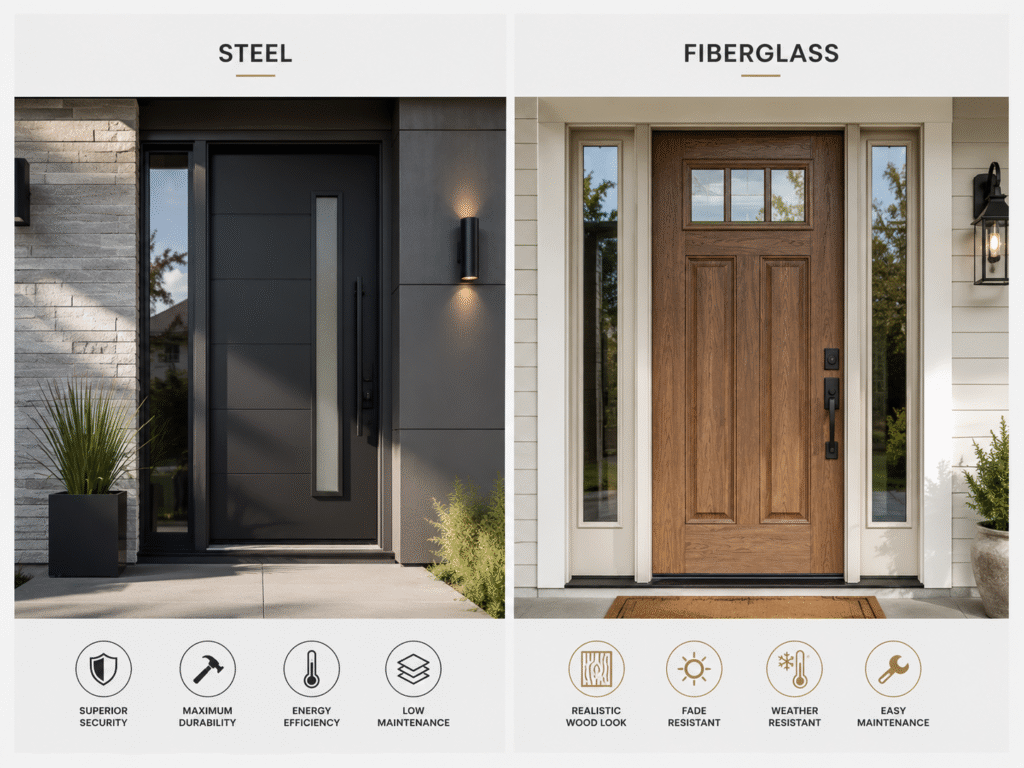
Steel & Fiberglass: The Industry Benchmark
Steel and fiberglass entry systems are commonly used as baseline pricing references because they offer strong performance at relatively accessible price points.
Steel Front Doors
Typical Cost
- Door only: $100 – $2,200
- Installed system: $300 – $2,700
Advantages
- Strong security performance
- Budget-friendly pricing
- Durable exterior construction
Considerations
- Can dent under heavy impact
- Less natural warmth and texture compared to real wood
Fiberglass Front Doors
Typical Cost
- Door only: $200 – $2,300
- Installed system: $400 – $2,800
Advantages
- Excellent thermal insulation
- Low maintenance
- Can realistically mimic natural wood grain
Considerations
- Less authentic appearance up close compared to solid wood
For many homeowners, fiberglass provides one of the best balances between aesthetics, durability, and energy efficiency.
Why Solid Wood Front Doors Cost More
Solid wood entry doors occupy the premium segment of the market because they deliver a level of craftsmanship, depth, and architectural character that manufactured materials cannot fully replicate.
Homeowners and designers often choose solid wood for:
- Rich natural grain and texture
- Heavier, more substantial feel
- Luxury architectural appearance
- Fully customizable designs and finishes
Producing a high-quality wood entry system also requires:
- Carefully kiln-dried lumber
- Precision joinery and engineering
- Advanced finishing systems
- Multi-layer sealing and UV protection
Because of this craftsmanship-intensive process, solid wood front doors typically command significantly higher pricing than fiberglass or steel alternatives.
Wood Species Pricing Tiers
Actual project pricing depends on door size, glass design, hardware, finishing, and customization level, but most premium wood entry systems generally fall into the following categories.
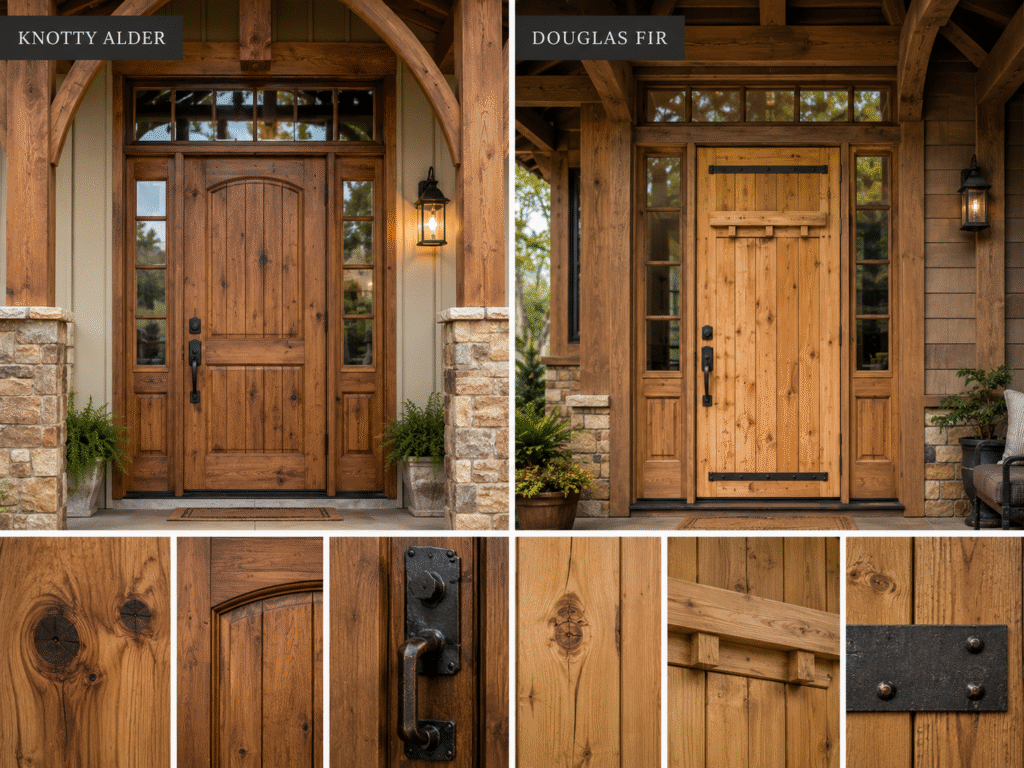
Tier 1 — Rustic Character Woods
Common Species
- Knotty Alder
- Douglas Fir
Best For
- Farmhouse homes
- Craftsman architecture
- Rustic and lodge-style projects
Characteristics
These species offer warm natural tones, visible grain variation, knots, and organic texture that create a more casual architectural feel.
Considerations
Softer wood species require proper sealing and perform best with adequate exterior overhang protection.
Tier 2 — Luxury Performance Hardwoods
Common Species
- Mahogany
- Sapele
Best For
- Luxury traditional homes
- Mediterranean architecture
- Transitional custom residences
Characteristics
Dense hardwood construction provides improved stability, durability, and resistance to moisture, insects, and long-term movement.
These woods are especially popular in high-end residential entry systems because they combine premium aesthetics with excellent structural performance.
Tier 3 — Ultra-Luxury Architectural Woods
Common Species
- Black Walnut
- American Walnut
Best For
- Estate homes
- Signature entrances
- Fully custom architectural projects
Characteristics
Walnut offers deep rich coloration, dramatic grain movement, and a highly bespoke appearance that immediately communicates luxury craftsmanship.
Considerations
Due to limited material availability and premium finishing requirements, walnut entry systems typically sit at the top end of custom front door pricing.
Cost Factor #2: Configuration & Customization
Beyond material selection, door size and overall configuration can significantly impact front door pricing. Larger entry systems require more structural support, upgraded hardware, and more complex installation.
Door Size & Scale
Standard front doors are typically 6’8″ (80″) tall, while luxury homes increasingly use 8’0″ (96″) or taller entry systems for a more dramatic architectural appearance.
Larger doors generally increase costs because they:
- Require stronger jambs and hinges
- Add significant weight to the system
- Often need upgraded locking hardware
- Take longer to transport and install safely
Single vs. Double Entry Doors
Single Entry Doors
A single-door configuration remains the most cost-effective option for high-performance front entry systems.
Double Entry Doors
Double front doors create a larger and more luxurious entrance but require:
- More complex framing
- Additional hardware
- Enhanced weather sealing
- Multi-point locking systems for stability and security
In most cases, double entry systems cost approximately 1.5×–2× more than comparable single-door configurations once installation and hardware are included.
Sidelights & Transoms
Decorative glass elements such as sidelights and transoms can dramatically enhance curb appeal while increasing natural light inside the entryway.
Typical Add-On Pricing
- Sidelights: $400 – $2,000+
- Transoms: $300 – $900+
Because these features enlarge the opening and increase glazing complexity, they also raise installation, framing, and weatherproofing requirements. In many projects, sidelights and transoms are the upgrades that move a standard front door installation into a more premium pricing category.
Price Scenarios: Good, Better & Best
The following real-world pricing examples help illustrate how material selection, customization level, and installation complexity affect total front door project costs.
Scenario A — The Curb Appeal Upgrade
Typical Configuration
- Standard-size Mahogany single entry door
- Pre-hung system
- Professional stain finish
- Upgraded handle set
Project Type
Replacement of an existing builder-grade steel entry door.
Estimated Installed Cost
$3,000 – $5,000+
Major Cost Variables
- Decorative or insulated glass options
- Premium hardware upgrades
- Minor framing or rot repair
Best For
Homeowners looking to significantly improve curb appeal and entry aesthetics without fully redesigning the front elevation.
Scenario B — The Luxury Grand Entrance
Typical Configuration
- Custom double entry door system
- Mahogany or Black Walnut construction
- 8-foot+ oversized height
- Decorative insulated glass
- Transom and sidelights
Project Type
Luxury custom home or large-scale architectural build.
Estimated Installed Cost
$8,000 – $15,000+
Major Cost Variables
- Oversized dimensions
- Complex panel designs
- Premium glazing systems
- Multi-point locking and smart hardware
Best For
Custom home builders, estate homes, and architect-designed projects where the front entry serves as a major architectural focal point.
Material Comparison: Steel vs. Fiberglass vs. Wood Front Doors
| Material | Typical Door Cost | Typical Labor | Installed Cost Range | Best Known For |
|---|---|---|---|---|
| Steel | $100 – $2,200 | $200 – $500 | $300 – $2,700 | Affordable security and durability |
| Fiberglass | $200 – $2,300 | $200 – $500 | $400 – $2,800 | Energy efficiency and low maintenance |
| Wood | $400 – $3,500+ | $250 – $800+ | $650 – $4,500+ | Premium appearance and natural texture |
| Custom Wood | $1,500 – $12,000+ | $500 – $1,500+ | $2,000 – $15,000+ | Fully customized luxury entry systems |
While steel and fiberglass remain popular for practical performance and affordability, solid wood and custom wood entry systems continue to dominate the luxury residential market due to their unmatched architectural presence, craftsmanship, and customization potential.
Conclusion & Next Steps
A front door is far more than a simple entry point — it is a critical part of your home’s security, energy efficiency, weather protection, and overall architectural presence. From material selection and door configuration to hardware, glass, and installation quality, every decision influences both performance and long-term value.
Understanding how these factors affect pricing allows homeowners, builders, and contractors to compare quotes more accurately and invest in a front entry system that delivers lasting durability, curb appeal, and return on investment.
For Builders & Contractors
For custom home builders, developers, and professional contractors, consistency and project efficiency are just as important as aesthetics.
At Zumwin, we provide:
- Factory-direct pricing for custom entry door systems
- Standardized specifications across multi-home projects
- Custom wood species, finish, and hardware options
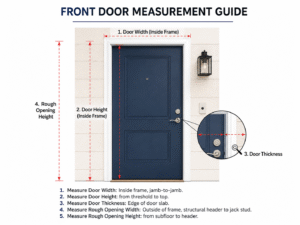
- Technical support for rough openings and installation details
- Volume pricing and production scheduling assistance
Planning a larger residential or custom luxury project?
Contact Our Trade Team to discuss contractor pricing and volume order support.
For Homeowners
If you are upgrading a single front entry, selecting the right door can dramatically improve both curb appeal and daily living comfort.
Whether you prefer:
- Rustic Knotty Alder designs
- Timeless Mahogany entry systems
- Statement Black Walnut doors
- Single or double entry configurations
- Sidelights and transom glass options
our team can help you create a front entry system tailored to your home’s architecture and budget.
Explore our premium Entry Door Collection and request a transparent manufacturer-direct quote for your 2026 front door installation project.
Frequently Asked Questions About Front Door Installation Costs
Get quick answers to the most common questions about front entry door pricing, installation, materials, and long-term value.
How much does front door installation cost in 2026?
Most professionally installed front doors in 2026 range from approximately $1,500 to $10,000+, depending on material, size, glass configuration, hardware, and installation complexity.
What is the most affordable front door material?
Steel entry doors are typically the most budget-friendly option while still providing strong security and durability. Fiberglass offers a balance between affordability, energy efficiency, and low maintenance.
Why do custom wood front doors cost more?
Custom wood entry systems require premium lumber, precision joinery, advanced finishing systems, and extensive craftsmanship. Larger custom dimensions and decorative glass further increase pricing.
Is a pre-hung front door better than a slab-only door?
In most exterior applications, pre-hung systems provide better weather sealing, easier installation, improved alignment, and lower long-term risk of air or water leakage.
Do sidelights and transoms significantly increase cost?
Yes. Sidelights and transoms enlarge the opening and add additional framing, glazing, and installation complexity, often increasing total project costs by several hundred to several thousand dollars.
Which front door material offers the best long-term value?
Fiberglass doors are widely considered one of the best long-term values due to their energy efficiency, low maintenance, durability, and realistic wood-grain appearance.
Do new front doors increase home value?
Yes. Front door replacement is consistently considered one of the highest-ROI exterior upgrades thanks to improved curb appeal, security, and energy efficiency.