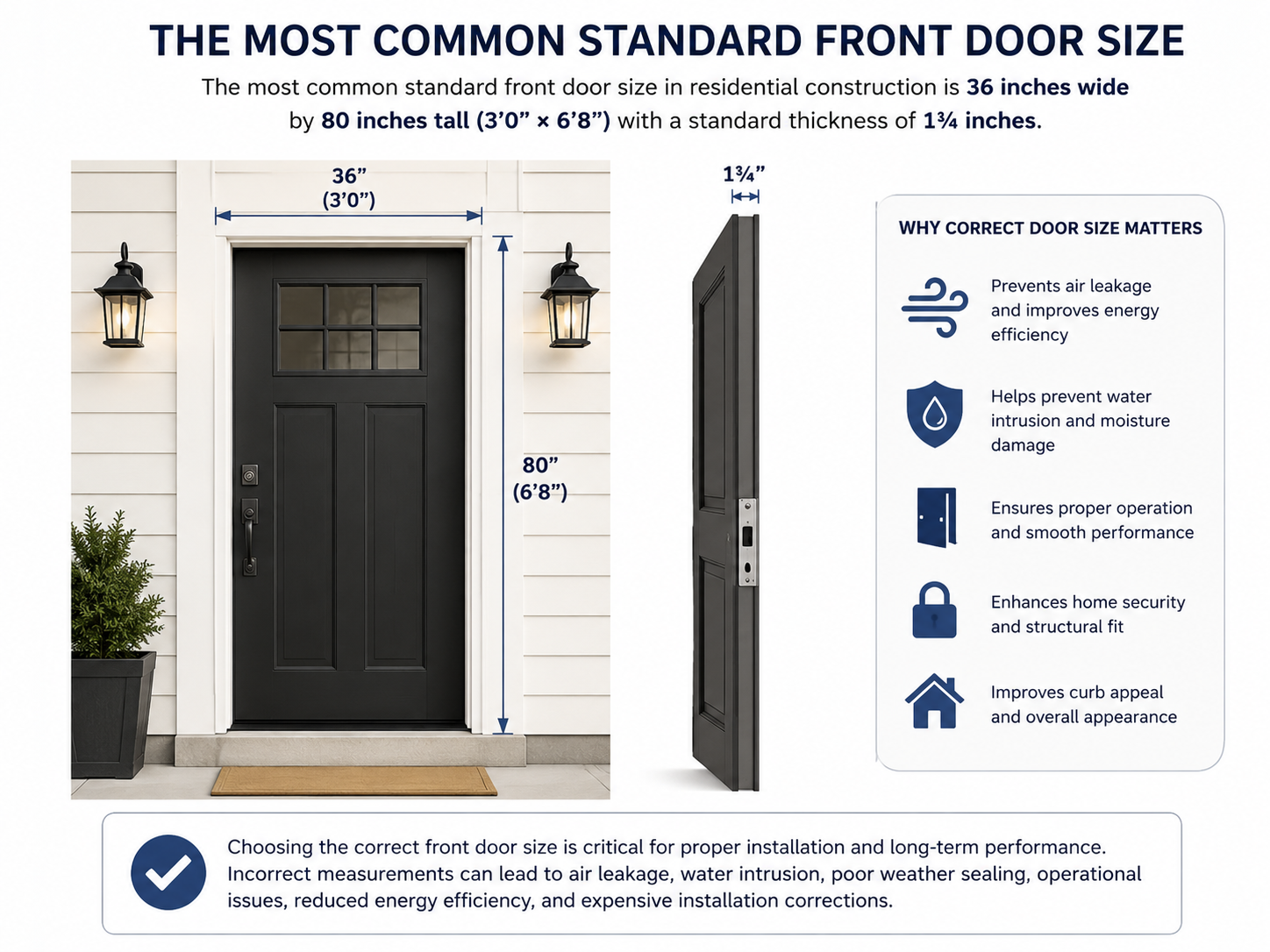
The most common standard front door size in residential construction is 36 inches wide by 80 inches tall (3’0″ × 6’8″) with a standard thickness of 1¾ inches. This size provides a practical balance of accessibility, security, curb appeal, and everyday functionality for most homes.
Choosing the correct front door size is critical for proper installation and long-term performance. Incorrect measurements can lead to air leakage, water intrusion, poor weather sealing, operational issues, reduced energy efficiency, and expensive installation corrections. Proper sizing also plays an important role in home security, structural fit, and overall exterior appearance.
This guide explains standard front door dimensions, how to measure an entry door correctly, common double-door and sidelight configurations, accessibility considerations, custom sizing options, and essential door terminology — helping homeowners, builders, and contractors confidently select the right entry door system for any project.
Standard Front Door Sizes: Quick Reference Guide
Most residential front doors follow standardized dimensions, with 36″ × 80″ (3’0″ × 6’8″) remaining the most common size for single-entry front doors. These standard dimensions simplify replacement, installation, hardware compatibility, and building code compliance.
| Door Width | Door Height | Thickness | Common Applications |
|---|---|---|---|
| 36″ | 80″ | 1¾″ | Standard front entry doors for most homes |
| 30″ | 80″ | 1¾″ | Older homes, secondary entrances, compact spaces |
| 32″ | 80″ | 1¾″ | Utility entrances and older residential construction |
| 42″ | 80″ | 1¾″ | Wider single-entry doors for larger openings |
| 36″ | 96″ | 1¾″ or 2¼″ | Modern homes with taller ceilings and larger entryways |
| 42″ | 96″ | 2¼″ | Oversized luxury or custom entry systems |
| 60″–72″ | 80″ | 1¾″ | Double front doors with paired door panels |
Important Notes
- 84″ and 96″ tall doors are becoming increasingly common in modern and luxury residential construction.
- 2¼″ thick doors are often used for oversized entry systems, high-end solid wood doors, and enhanced security applications.
- Double-door configurations typically use two equal door panels, commonly:
- 2 × 30″
- 2 × 32″
- 2 × 36″
- Custom front door sizes are frequently used in luxury homes, commercial entrances, and architect-designed projects.
How to Measure Your Front Door in 4 Simple Steps
Accurate measurements are essential when replacing or ordering a new front door. Even small measuring errors can lead to installation issues, air leakage, poor weather sealing, and expensive modifications later.
For the most accurate results, measure the door slab width, height, thickness, and rough opening separately before ordering a replacement door or complete entry system.
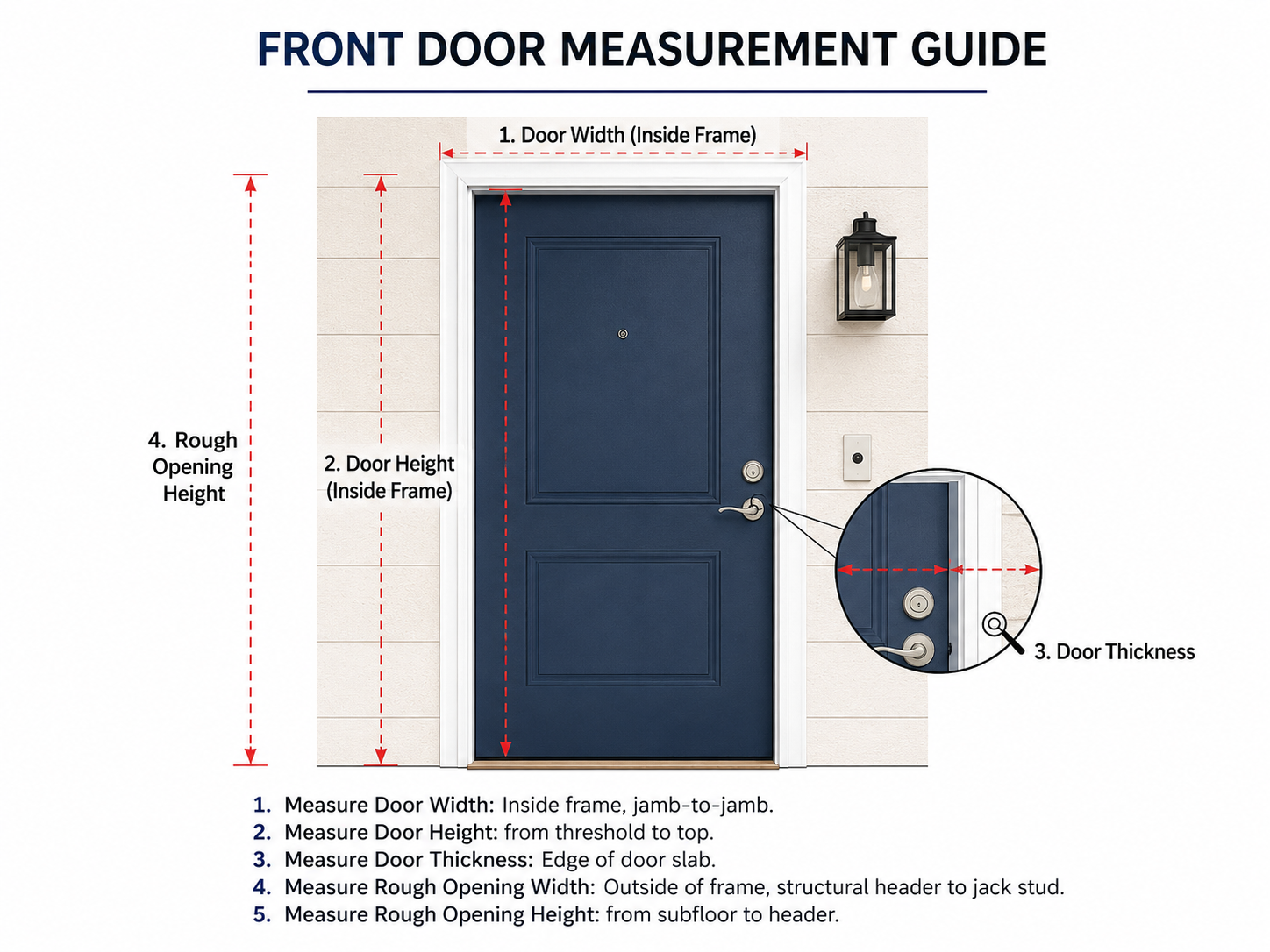
Step 1: Measure the Door Width
Measure the actual door slab — not the frame or trim — at three locations:
- Top
- Middle
- Bottom
Use the largest measurement to account for minor warping or frame movement over time.
Measure horizontally from edge to edge, excluding weatherstripping, hinges, and trim components.
Step 2: Measure the Door Height
Measure vertically from the top edge of the door slab to the bottom edge on both sides of the door.
- Measure left side
- Measure right side
Use the largest measurement for the most accurate sizing reference.
Do not include the threshold, sill, or floor transition in the measurement.
Step 3: Measure the Door Thickness
Measure the thickness of the door slab at the lock edge.
Standard Front Door Thickness
- Standard residential doors: 1¾″
- Oversized or luxury entry doors: 2¼″
Exclude weatherstripping, door sweeps, or edge seals from the measurement.
Step 4: Measure the Rough Opening
If you are replacing the entire frame or installing a new pre-hung door, you must also measure the rough opening.
The rough opening is the framed structural opening inside the wall between the studs and header.
Width Measurement
Measure the inside distance between the left and right framing studs.
Height Measurement
Measure from the subfloor (or finished floor if already installed) to the underside of the header.
Standard Rough Opening Rule
The rough opening should generally be:
- Approximately 2″ wider
- Approximately 2–2.5″ taller
than the actual door size.
This extra space allows room for:
- Door jambs
- Shims
- Insulation
- Leveling adjustments
Rough Opening Example
For a standard 36″ × 80″ front door, the recommended rough opening is approximately:
- 38″ wide
- 82.5″ high
Expert Tip
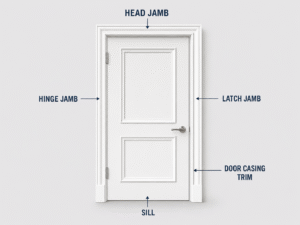
Understanding common door frame components and entry door terminology can make measuring easier and help you communicate more accurately with manufacturers, suppliers, and installers when ordering replacement doors or custom entry systems.
Single Doors, Double Doors & Sidelights: Understanding Front Door Sizing
Front entry systems are available in several configurations, including single doors, double doors, and doors with sidelights. Each setup requires slightly different sizing calculations to ensure proper fit, balance, and installation clearance.
Standard Double Door Sizes
Double front doors typically range from 60″ to 72″ in total width, depending on the size of each door panel.
Common Double Door Configurations
- 60″ total width = two 30″ doors
- 64″ total width = two 32″ doors
- 72″ total width = two 36″ doors
Standard Heights
Common double-door heights include:
- 80″ (6’8″)
- 84″ (7’0″)
- 96″ (8’0″)
Most double-entry systems use the same standard thickness as single entry doors:
- 1¾″ standard thickness
- 2¼″ thickness for oversized or luxury entry systems
In most configurations:
- One panel functions as the active door
- The second panel acts as the inactive door secured with flush bolts
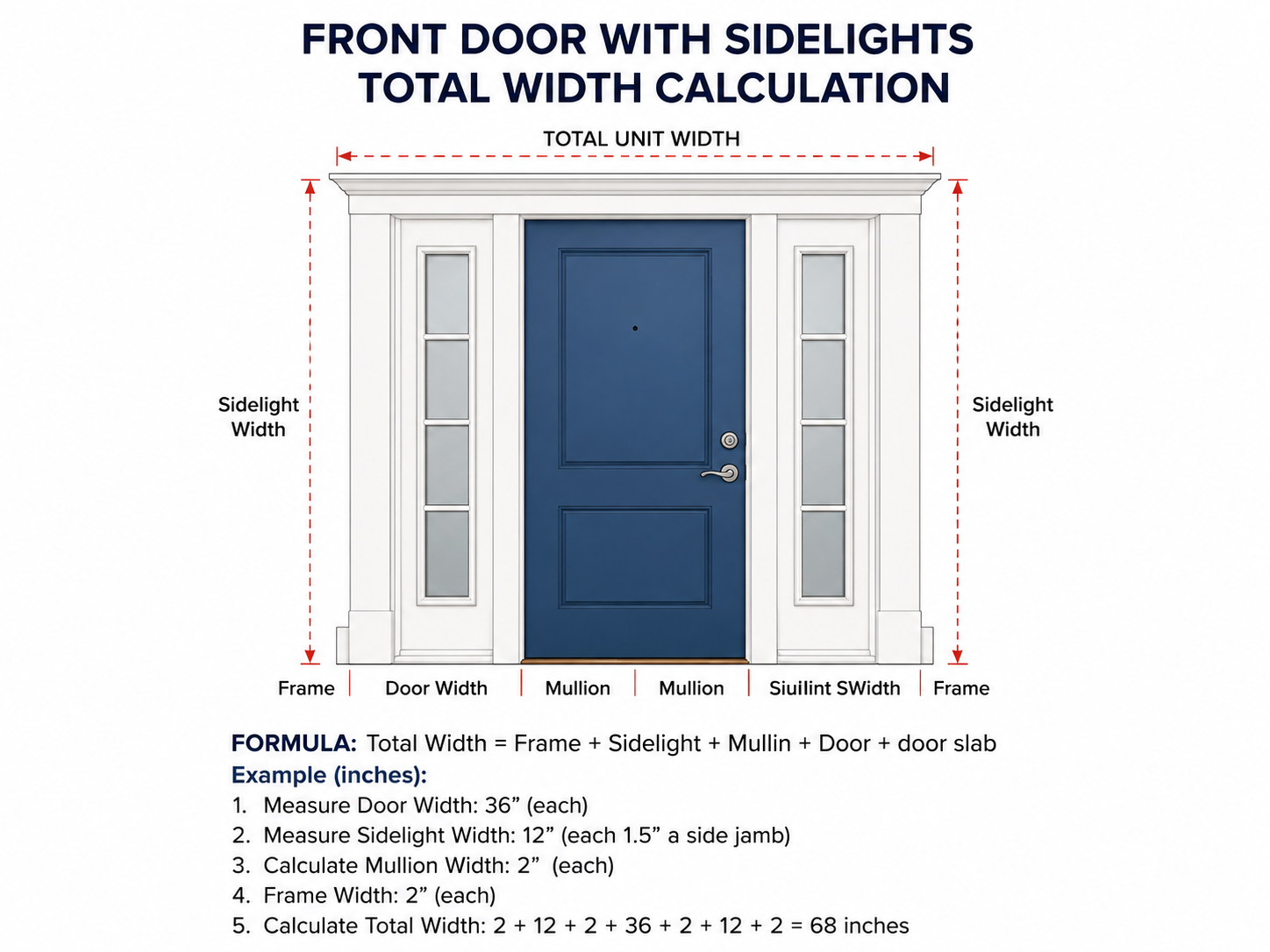
Front Doors with Sidelights
Sidelights are vertical glass panels installed beside the main entry door to increase natural light and create a wider, more upscale entrance appearance.
How to Calculate Total Width
Total entry system width is calculated as:
Door Width + Sidelight Width(s) + Frame/Mullion Allowances
Common Sidelight Sizes
Typical sidelight widths include:
- 10″
- 12″
- 14″
Example Calculation
A standard:
- 36″ front door
- Two 12″ sidelights
- Approximately 2″ combined frame/mullion allowance
Results in:
36″ + 12″ + 12″ + 2″ = approximately 62″ total system width
Additional Notes
- Sidelights are typically fixed glass panels
- Operable sidelights are available but less common
- Wider entry systems often require larger rough openings and additional structural support
Proper planning for door configuration, frame size, and rough opening dimensions is especially important for double doors and custom entry systems to ensure smooth installation and long-term performance.
Beyond the Basics: Important Front Door Sizing Factors
Choosing the correct front door size involves more than matching width and height measurements. Accessibility requirements, energy efficiency, door material behavior, and local building codes all play an important role in long-term performance and usability.
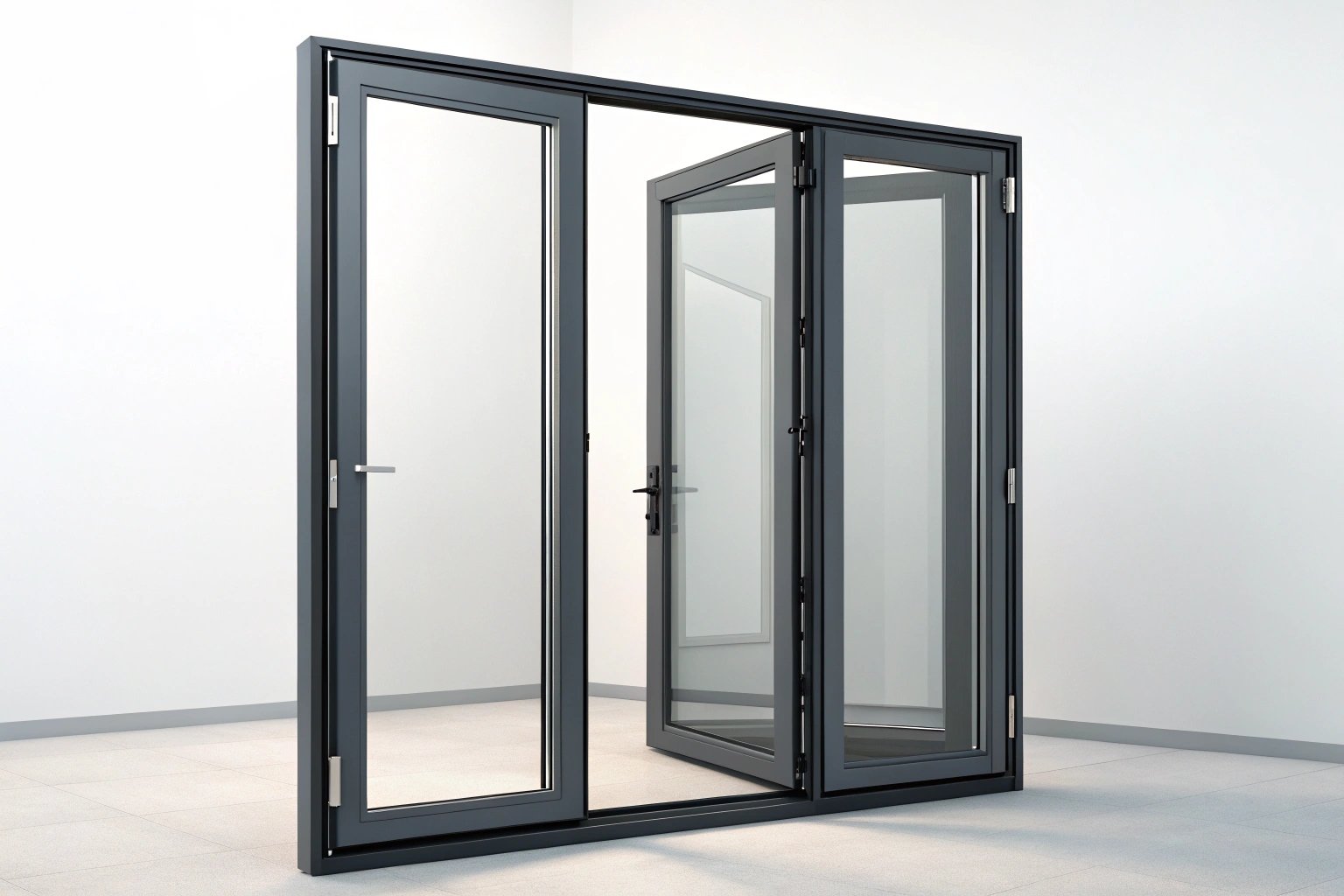
Front Entry Door
Most common entry size
Patio/Balcony Door
Maximizes natural light
Side/Back Door
Practical access point
French/Double Door
Elegant entryway or patio access
Accessibility & ADA Considerations
Most building codes and ADA accessibility guidelines recommend a minimum 32-inch clear opening width when the door is opened to 90 degrees.
In practice, this usually requires installing a:
- 36-inch wide front door
because the door slab, hinges, stops, and hardware reduce the actual walk-through clearance.
Why It Matters
Proper clear opening width improves:
- Wheelchair accessibility
- Walker and mobility access
- Furniture and appliance movement
- Overall long-term usability
Even in private residential projects where ADA compliance is not legally required, wider entry doors can improve convenience, accessibility, and future resale value.
How Door Size Affects Energy Efficiency
Correct sizing is essential for proper weather sealing and thermal performance.
A front door that is too small for the opening may create:
- Air leakage
- Drafts
- Water intrusion
- Reduced insulation performance
At the same time, forcing an oversized door into a tight opening can cause:
- Binding
- Warping
- Seal failure
- Operational problems over time
Accurate measurements allow enough space for:
- Weatherstripping
- Door sweeps
- Threshold seals
- Proper insulation around the frame
High-performance entry systems — especially ENERGY STAR® rated doors — rely heavily on precise installation and proper rough opening dimensions.
How Door Material Impacts Sizing & Installation
While standard front door dimensions remain relatively consistent across materials, installation requirements and structural behavior can vary significantly.
Wood Doors
Solid wood doors are heavier and naturally expand or contract with humidity and seasonal temperature changes.
Typical recommendations include:
- Stronger hinges and frame anchoring
- Approximately 1/8″ perimeter clearance for movement
Steel & Aluminum Doors
Steel and aluminum doors are more dimensionally stable and less affected by moisture exposure.
However:
- Steel entry doors can be very heavy
- Larger aluminum systems may require reinforced framing support
Vinyl (uPVC) Doors
Vinyl door systems are lighter but often use thicker multi-chamber profiles for insulation performance.
In extreme climates, thermal expansion and contraction should still be considered during installation.
Professional Installation Matters
Regardless of material type, proper rough opening sizing, shimming, leveling, insulation, and sealing are critical for ensuring:
- Smooth operation
- Long-term durability
- Energy efficiency
- Weather resistance
- Security performance
What If My Front Door Size Isn’t Standard?
Not every home is built around standard entry door dimensions. Older homes, custom architecture, remodels, and oversized entrances often require either a custom-sized door or structural opening modifications.
In most cases, homeowners and builders have two primary solutions: ordering a custom front door or reframing the existing opening to fit a standard-sized unit.
Option 1: Order a Custom Front Door
Custom doors are designed specifically for non-standard or oversized openings and are commonly used in luxury homes, historic renovations, and architect-designed projects.
Advantages
- Fits unusual or oversized openings precisely
- Maintains original architectural proportions
- Allows greater design flexibility
- Ideal for custom entry systems with sidelights or transoms
Considerations
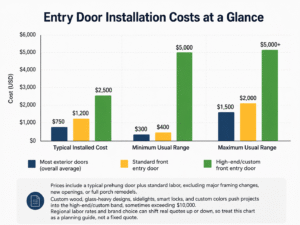
- Typically costs 30–60% more than standard doors
- Longer production lead times (commonly 6–12 weeks or more)
- Limited return or exchange flexibility for custom products
Best For
- Historic homes
- Fixed structural openings
- Luxury or oversized entryways
- Custom architectural designs
Option 2: Reframe the Opening
Reframing involves modifying the wall opening to accommodate a standard-sized door system.
This process may include:
- Removing trim and existing framing
- Adjusting wall studs
- Installing or modifying headers
- Repairing drywall, siding, or finishes
Advantages
- Allows use of standard-size doors
- Often reduces long-term replacement costs
- Can improve accessibility and door clearance
- Makes future door replacement easier
Considerations
- Typical reframing costs range from approximately $500–$2,000+ depending on structural complexity
- Requires professional carpentry and finish work
- May involve additional repairs or repainting
Best For
- Severely outdated openings
- Damaged frames
- Accessibility upgrades
- Expanding narrow entry doors
Quick Decision Tip
- If your opening differs by only 1–2 inches, a custom-sized door is often the simpler solution.
- If you are changing the opening significantly, adding sidelights, or upgrading to a larger entry system, reframing may be more practical and cost-effective.
Front Door Terminology: Quick Reference Guide
Understanding basic front door terminology helps simplify measuring, ordering, installation, and communication with manufacturers or contractors.
Door Slab
The actual door panel itself, without the frame, hinges, or hardware.
Pre-Hung Door
A complete door system with the slab pre-installed into a factory-assembled frame with hinges and preparation for hardware.
Rough Opening (RO)
The framed wall opening before the door frame is installed, measured between studs and from floor to header.
Door Jamb
The vertical and horizontal frame components surrounding the door slab.
Door Casing (Trim)
Decorative molding installed around the frame to cover the gap between the wall and jamb.
Threshold (Sill)
The bottom portion of the entry system that helps create weather sealing and transition between interior and exterior flooring.
Clear Opening Width
The actual usable walking clearance when the door is fully open — especially important for accessibility and ADA considerations.
Door Handing
Describes hinge placement and swing direction, such as:
- Left-hand inswing
- Right-hand inswing
- Left-hand outswing
- Right-hand outswing
Frequently Asked Questions (FAQs)
What is the most common front door size?
The standard residential front door size is typically 36″ wide × 80″ high with a thickness of 1¾″. This size is widely used in modern homes and meets most accessibility and building code requirements.
How much larger should a rough opening be than the door?
A rough opening is generally about 2 inches wider and 2–2.5 inches taller than the actual door size. For a standard 36″ × 80″ front door, the recommended rough opening is roughly 38″ × 82.5″.
Can I install a larger front door in an existing opening?
Yes, but enlarging the opening usually requires reframing work, structural adjustments, and finish repairs. A licensed contractor should evaluate the wall structure and local code requirements before modifying the opening size.
What is the minimum recommended width for a front door?
While some older homes use 30″ or 32″ entry doors, a 36-inch-wide door is generally recommended for improved accessibility, easier furniture movement, and better long-term usability.
How are front doors different from interior doors?
Front doors are usually wider, thicker, and more heavily insulated than interior doors. Standard entry doors are commonly 1¾″ thick, while most interior doors are typically 1⅜″ thick.
Are taller front doors better for modern homes?
Taller doors, such as 84″ or 96″ models, are increasingly popular in homes with higher ceilings because they create a more balanced and upscale architectural appearance.
Should I hire a professional to measure my front door?
DIY measurements may work for simple replacements, but professional measurement is recommended for custom doors, reframing projects, double doors, or oversized entry systems to ensure proper fit and installation.
Conclusion and Next Steps
Selecting the right front door size is about more than appearance — it directly impacts installation quality, weather sealing, security, energy efficiency, and long-term performance. While the standard 36″ × 80″ entry door remains the most common residential option, accurate measurements are essential for achieving the proper fit, especially for double doors, sidelights, oversized openings, or custom entry systems.
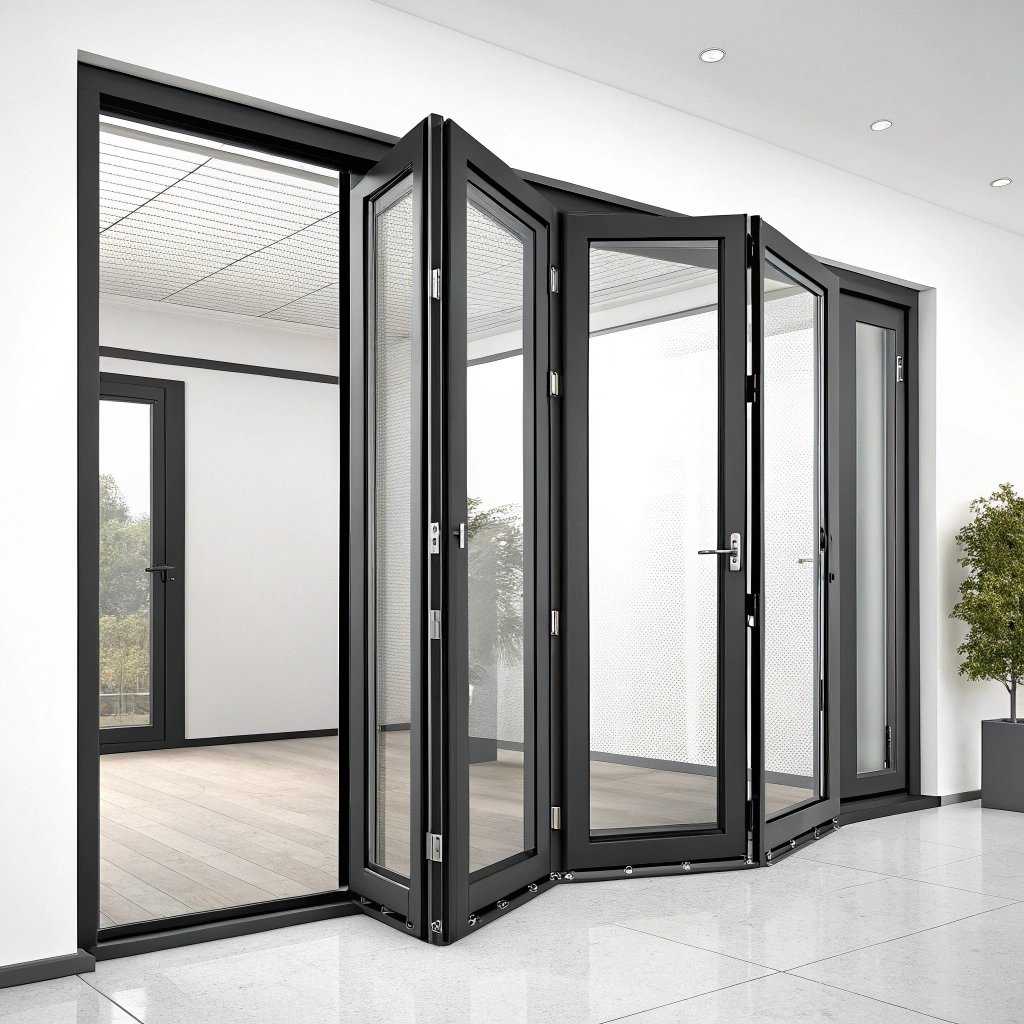
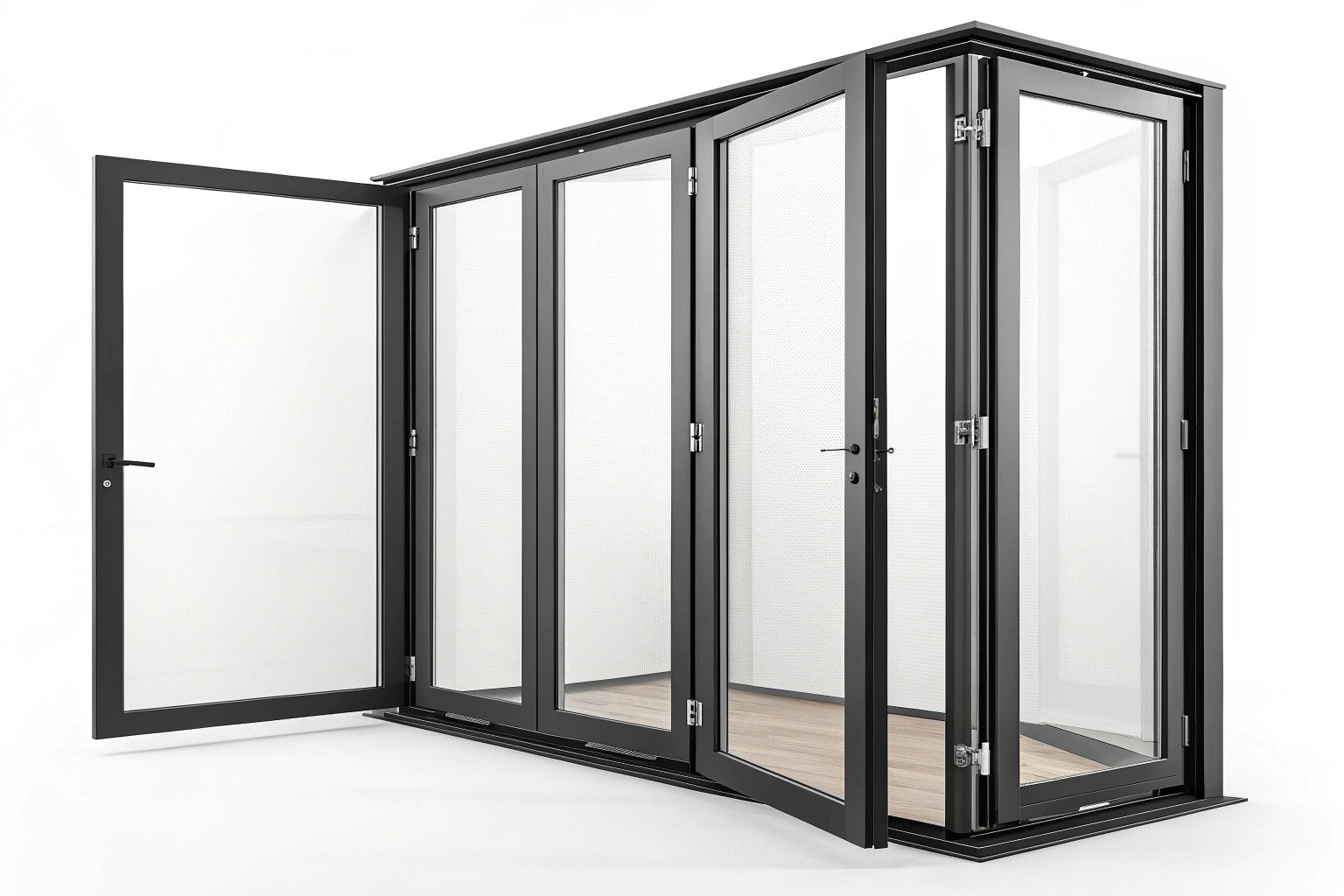
Before purchasing a new door, carefully confirm the slab dimensions, rough opening size, frame depth, and clearance requirements. Proper planning helps prevent installation problems, air leakage, and costly adjustments later. For additional inspiration and modern entry system options, explore solutions from a professional aluminum windows and doors manufacturer offering custom residential and commercial door systems.