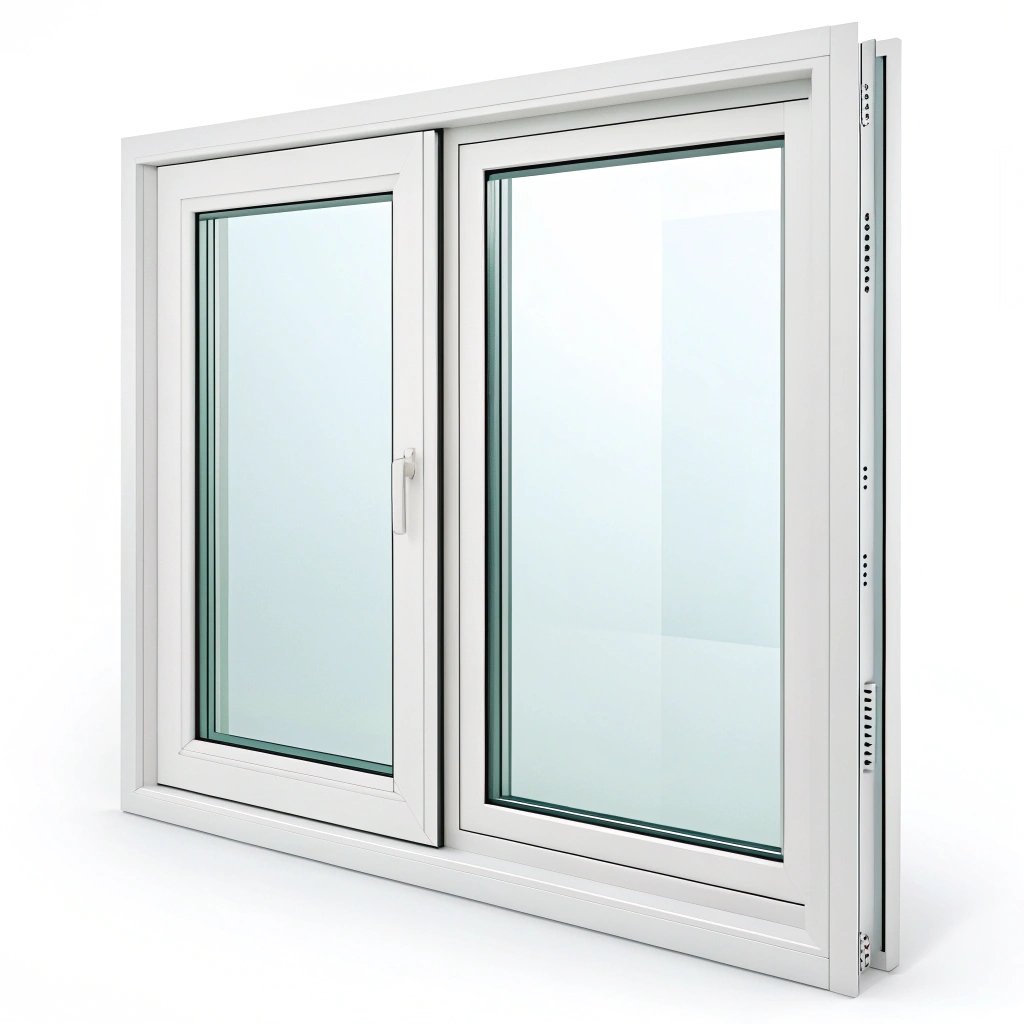
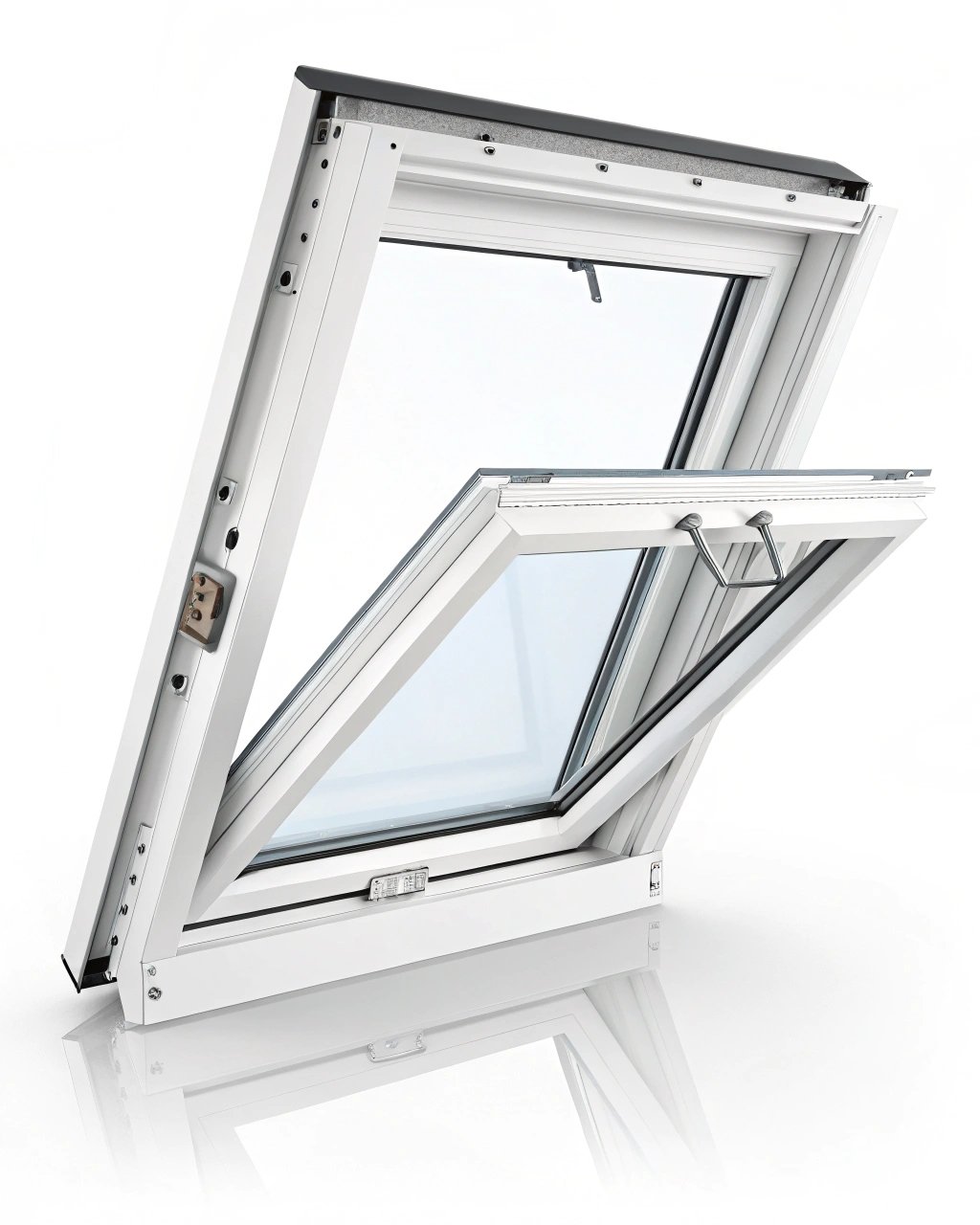
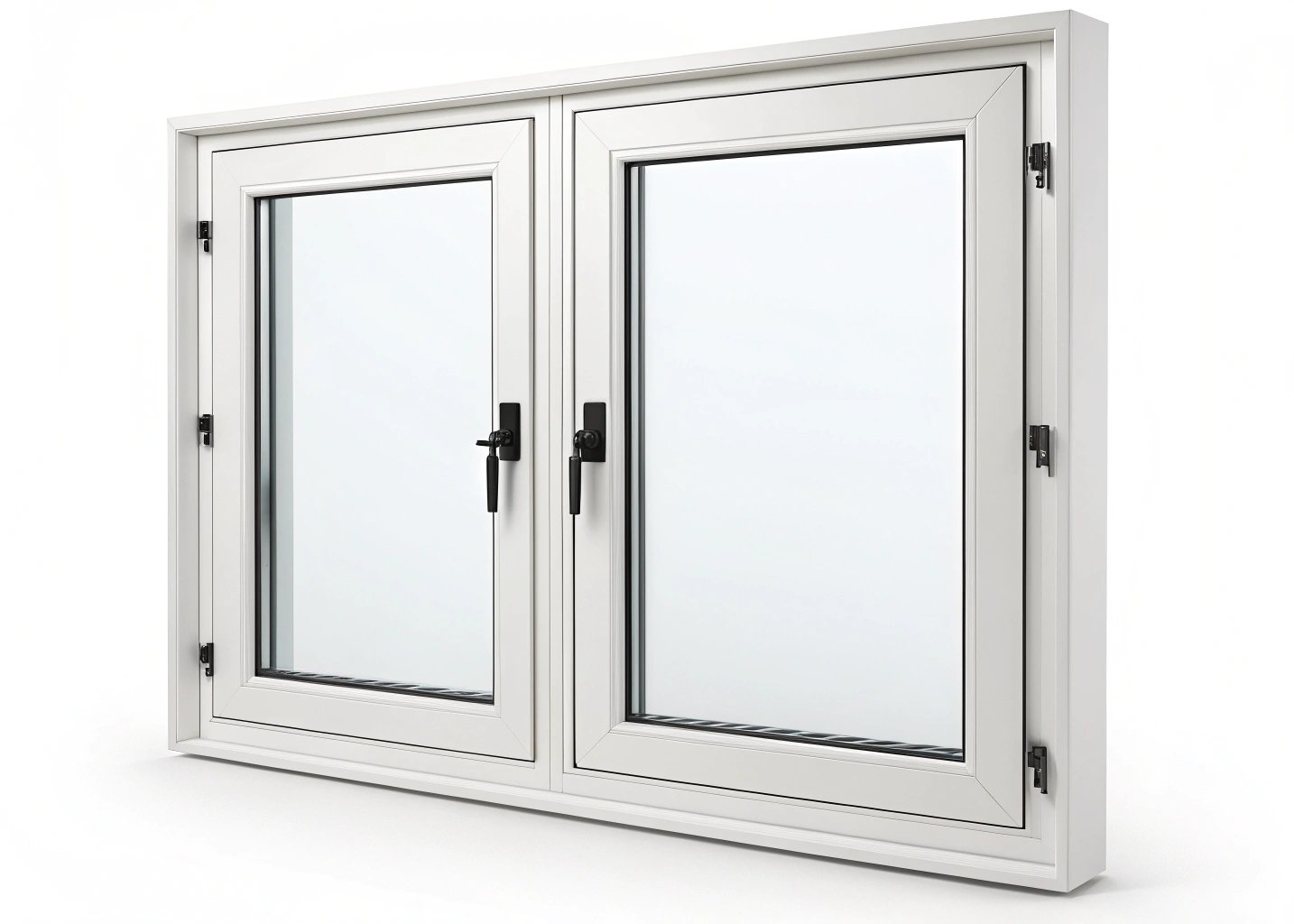
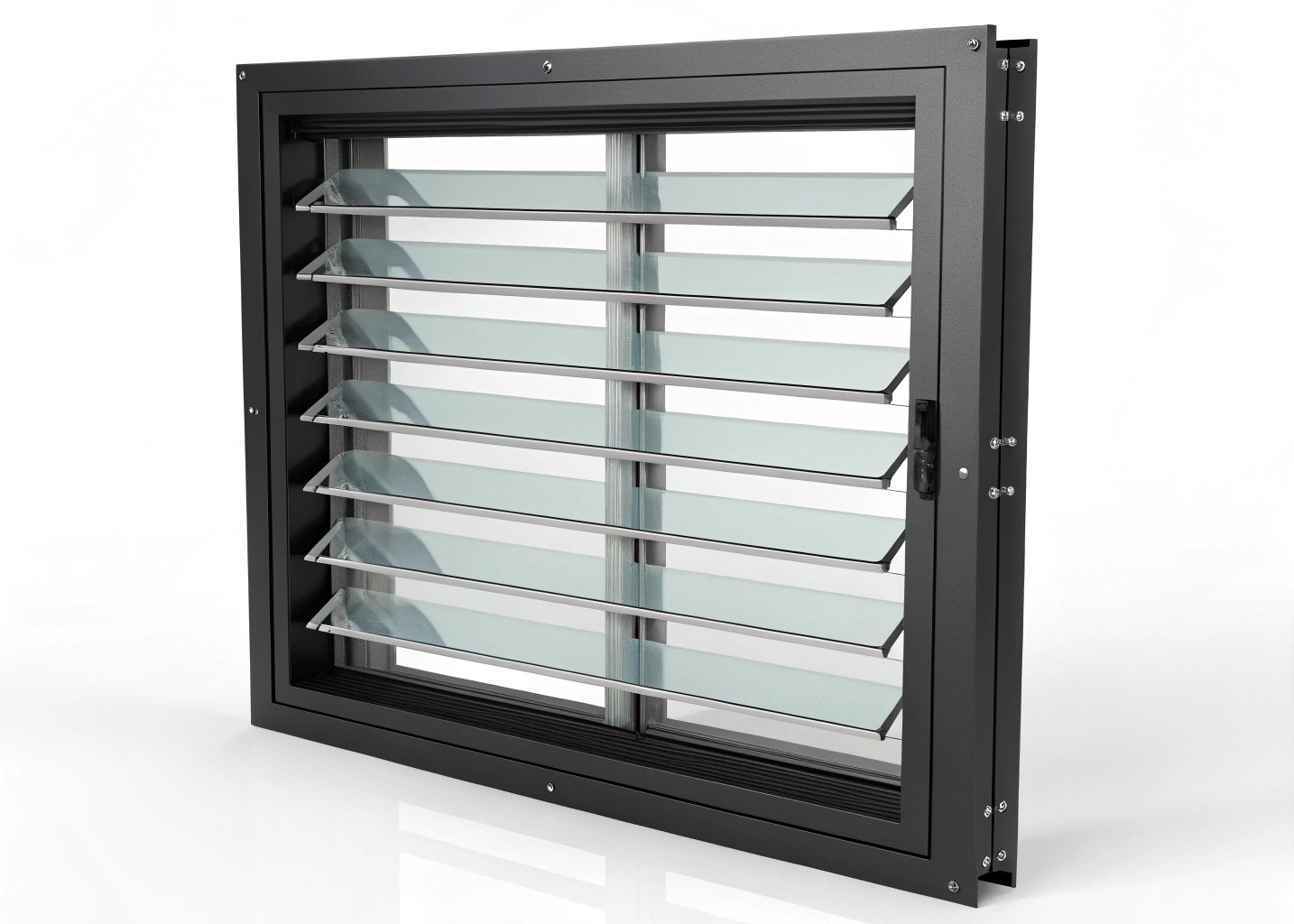
Vinyl and aluminum windows are often compared as direct competitors, but the real difference goes far beyond upfront pricing. While vinyl windows typically cost around $450–800 installed for a standard 3’ × 5’ unit, comparable aluminum windows generally range from $600–1,200 installed. Interestingly, the actual factory manufacturing cost difference is often relatively small — in many cases only $40–60 per unit — meaning much of the retail price gap comes from distribution, branding, installation, and market positioning rather than raw material cost alone.
Long-term ownership costs also tell a different story. Although vinyl windows usually have a lower initial purchase price, aluminum systems often deliver better lifecycle value due to their longer structural lifespan, higher durability, and reduced replacement frequency. In many climates and commercial applications, aluminum windows can remain serviceable for decades longer than vinyl systems, particularly in coastal, high-UV, or large-opening environments where vinyl frames may warp, discolor, or degrade over time.
Performance differences have also narrowed significantly in recent years. Modern thermally broken aluminum windows now achieve energy-efficiency ratings comparable to vinyl while offering substantially greater structural strength, slimmer sightlines, and larger glass capabilities. As a result, vinyl windows are often favored for budget-focused residential projects, while aluminum systems remain the preferred choice for modern architecture, luxury homes, commercial buildings, and long-term property investments.
Why This Comparison Matters More Than Most Buyers Realize
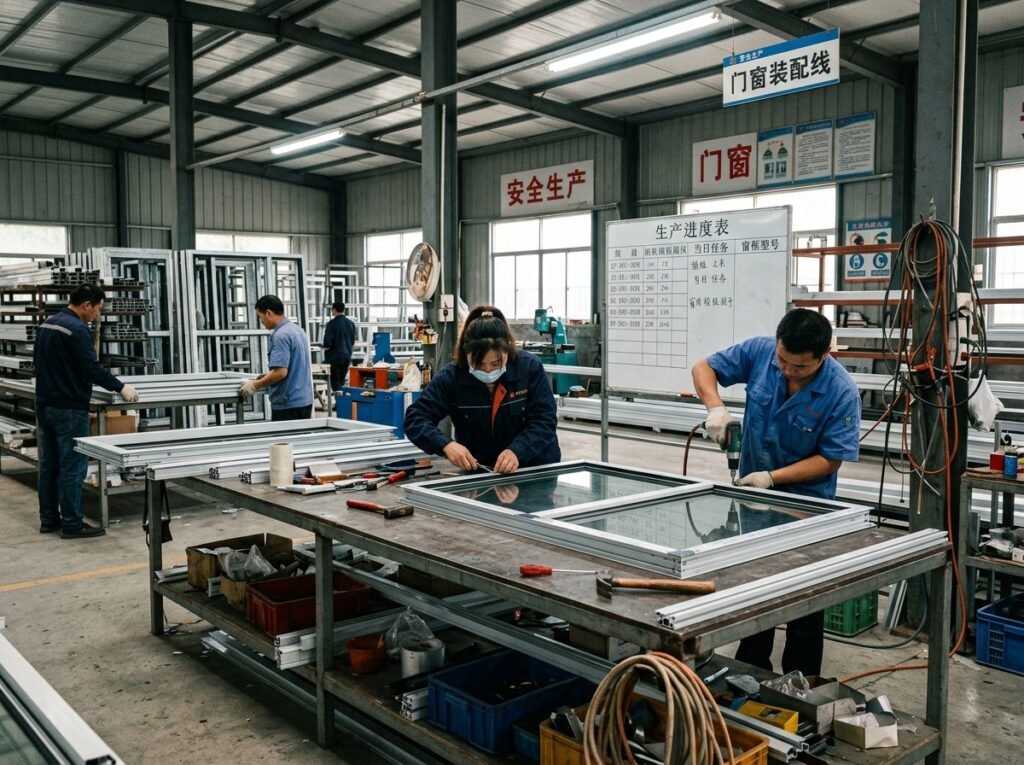
At Zumwin, we specialize in manufacturing custom aluminum window and door systems for residential, commercial, and architectural projects across a wide range of climates and building types. Through years of working with contractors, developers, architects, and property owners, one thing becomes clear very quickly: comparing aluminum and vinyl windows based only on upfront price often leads to the wrong long-term decision.
The common assumption that “vinyl is cheaper and aluminum is expensive” only tells part of the story. Initial purchase cost is important, but real-world performance depends just as much on lifespan, structural durability, climate resistance, maintenance requirements, energy efficiency, and replacement cycles over decades of use. In many projects, especially large openings, coastal environments, modern architectural homes, and commercial buildings, aluminum systems deliver significantly stronger long-term value despite the higher starting price.
This guide examines aluminum vs vinyl windows from a practical, performance-driven perspective — including installed cost, durability, thermal efficiency, maintenance, ROI, structural strength, and lifecycle considerations. Rather than relying on generic recommendations, the goal is to help homeowners, contractors, builders, architects, and property managers understand which material is actually the better fit for their specific project requirements, climate conditions, and investment horizon.
Who This Guide Is For
- Homeowners comparing long-term value, maintenance, and energy performance
- Contractors & Builders evaluating specification strategies and installation profitability
- Property Managers & Developers planning lifecycle costs and replacement schedules
- Architects & Designers considering structural capability, sightlines, and modern aesthetics
The Cost Reality: Factory vs Retail Markup
Here’s what most comparison articles won’t tell you: The massive price gap between aluminum and vinyl at retail is largely due to installation complexity and perceived value pricing—not raw material costs.
Factory Cost Breakdown (3’×5′ Casement Window)
| Cost Component | Vinyl Window | Thermal-Break Aluminum | Why the Difference? |
|---|---|---|---|
| Raw materials | $35-45 | $55-75 | Aluminum is traded commodity; PVC is extruded plastic |
| Manufacturing labor | $20-30 | $35-50 | Aluminum requires thermal break assembly + crimping (not just welding) |
| Hardware/glass | $25-35 | $30-40 | Similar quality components |
| Factory price (FOB) | $80-110 | $120-160 | Real gap: $40-60 (50% more) |
| Distribution Chain | Vinyl Window | Thermal-Break Aluminum |
|---|---|---|
| Distributor markup | +$80-120 | +$100-150 |
| Contractor purchase | $160-230 | $220-310 |
| Installation labor | $150-250 | $200-350 |
| Retail markup | +$140-320 | +$180-540 |
| Installed price | $450-800 | $600-1,200 |
The Critical Insights
Insight #1: Factory vs Retail Gap
At factory level, aluminum costs 50% more than vinyl ($120 vs $80). At retail, it costs 33-50% more ($900 vs $625 average). The gap actually narrows through the distribution chain because aluminum commands higher perceived value.
Insight #2: Volume Pricing Changes Everything
For 20+ window projects, factory-direct or contractor pricing eliminates much of the retail markup:
- Vinyl: $160-230 per window (contractor cost)
- Aluminum: $220-310 per window (contractor cost)
Gap shrinks to $60-80 per window (27% premium)
Insight #3: Installation Cost Often Equal
Experienced installers charge similar rates for both materials. The “$200–350 for aluminum” range reflects worst-case scenarios with unprepared crews. Proper installation costs $180-250 for either material.
💡 Pro Tip for Contractors:
Aluminum projects command 35-40% gross margin vs vinyl’s 30% due to perceived value (easier to justify premium to clients). On a 20-window job: aluminum nets $6,000–9,000 profit vs vinyl’s $3,600-5,000. The higher upfront cost is often a feature, not a bug—it filters for clients willing to pay for quality.
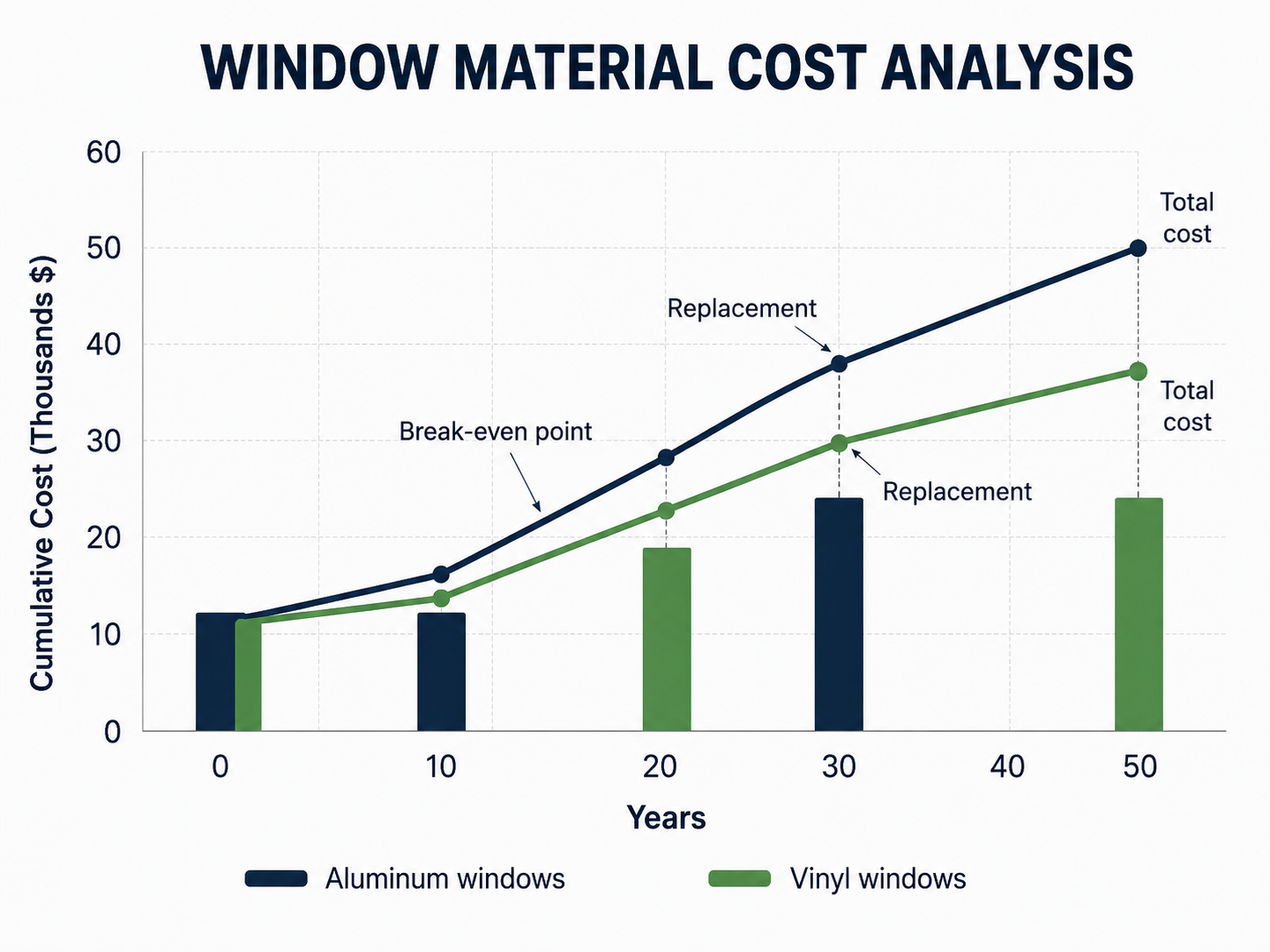
The 50-Year Cost Analysis: Where Aluminum Often Wins Long-Term
One of the biggest problems with most aluminum vs vinyl window comparisons is that they focus almost entirely on upfront pricing while ignoring long-term ownership costs. In reality, window systems should be evaluated over the lifespan of the building — not just the initial installation year.
While vinyl windows usually cost less upfront, aluminum systems often deliver significantly better long-term value due to their longer lifespan, stronger structural stability, and lower replacement frequency in demanding environments.
Average Lifespan by Climate Zone
Real-world window lifespan varies heavily based on climate exposure, UV intensity, humidity, freeze-thaw cycles, and salt-air conditions.
| Climate Zone | Vinyl Windows | Aluminum Windows | Common Failure Factors |
|---|---|---|---|
| Hot / High-UV Regions | 18–25 Years | 35–45 Years | Vinyl warping, UV degradation |
| Mixed Climates | 20–30 Years | 35–50 Years | Seal failure, discoloration |
| Cold Regions | 20–28 Years | 30–45 Years | Freeze-thaw brittleness |
| Coastal Areas | 10–15 Years | 30–40 Years | Salt-air damage, chalking |
Average Estimated Lifespan
- Quality Vinyl Windows: ~22 years
- Thermal-Break Aluminum Windows: ~38 years
Modern thermally broken aluminum systems generally maintain better dimensional stability over time, especially in large openings, coastal climates, and commercial applications.
50-Year Window Ownership Cost Comparison
For a typical home with approximately 20 windows:
| Cost Factor | Vinyl Windows | Thermal-Break Aluminum |
|---|---|---|
| Initial Installation | ~$13,000 | ~$17,000 |
| Ongoing Maintenance | Moderate | Lower |
| Replacement During Ownership | Usually Required | Often Avoidable |
| Long-Term Lifecycle Cost | Higher | Lower |
| Structural Longevity | Moderate | Excellent |
Although aluminum windows typically require a higher initial investment, their extended service life can significantly reduce replacement and renovation costs over decades of ownership.
Why Coastal Homes Are Different
Coastal environments are especially demanding for window materials due to:
- Salt-air exposure
- High humidity
- Strong UV radiation
- Wind-driven moisture
In these conditions, vinyl frames may deteriorate faster over time, while properly finished aluminum systems generally maintain better structural performance and durability.
For waterfront homes, multi-family coastal developments, and commercial properties, aluminum windows are often preferred because of their longer lifecycle and reduced long-term maintenance risk.
Important Consideration for Property Owners & Developers
For large residential developments, commercial buildings, and multi-unit properties, replacement timing can dramatically affect long-term capital planning.
A lower upfront window budget may eventually result in:
- Earlier replacement cycles
- Higher maintenance costs
- Increased disruption to occupants
- Larger future renovation expenses
This is why many developers, architects, and property managers evaluate aluminum window systems based on lifecycle cost rather than initial purchase price alone.
The Thermal Break Revolution: Why Modern Aluminum Windows Are No Longer “Cold”
One of the most outdated assumptions in the window industry is that aluminum windows are inherently poor insulators. While this may have been true decades ago, modern thermal-break technology has fundamentally changed the energy performance of aluminum window systems.
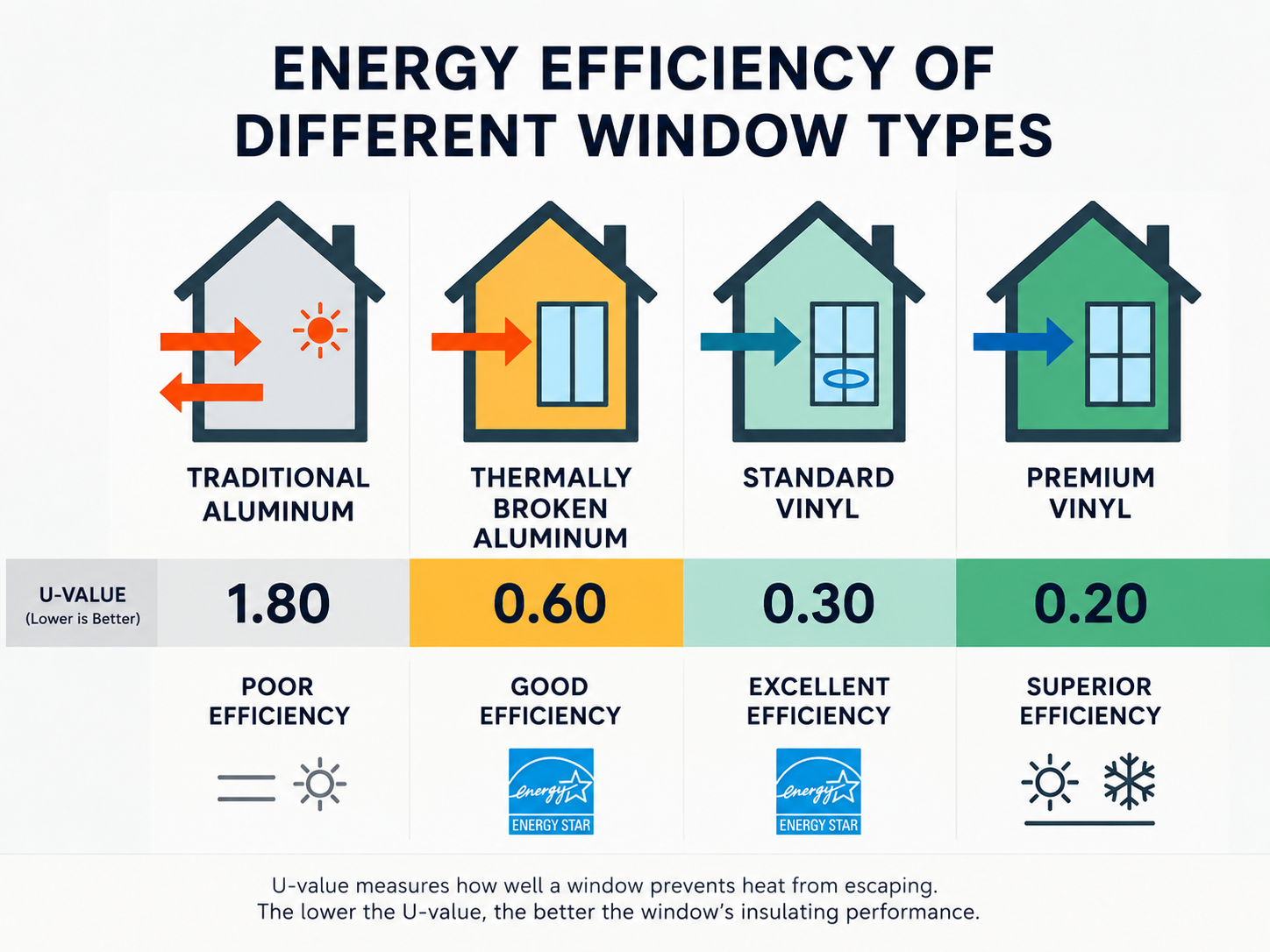
How Traditional Aluminum Windows Lost Heat
Older aluminum windows used fully conductive metal frames without insulation barriers.
Common Problems with Older Aluminum Systems
- Direct heat transfer through the frame
- Interior condensation and cold surfaces
- Higher heating and cooling losses
- Ice formation in cold climates
Typical older aluminum windows often had:
- U-Factors between 1.0–1.5
- Poor thermal performance by modern standards
This is the origin of the long-standing belief that aluminum windows are “cold.”
What Is a Thermal Break?
Modern aluminum windows now use a thermal break — a non-metallic insulating barrier placed between the interior and exterior aluminum sections of the frame.
How Thermal Break Technology Works
- A reinforced polyamide strip separates the two aluminum sections
- The barrier interrupts heat transfer through the metal frame
- Interior surfaces stay significantly warmer in winter
- Thermal efficiency improves dramatically
Modern commercial-grade systems commonly use thermal breaks ranging from:
- 14mm to 34mm
- Higher-performance systems often use wider thermal barriers for improved insulation
Modern Energy Performance: Aluminum vs Vinyl
Thanks to thermal-break engineering, modern aluminum windows now perform much closer to vinyl windows than many buyers realize.
| Window Type | Typical U-Factor | Energy Performance |
|---|---|---|
| Standard Vinyl Windows | 0.28–0.32 | Excellent |
| Thermal-Break Aluminum | 0.30–0.35 | Very Good |
| High-Performance Vinyl | 0.24–0.28 | Excellent |
| Non-Thermal Aluminum | 0.80–1.20 | Poor |
Key Takeaways
- Modern thermal-break aluminum windows now perform within a relatively small range of vinyl systems in most climates.
- The real-world energy cost difference between quality vinyl and thermally broken aluminum is often modest compared to lifespan and structural advantages.
- High-performance vinyl systems may still achieve slightly better insulation values, but aluminum offers:
- Greater structural strength
- Slimmer sightlines
- Larger glass capabilities
- Better durability in demanding climates
Why Thermal-Break Aluminum Is Popular in Modern Architecture
Thermally broken aluminum systems are increasingly used in:
- Luxury residential homes
- Commercial buildings
- Coastal developments
- Large panoramic window systems
- Modern minimalist architecture
because they combine:
- Strong structural performance
- Contemporary aesthetics
- Large-opening capability
- Improved thermal efficiency
- Long-term durability
Modern aluminum windows are no longer the inefficient systems many homeowners remember from decades ago.
Performance by Climate Zone: Which Window Material Performs Best?
One of the biggest mistakes homeowners and builders make is assuming there’s a universal “best” window material for every climate. In reality, aluminum and vinyl windows perform differently depending on temperature extremes, humidity, UV exposure, salt air, and long-term environmental stress.
Rather than relying on generic advice, window selection should be based on actual climate conditions, building type, and expected ownership timeline.
Climate Zone Comparison Guide
| Climate Zone | Typical Conditions | Recommended Material | Main Reason |
|---|---|---|---|
| Hot / High-UV Regions | Phoenix, Miami | Aluminum | Better resistance to heat, UV, and frame distortion |
| Warm & Humid Climates | Houston, Atlanta | Aluminum | Greater long-term dimensional stability |
| Mixed Climates | Dallas, Charlotte | Either | Both materials perform well with quality construction |
| Moderate Climates | Chicago, Boston | Either | Performance difference is relatively small |
| Cold Regions | Minneapolis, Calgary | Vinyl | Better insulation performance in extreme cold |
| Extreme Cold Zones | Alaska, Northern Canada | Vinyl | Superior thermal efficiency for severe winter climates |
| Coastal Areas | Oceanfront & Salt-Air Environments | Aluminum | Better corrosion resistance and structural durability |
Why Climate Matters So Much
Window systems expand, contract, and age differently depending on environmental exposure.
In Hot & High-UV Climates
Extended exposure to:
- High temperatures
- Intense sunlight
- UV radiation
can accelerate aging in vinyl frames over time, potentially leading to:
- Warping
- Discoloration
- Brittleness
- Reduced structural stability
Modern aluminum systems generally maintain better dimensional stability in these conditions.
In Cold Climates
High-performance vinyl windows still offer an insulation advantage in extremely cold regions because multi-chamber vinyl profiles naturally reduce thermal transfer.
In northern climates with long winters, vinyl systems may help reduce annual heating demand slightly more than standard thermal-break aluminum systems.
However, high-end thermally broken aluminum windows have significantly narrowed this performance gap compared to older aluminum products.
Why Aluminum Performs Better in Coastal Environments
Coastal environments are among the harshest conditions for window systems due to:
- Salt-air exposure
- High humidity
- Strong UV radiation
- Wind-driven rain
- Hurricane-force conditions in some regions
Common Issues for Vinyl in Coastal Areas
Over time, salt exposure and UV radiation may contribute to:
- Surface chalking
- Fading or discoloration
- Accelerated material aging
- Reduced structural rigidity
Advantages of Aluminum in Coastal Construction
High-quality aluminum systems with marine-grade finishes offer:
- Excellent corrosion resistance
- Better long-term structural stability
- Stronger wind-load performance
- Improved impact resistance for coastal storm zones
This is one reason aluminum windows are widely used in:
- Coastal residential homes
- High-rise condominiums
- Hospitality projects
- Commercial waterfront developments
Important Consideration for Developers & Property Owners
In large residential or commercial projects, material selection affects more than upfront construction cost.
Climate-related deterioration can significantly influence:
- Future maintenance budgets
- Warranty claims
- Replacement schedules
- Insurance compliance
- Long-term property value
For projects in demanding climates — especially coastal or high-UV regions — many architects and developers prioritize aluminum systems because of their longer service life and lower long-term replacement risk.
Strength & Structural Performance: Where Aluminum Clearly Leads
While vinyl windows are often chosen for affordability and insulation performance, aluminum’s biggest advantage lies in its structural strength. For large openings, modern architecture, commercial buildings, and high-wind environments, aluminum consistently outperforms vinyl in rigidity, load capacity, and long-term dimensional stability.
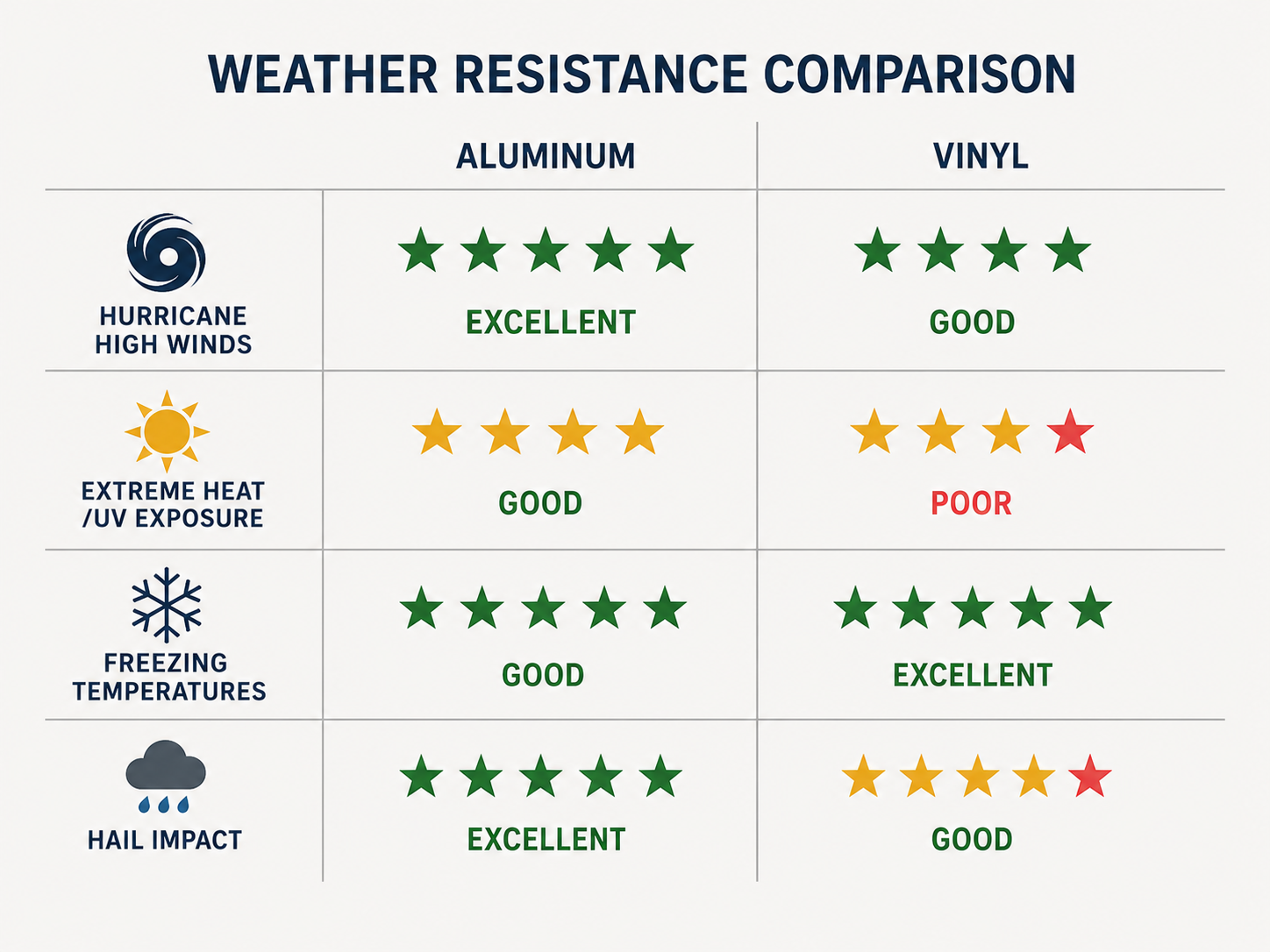
Structural Strength Comparison
Aluminum frames offer significantly higher tensile strength than standard vinyl systems, allowing them to support larger glass panels with slimmer profiles and less frame bulk.
| Material | Relative Strength | Typical Maximum Span | Frame Profile Size | Glass Visibility |
|---|---|---|---|---|
| Standard Vinyl | Moderate | Smaller Openings | Thicker Frames | Lower Glass Ratio |
| Reinforced Vinyl | Improved | Medium Openings | Thick Profiles | Moderate Glass Area |
| Thermally Broken Aluminum | High | Large Openings | Slim Profiles | Maximum Glass Area |
What This Means in Real Projects
Large Glass Openings
For:
- Floor-to-ceiling windows
- Oversized sliding doors
- Panoramic glass walls
- Modern minimalist homes
aluminum is often the preferred or required material because it can support significantly larger spans without excessive frame thickness.
Vinyl systems usually require additional reinforcement for large openings, increasing profile size and reducing visible glass area.
Slimmer Frames & Better Views
One of aluminum’s biggest architectural advantages is its ability to maintain strength with much narrower frame profiles.
Benefits of Slim Aluminum Sightlines
- More natural light
- Larger visible glass area
- Cleaner modern appearance
- Better indoor-outdoor connection
- Reduced visual bulk
This is one reason aluminum windows dominate modern luxury residential and commercial architecture.
Better Performance in High-Wind & Coastal Zones
In hurricane-prone and coastal regions, structural performance becomes especially important.
High-quality aluminum systems are commonly engineered for:
- High wind-load resistance
- Impact-rated glazing systems
- Commercial curtain wall applications
- Large multi-panel door systems
Aluminum’s rigidity also improves resistance against:
- Frame deflection
- Seal movement
- Operational misalignment over time
Security & Forced-Entry Resistance
Because aluminum frames are structurally stronger and more rigid, they generally provide better resistance against:
- Prying force
- Frame flexing
- Hardware movement under pressure
This makes aluminum a popular choice for:
- Ground-floor commercial applications
- Luxury residential projects
- Security-focused installations
- Large sliding door systems
Design Flexibility: Why Modern Architecture Favors Aluminum
Contemporary architecture increasingly prioritizes:
- Floor-to-ceiling glass
- Thin black frames
- Minimalist aesthetics
- Large uninterrupted openings
These design trends strongly favor aluminum because the material can support large glass panels while maintaining slim, clean sightlines.
Advantages of Aluminum for Modern Design
✅ Slim frame profiles
✅ Large-span structural capability
✅ Excellent support for oversized glazing
✅ Stable dark-color finishes
✅ Wide customization flexibility
✅ Contemporary architectural appearance
Color Stability & Finish Performance
Modern powder-coated aluminum systems offer excellent long-term color stability, especially in dark finishes.
Aluminum Finish Advantages
- Available in virtually unlimited colors
- Excellent UV resistance
- Better heat tolerance in dark finishes
- Reduced fading over time
- Suitable for black-framed modern architecture
In contrast, darker vinyl finishes may experience greater heat absorption in high-UV climates, which can accelerate expansion, distortion, or surface aging over long periods.
Where Vinyl Still Makes Sense
Vinyl windows remain a practical solution for many residential projects, particularly:
- Budget-focused homes
- Traditional architectural styles
- Moderate climates
- Smaller window openings
They are commonly used in:
- Colonial homes
- Ranch-style houses
- Standard residential replacement projects
where ultra-large glass spans and minimalist aesthetics are less critical.
The Contractor & Builder Perspective: Understanding Project Profitability
For contractors, builders, and developers, choosing between vinyl and aluminum windows is not only about product cost — it also affects labor efficiency, warranty exposure, project positioning, and long-term profitability.
While vinyl windows remain attractive for budget-driven residential projects, aluminum systems often generate higher overall project value due to their premium positioning, structural capabilities, and upgrade potential.
Typical Residential Project Comparison
For a mid-sized residential project with approximately 20 windows:
| Cost Category | Vinyl Windows | Aluminum Windows |
|---|---|---|
| Material Cost | Lower | Higher |
| Installation Labor | Moderate | Slightly Higher |
| Average Project Value | Lower | Higher |
| Gross Profit Potential | Moderate | Higher |
| Warranty Risk | Higher Over Time | Lower Long-Term Risk |
Although aluminum projects typically involve higher material and installation costs, they also support significantly higher project pricing and premium architectural positioning.
Why Many Contractors Prefer Aluminum Systems
Higher Project Value
Aluminum window projects generally command higher total contract values because they are commonly associated with:
- Modern architectural homes
- Luxury residential construction
- Commercial developments
- Oversized glazing systems
- Coastal or impact-rated applications
This often increases overall project profitability even when labor requirements are slightly higher.
Reduced Long-Term Warranty Issues
Modern thermally broken aluminum systems are highly stable structurally and less prone to:
- Warping
- Expansion-related movement
- UV-related deformation
- Large-span frame deflection
For contractors, this can reduce callback risk and long-term warranty exposure compared to lower-end window systems in demanding climates.
More Upgrade Opportunities
Clients choosing aluminum systems are also more likely to invest in premium upgrades such as:
- Impact-resistant glass
- Multi-slide door systems
- Custom finishes
- Smart hardware integration
- Oversized architectural glazing
This increases total project scope and overall revenue potential.
Smart Material Specification for Developers
In large residential or mixed-use developments, many builders use a hybrid specification strategy to balance budget and performance.
Common Approach
- Lower floors or high-exposure areas:
- Aluminum systems for durability, security, and weather resistance
- Upper residential floors:
- High-quality vinyl systems where structural demands are lower
This approach can help optimize:
- Construction budgets
- Long-term maintenance costs
- Energy efficiency
- Structural performance
- Overall project profitability
without requiring full premium aluminum specification across the entire development.
The Bigger Industry Trend
As modern architecture increasingly favors:
- Larger glass openings
- Slim black frames
- Floor-to-ceiling windows
- Contemporary minimalist aesthetics
aluminum systems continue gaining popularity across both residential and commercial construction sectors because of their structural strength, design flexibility, and long-term durability.
Decision Framework: Which Window Material Is Right for Your Project?
There is no universal “best” window material for every building. The right choice depends on your climate, budget, architectural style, ownership timeline, and performance priorities.
Choose Aluminum Windows If:
Aluminum windows are often the better long-term solution for projects that prioritize durability, structural strength, modern aesthetics, and low lifecycle risk.
Aluminum Is Ideal For:
✅ Coastal properties or homes near saltwater environments
✅ Modern or contemporary architecture with slim sightlines
✅ Large glass openings and floor-to-ceiling window designs
✅ Long-term ownership where lifecycle cost matters
✅ Commercial and multi-family developments requiring durability
✅ Hot or high-UV climates where vinyl may age faster
✅ Dark-colored frames such as black, charcoal, or bronze
✅ Luxury residential projects emphasizing minimalist aesthetics
Modern thermally broken aluminum systems are especially beneficial for oversized glazing applications where structural performance is critical.
Choose Vinyl Windows If:
Vinyl windows remain a practical option for many residential projects where budget and insulation performance are the primary priorities.
Vinyl Is Often Best For:
✅ Budget-focused residential projects
✅ Inland locations with moderate climate conditions
✅ Traditional home styles such as Colonial or Craftsman designs
✅ Cold climates where maximum insulation performance is desired
✅ Short-term ownership horizons
✅ Standard residential window sizes
✅ Light-colored frame preferences such as white or beige
For smaller openings and moderate climates, quality vinyl windows can still provide strong value and energy efficiency.
The Hybrid Strategy: Combining Both Materials
Many builders and developers now use a mixed-material approach to balance performance, appearance, and budget.
Common Hybrid Approaches
Residential Projects
- Front-facing and highly visible windows:
- Aluminum for aesthetics and long-term curb appeal
- Rear or lower-visibility elevations:
- Vinyl for cost optimization
Multi-Story Buildings
- Lower floors:
- Aluminum for security, durability, and weather exposure
- Upper floors:
- Vinyl where structural demands are reduced
This strategy can help reduce total construction costs while still capturing many of aluminum’s architectural and durability advantages.
Final Consideration
The best window material is ultimately the one that aligns with:
- Your climate conditions
- Architectural goals
- Expected ownership period
- Maintenance expectations
- Long-term investment strategy
For some projects, vinyl delivers excellent short-term value. For others — especially modern, coastal, commercial, or long-lifecycle buildings — aluminum may provide significantly stronger long-term performance and return on investment.
“`htmlVinyl vs. Aluminum Windows (FAQs)
Can vinyl windows be painted a different color?
Painting vinyl windows is generally not recommended. Because the color is integrated into the material itself, paint may not adhere properly over time and can eventually peel or chip. Dark paint colors may also absorb additional heat, increasing the risk of frame warping or distortion and potentially affecting manufacturer warranties.
For homeowners seeking long-term color flexibility — especially modern black, bronze, or charcoal finishes — powder-coated aluminum windows are typically the more durable and stable option.
Do aluminum windows cause condensation or feel cold in winter?
Older non-thermal aluminum windows were known for condensation and cold interior surfaces because the metal frame transferred outdoor temperatures directly indoors.
Modern thermally broken aluminum windows are very different. They use insulated polyamide barriers that separate the interior and exterior aluminum sections, dramatically improving thermal performance and condensation resistance.
When comparing aluminum systems, always verify that the window includes a properly engineered thermal break suitable for your climate zone.
Do vinyl windows increase home value?
Vinyl windows can improve home value, especially when replacing outdated, damaged, or inefficient windows. They are commonly viewed as a practical upgrade in many residential markets due to their affordability and energy efficiency.
Aluminum windows may add greater perceived value in modern homes, coastal properties, luxury residential projects, and commercial buildings where durability, slim sightlines, and premium aesthetics are highly valued.
What is the typical lead time for vinyl vs. aluminum windows?
Lead times vary depending on project size, customization level, glass specifications, and finish selections.
| Project Type | Vinyl Windows | Aluminum Windows |
|---|---|---|
| Standard Residential Projects | 3–6 Weeks | 6–8 Weeks |
| Large or Custom Projects | 6–10 Weeks | 8–12 Weeks |
| Rush Orders (If Available) | 2–3 Weeks | 2–4 Weeks |
Custom colors, oversized glazing, impact-resistant glass, and specialty hardware may extend production timelines for both materials.
Why Choose Zumwin for Your Window Project
At Zumwin, we focus on manufacturing high-performance aluminum window and door systems for residential, commercial, and architectural projects worldwide. We understand that window selection is not only about appearance — it’s about climate performance, long-term durability, energy efficiency, structural strength, and project-specific requirements.
Rather than offering one-size-fits-all solutions, we provide customized systems designed around your building type, architectural style, climate zone, and performance goals.
Our Aluminum Window System Advantages
Advanced Thermal-Break Technology
Our thermally broken aluminum systems are engineered to improve insulation performance while maintaining the structural strength and slim profiles aluminum is known for.
Premium Surface Finishes
- High-performance powder coating options
- Excellent UV and weather resistance
- Long-term color stability for dark modern finishes
- Custom color matching available
Structural Performance
Our aluminum systems are suitable for:
- Large glass openings
- Floor-to-ceiling windows
- Modern architectural projects
- Coastal and high-wind environments
- Residential and commercial developments
Energy Efficiency
With the appropriate glazing configurations, modern aluminum systems can achieve strong thermal performance while maintaining slim contemporary sightlines and structural rigidity.
Custom Manufacturing Capabilities
We provide flexible customization options including:
- Window sizes and configurations
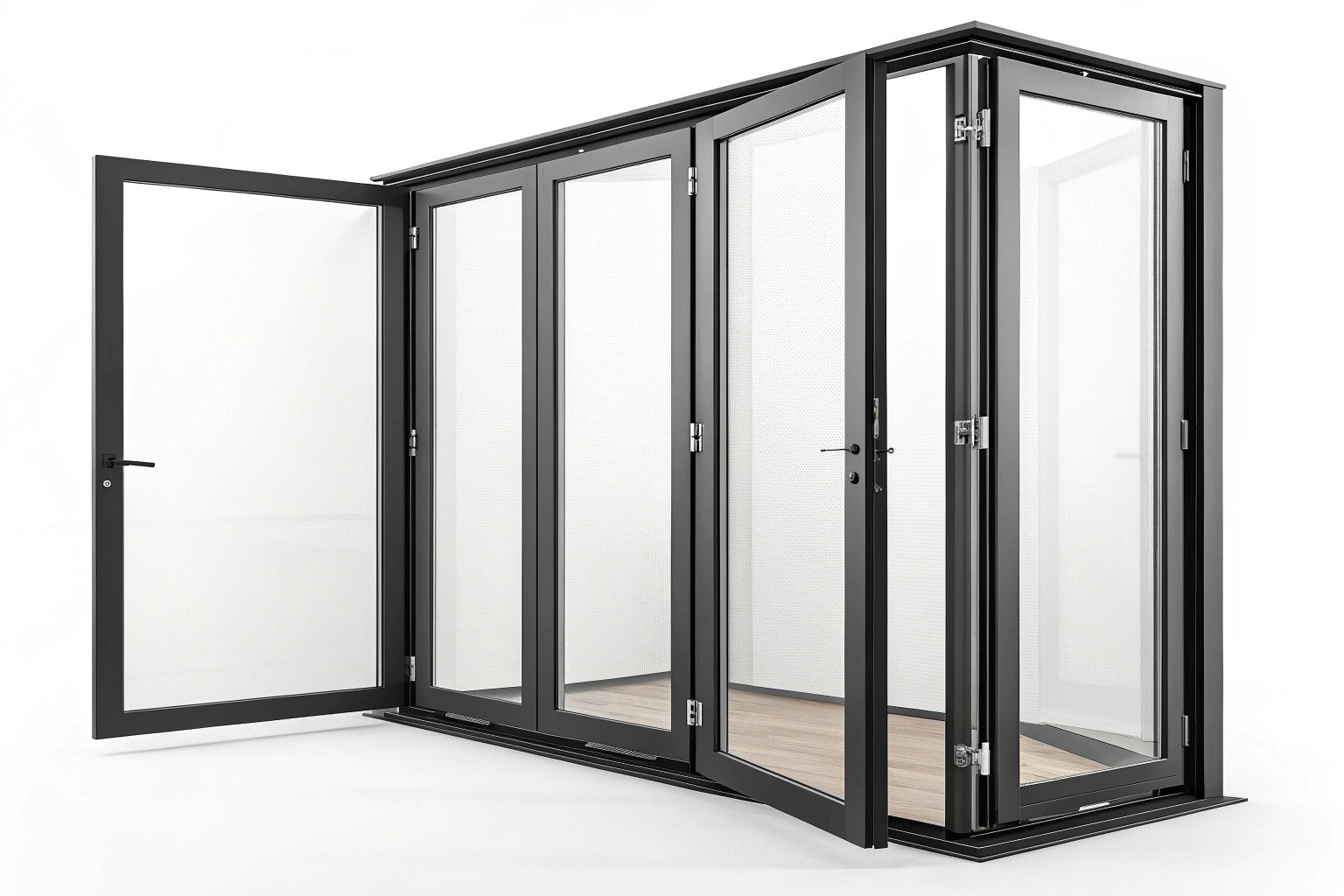
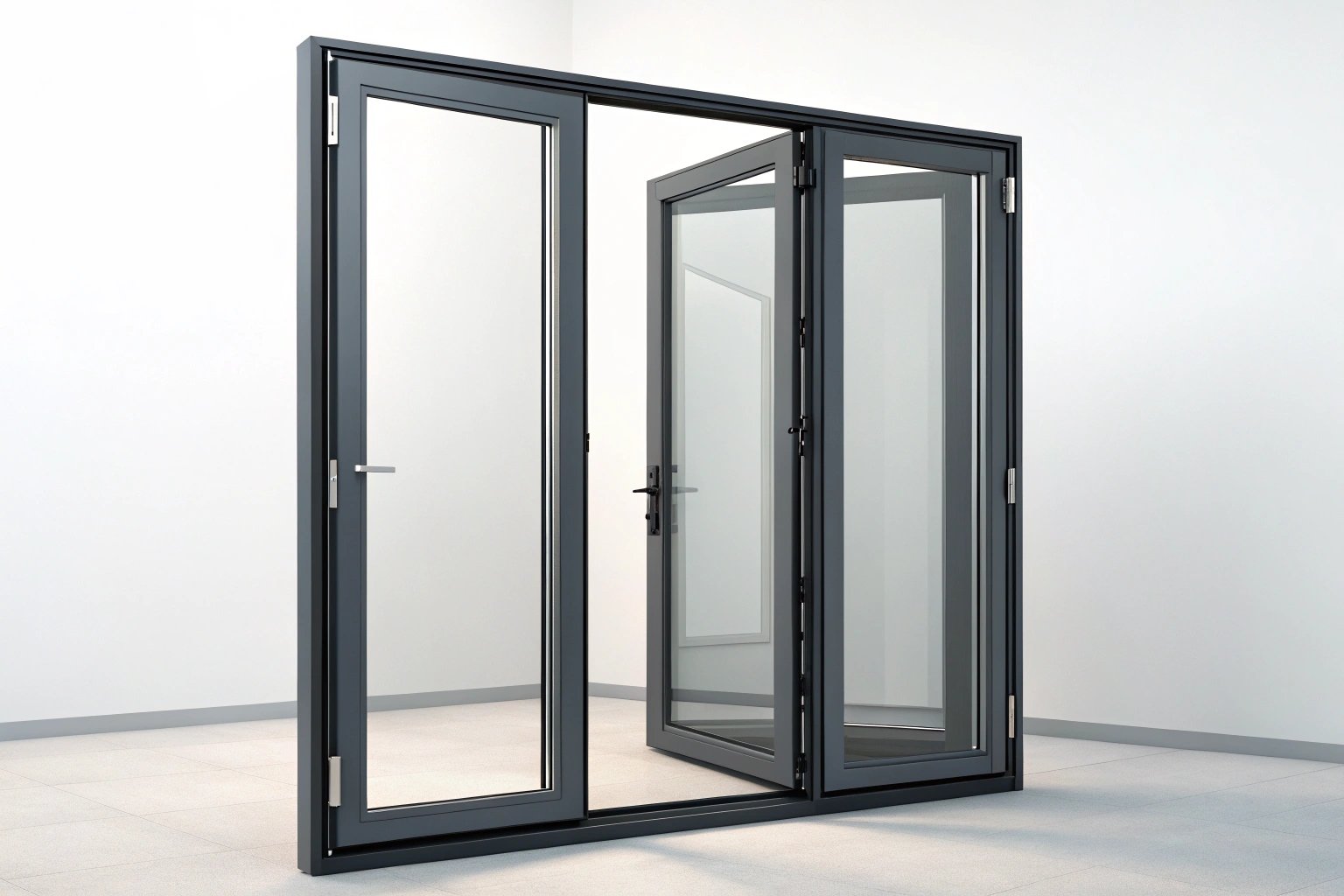
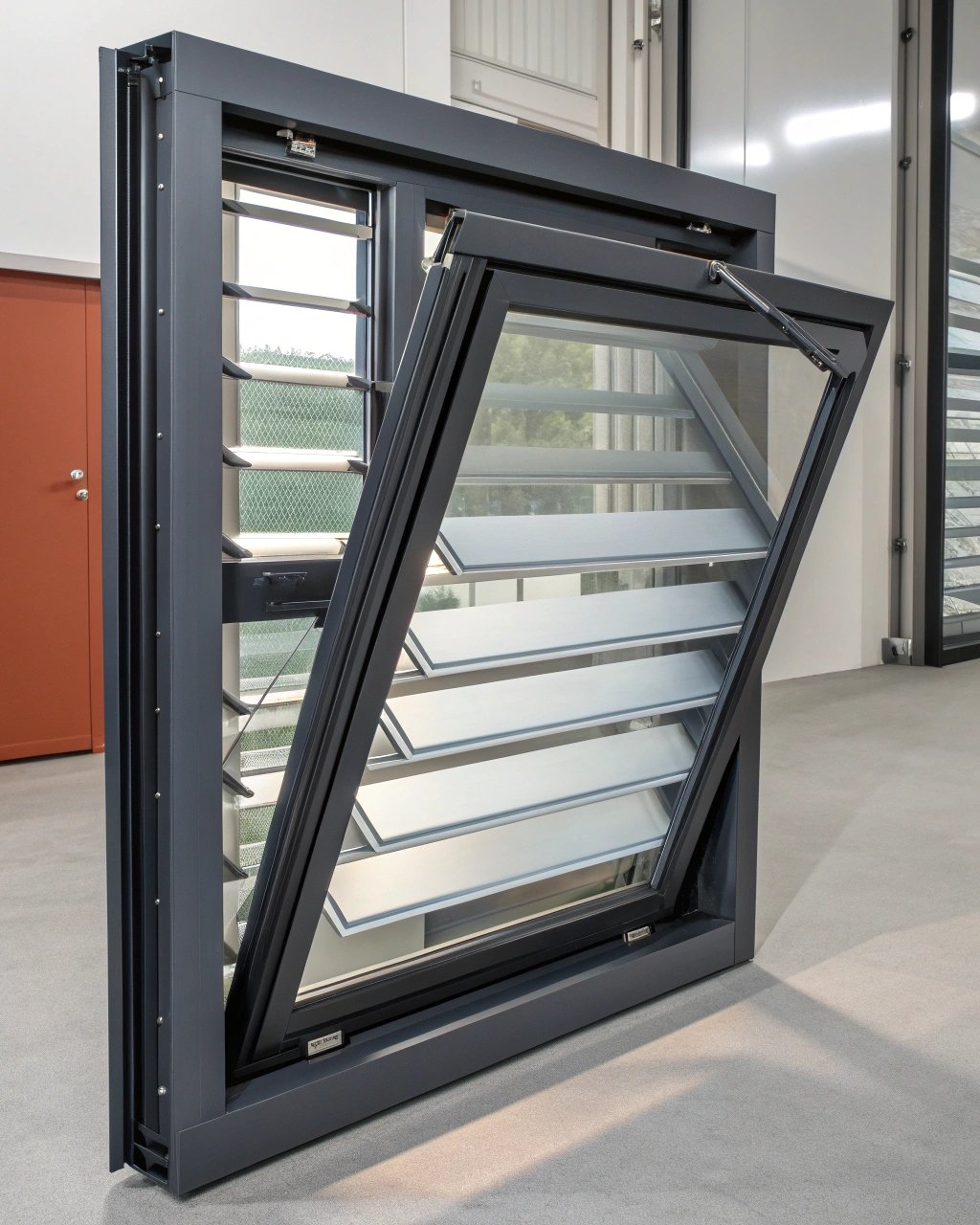
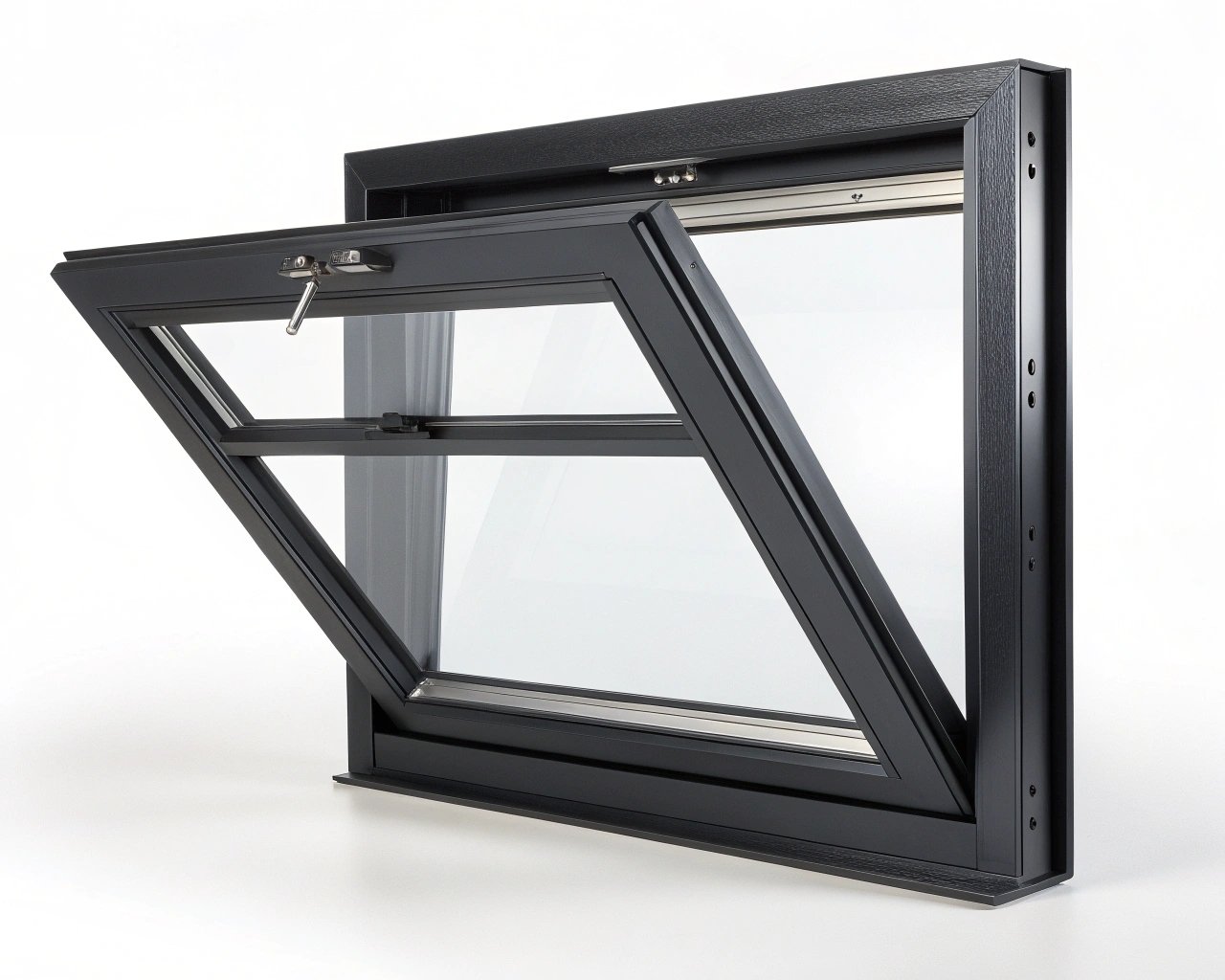
- Sliding, casement, awning, and fixed systems
- Oversized architectural glazing
- Custom colors and finishes
- Double and triple glazing options
- Hardware customization
- Impact-resistant systems for demanding climates
Project Support for Builders & Developers
For contractors, architects, wholesalers, and large-scale projects, we offer:
- Factory-direct pricing
- Technical drawings and specification support
- CAD and project submittal assistance
- Custom manufacturing solutions
- Bulk order support
- International shipping coordination
Built for Modern Residential & Commercial Projects
Our aluminum systems are commonly used in:
- Luxury residential homes
- Modern villas
- Multi-family developments
- Hospitality projects
- Commercial buildings
- Coastal architecture
- Contemporary minimalist designs
Explore More
To learn more about our custom aluminum window and door solutions, visit: